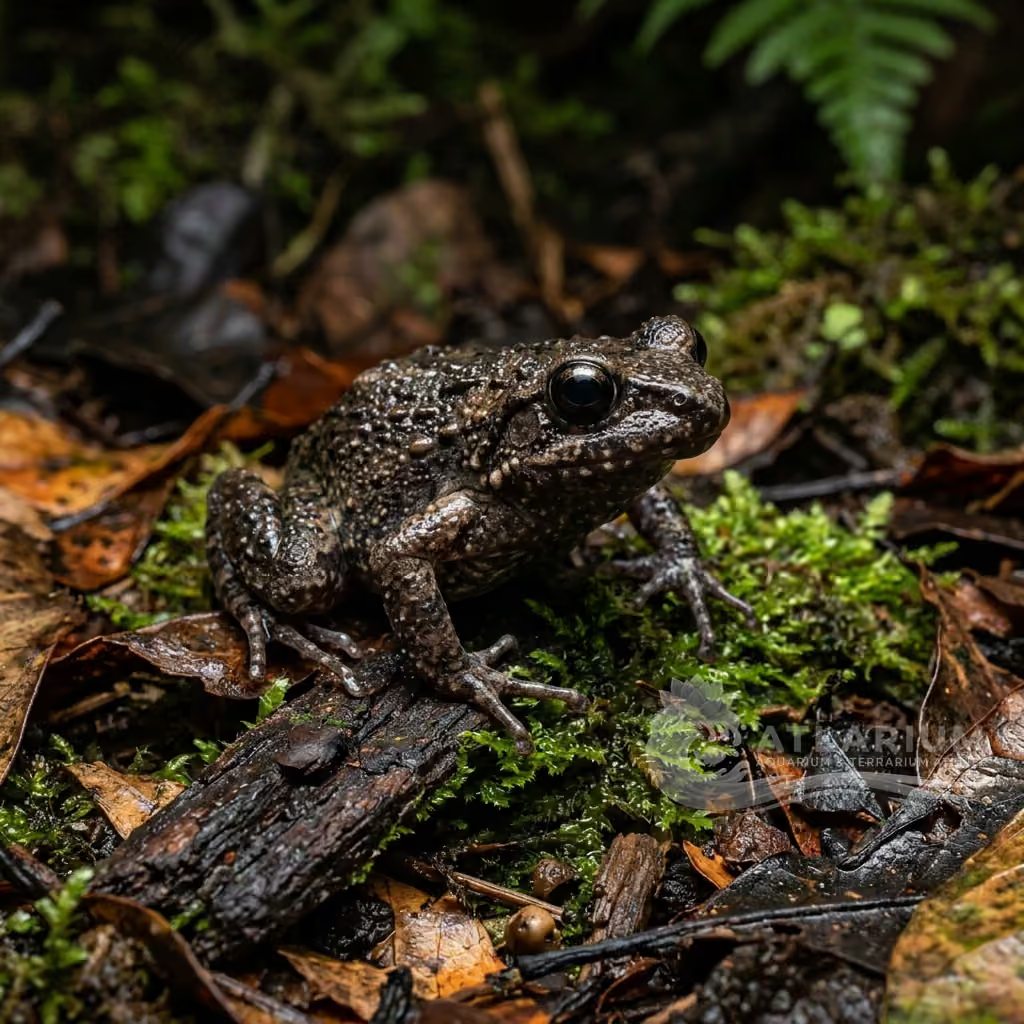
Mitchell's Reed Frog
Hyperolius mitchelli
Native to East Africa, including Tanzania, Malawi, and Mozambique. Inhabits swamps, savannas, and low vegetation near water....
Environment
Terrestrial
Humidity
60 - 80 %
Day temperature
24 - 28 °C
Night temperature
20 - 24 °C

Species description
Geographical Origin and Habitat: Native to East Africa, including Tanzania, Malawi, and Mozambique. Inhabits swamps, savannas, and low vegetation near water. This small reed frog is native to East Africa (Tanzania, Malawi, Mozambique), inhabiting swamps, lowland forests, and humid savanna habitats.
Taxonomy and Genetics: Member of the Hyperoliidae family. A small reed frog, measuring between 2.5 and 3.0 cm in length. Belongs to the family Hyperoliidae. A small arboreal frog with a slender body and toe pads adapted for climbing vertical surfaces.
Behavior and Habits: Nocturnal. During the day, it clings tightly to reeds or leaves to blend in and reduce moisture loss. Primarily active at night (nocturnal). During the day, it clings tightly to leaves or reed stems to conserve body moisture and blend in.
Morphology: Features a golden-brown or greenish back with yellow longitudinal stripes and reddish-orange flanks. Males have a prominent vocal sac.

Care, breeding and tankmates
Terrarium Setup: A tall terrarium of at least 45x45x60 cm. Decorate with vertical reed stems (bamboo) and large-leafed plants. Requires a tall terrarium (minimum 45x45x60 cm) decorated with vertical bamboo poles and broad-leafed live plants like Pothos or Philodendron.
Lighting and Heating: Day temp 24-28°C, night temp 20-22°C. Low UVB lighting is recommended to maintain health. Maintain day temperatures of 24-28°C and night temperatures of 20-22°C. A low-output UVB light (2.0) is recommended for overall health.
Humidity and Hydration: Maintain high humidity (70-90%). Mist heavily in the evenings. Provide a shallow water dish. High humidity of 70-90% is crucial; mist the enclosure daily with reverse osmosis water. Provide a shallow, clean water dish on the substrate.
Feeding and Supplementation: Feed on small live insects (fruit flies, pinhead crickets). Dust prey with calcium and vitamins. Feed on small live insects such as fruit flies, pinhead crickets, and springtails, dusted with calcium and vitamin supplements.
Compatibility: Can be housed in groups of the same species. Do not house with aggressive or predatory animals. Can be kept in small groups of the same species. Do not house with larger frogs, lizards, or predatory invertebrates that might eat them.
Health and Common Diseases: Vulnerable to skin infections and dehydration if humidity levels drop too low. Vulnerable to skin infections from stagnant air or poor hygiene, and rapid dehydration if humidity levels drop below safety margins.

Geographic origin and distribution
Native to East Africa, including Tanzania, Malawi, and Mozambique. Inhabits swamps, savannas, and low vegetation near water. This small reed frog is native to East Africa (Tanzania, Malawi, Mozambique), inhabiting swamps, lowland forests, and humid savanna habitats.
Origin
Africa and Madagascar

Amphibian profile
- Diet
- Insectivore
- This species is primarily insectivorous, consuming a wide variety of small invertebrates like crickets, flies, and roaches in the wild. In captivity, a similar varied diet should be provided, dusted regularly with calcium and multivitamin supplements. Appropriately sized live food is essential to trigger their natural feeding response.
- Life expectancy
- 3-5 years
- Adult size
- 3 cm
- Lifestyle/Microhabitat
- Arboreal
- Depending on their morphology, they may live exclusively in trees, on the forest floor, or near bodies of water. A properly designed vivarium must provide the correct balance of humidity, temperature, and specific microhabitats. Ample vertical climbing space or deep substrate should be provided accordingly.
- Activity cycle
- Nocturnal
- Most are strictly nocturnal, becoming active at dusk to hunt and vocalize under the cover of darkness. This pattern helps them avoid diurnal predators and prevents desiccation from the heat of the sun. During daylight hours, they remain motionless in hidden spots to conserve energy and retain moisture.
- Sociality
- Gregarious
- They exhibit fascinating behaviors that vary depending on their exact habitat, often relying on camouflage to avoid predators. Many display remarkable agility and jumping prowess when startled or while hunting. Social interactions are generally limited to breeding seasons when males become highly territorial.
- Reproduction
- Oviparous
- Breeding typically occurs following heavy rainfall or during the wet season. Males attract females with distinctive vocalizations from specific calling sites near water. Depending on the exact species, eggs may be laid in water, on foliage overhanging water, or in specialized foam nests.
- Toxicity
- Harmless
- This small African reed frog is non-toxic and poses no danger. They rely on their cryptic coloration and hiding behaviors to evade predators. They do not possess the toxic skin glands found in poison dart frogs.
- Life stage
- Neotenic
- The life cycle starts with small egg masses deposited on vegetation above water. The resulting tadpoles drop into the water to undergo a relatively rapid metamorphosis. The tiny juvenile froglets look quite similar to the adults.
- Handling tolerance
- Display only
- Handling should be strictly avoided as their skin is delicate and prone to tearing. Human skin oils are toxic and can easily disrupt their skin barrier. Relocation should only be done using a sterile plastic cup.
- Brumation
- Not required
- These tropical frogs do not require a brumation period in captivity. A slight drop in temperature and humidity can simulate the dry season. However, they should always be kept within safe tropical temperature ranges.
- Molting
- Periodic
- Regular skin shedding is critical for their hygiene and health. The frog will use its legs to sweep the old skin toward its mouth. The consumed skin provides a quick source of recycled proteins.

Related species
Recommendations grouped by close relatives, companion choices, and similar care.