New Mexico Spadefoot Toad
Spea multiplicata
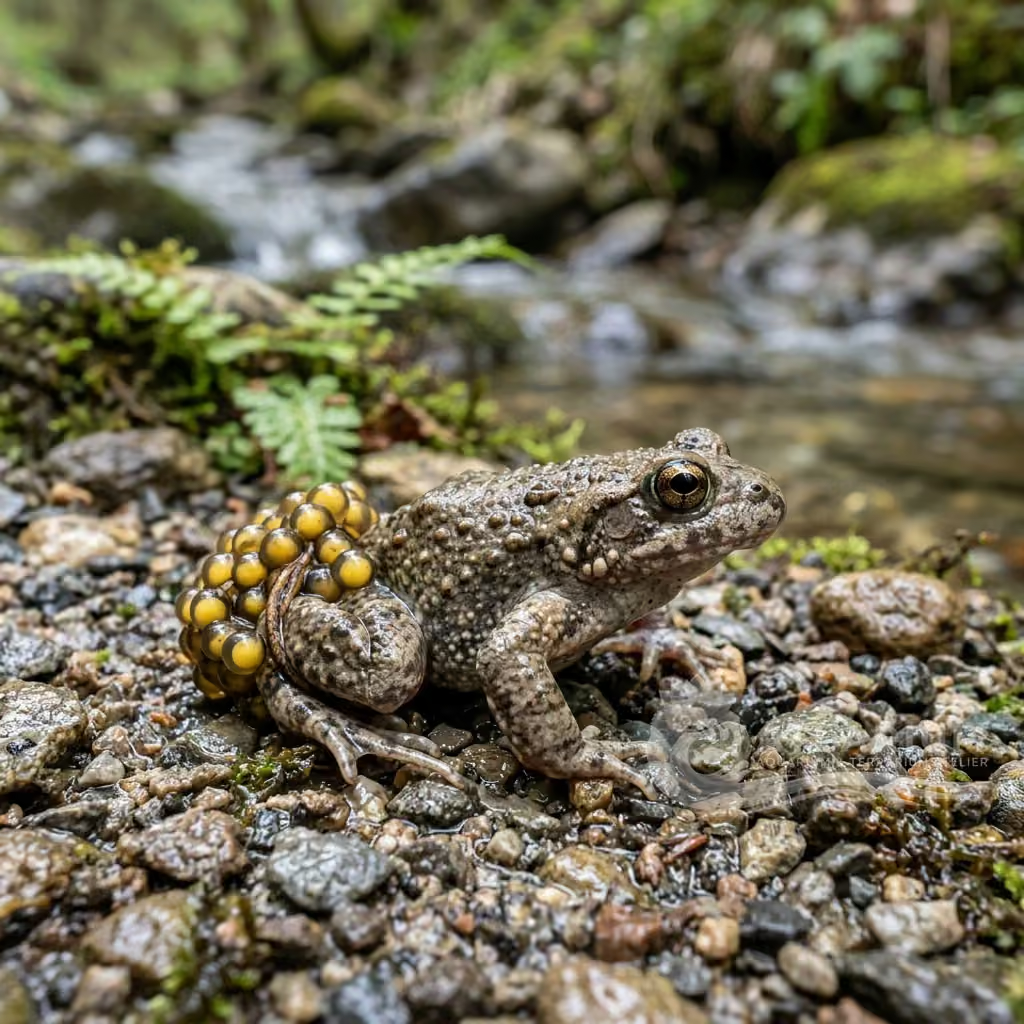
The New Mexico Spadefoot is a small fossorial toad featuring a round body and striking golden eyes. It is equipped with black spade-like tubercles on its hind feet, enabling exceptional digging skills.
Environment
Terrestrial
Humidity
30 - 50 %
Day temperature
24 - 27 °C
Night temperature
18 - 20 °C
Ambient temperature
24 - 27 °C
Minimum enclosure
>= 45 L

Species description
Geographical Origin and Habitat: Native to the southwestern United States and Mexico. They inhabit arid and semi-arid regions including deserts, grasslands, and dry shrublands, spending most of the year buried deep underground to avoid dry conditions.
Taxonomy and Genetics: Belonging to the family Scaphiopodidae. Commonly known as the Mexican Spadefoot or Southern Spadefoot. They are adapted to explosive breeding in ephemeral desert pools after heavy summer rains.
Behavior and Habits: Strictly nocturnal and fossorial. They burrow backwards into the soil using keratinized spade-like tubercles on their hind feet. They remain dormant underground for months during dry spells.
Morphology: Reaches 4–6 cm in length. Females are slightly larger and wider. Breeding males develop dark nuptial pads on their inner fingers and have a dark vocal sac.

Care, breeding and tankmates
Terrarium Setup: A horizontal semi-arid enclosure (minimum 50x30x30 cm) is suitable. Provide a deep burrowing substrate layer (minimum 10–15 cm) consisting of a loose sand and coco fiber mix. Furnish with flat cork bark hides and smooth rocks.
Lighting and Heating: Keep daytime temperatures at 24–27°C, dropping to 18–20°C at night. Provide a natural day-night light cycle. A low-output (2–5%) UVB source is recommended.
Humidity and Hydration: Requires a moisture gradient in the soil. Keep the bottom layers of the substrate slightly damp to prevent dehydration. Spray with dechlorinated water weekly. Provide a small, shallow water dish.
Feeding and Supplementation: Voracious insectivores. Feed on crickets, roaches, earthworms, and isopods. Dust all food with calcium and D3 supplements twice a week.
Compatibility: Peaceful. Can be kept in small groups of similarly sized individuals in a spacious enclosure.
Health and Common Diseases: Skin infections can occur if the substrate is muddy or waterlogged. Dehydration is a risk if the substrate dries out completely. Handle only when strictly necessary, using wet hands.

Geographic origin and distribution
Native to the southwestern United States and Mexico. They inhabit arid and semi-arid regions including deserts, grasslands, and dry shrublands, spending most of the year buried deep underground to avoid dry conditions.
Origin
Central America and CaribbeanNorth America

Amphibian profile
- Diet
- Insectivore
- The New Mexico Spadefoot Toad emerges at night, especially after rains, to hunt a diverse array of terrestrial invertebrates. Its diet largely consists of beetles, ants, termites, and spiders found scurrying across the desert and grassland floors. They are opportunistic feeders capable of consuming large quantities of food rapidly to build up fat stores for their long periods of dormancy.
- Life expectancy
- 2-16 years
- Adult size
- 6.5 cm
- Lifestyle/Microhabitat
- Fossorial
- Exclusively fossorial, they possess keratinized spades on their feet for rapid backward burrowing to escape desert heat and desiccation.
- Activity cycle
- Nocturnal
- New Mexico Spadefoots are nocturnal, spending vast amounts of time dormant and emerging primarily during warm, heavy summer downpours.
- Sociality
- Solitary
- This species is famous for using the keratinized 'spades' on its hind feet to burrow rapidly backwards into the sandy soil. They spend the vast majority of the year underground in a state of estivation, encased in a protective cocoon of shed skin to prevent desiccation. They only emerge to the surface during periods of high humidity and rainfall to feed and breed.
- Reproduction
- Oviparous
- Breeding is an explosive and highly synchronized event triggered by heavy summer monsoon rains that form temporary pools. Males chorus loudly from these ephemeral waters to attract females, leading to a frenzied mating process. The eggs are laid in small clusters attached to submerged vegetation and hatch incredibly fast to ensure the tadpoles can mature before the pools dry up.
- Toxicity
- Harmless
- While not intensely toxic, the New Mexico Spadefoot Toad secretes a mildly irritating mucus from its skin when handled or stressed. This secretion can cause a burning sensation if it comes into contact with human eyes, nose, or cuts. Its primary function in nature is to make the toad unpalatable to smaller predators seeking an easy meal.
- Life stage
- Metamorphosis
- The tadpoles of this species exhibit one of the fastest developmental rates of any North American amphibian. In response to environmental stress and crowding, some tadpoles may develop into a carnivorous morph, preying on other tadpoles to speed up their growth. Once metamorphosis is complete, the tiny froglets immediately begin practicing their burrowing skills to escape the harsh, drying climate.
- Handling tolerance
- Display only
- They are sensitive, display-only amphibians. Handling stresses them greatly and exposes them to harmful skin abrasions and human oils.
- Brumation
- In the wild, they aestivate for up to 10 months a year. In captivity, simulating a dry season followed by heavy 'rain' is required for breeding.
- Molting
- Regular
- Because they spend so much time underground, they rely entirely on the subterranean micro-humidity of their burrows to successfully shed their skin.

Related species
Recommendations grouped by close relatives, companion choices, and similar care.