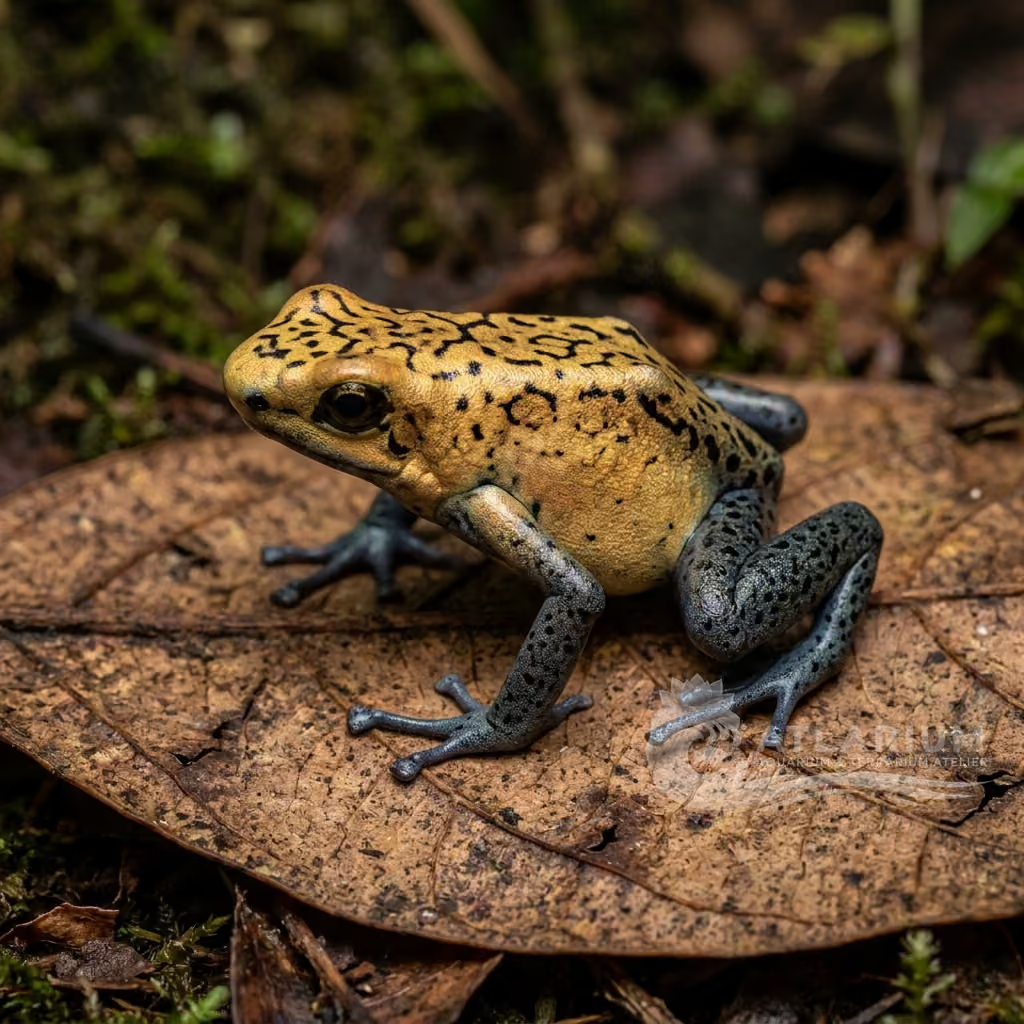
Malayan Horned Frog
Pelobatrachus nasuta
The Malayan Horned Frog boasts unparalleled camouflage with large, fleshy horn-like appendages above its eyes. It remains perfectly hidden in the leaf litter of the forest floor, ambushing passing prey.
Environment
Terrestrial
Humidity
70 - 90 %
Day temperature
21 - 26 °C
Night temperature
18 - 21 °C

Species description
Geographical Origin and Habitat: This cryptic and species is native to the primary and secondary rainforests of Southeast Asia, including Malaysia, Sumatra, and Borneo. The Malayan horned frog (or long-nosed horned frog) lives permanently on the forest floor among leaf litter and moist soils near slow-flowing streams, relying on its exceptional camouflage to avoid predators.
Taxonomy and Genetics: The species is highly adapted for crypsis, resembling a dry leaf. It features dramatic, horn-like dermal projections above the eyes and a pointed snout. The skin is smooth, with distinct lateral folds that mimic leaf veins. Coloration ranges from shades of brown, rust, orange, and tan to match the leaf litter. Females are significantly larger and bulkier than males, reaching lengths of 10 to 14 cm, while males are smaller and more slender.
Behavior and Habits: This terrestrial species is primarily nocturnal and acts as a sit-and-wait ambush predator. During the day, it remains buried and motionless in leaf litter. At night, it hunts large insects, spiders, and occasionally small rodents or other frogs. Males produce a loud, metallic call resembling a hammer striking an anvil ("tink") to attract females.
Morphology: The species exhibits pronounced sexual dimorphism. Females are much larger and heavier (10–14 cm) with a robust, rounded body shape, while males are smaller, more slender, and possess a darker throat patch visible during calling.

Care, breeding and tankmates
Terrarium Setup: Requires a spacious, horizontal terrarium (minimum 80x45x45 cm) with ample floor space. The substrate must consist of a deep layer of moist peat or coconut fiber, topped with a thick layer of dried leaves (such as Ketapang or oak) where the frog can bury itself. A very shallow water dish must be provided, as these frogs are poor swimmers and can easily drown in deep water.
Lighting and Heating: Prefers moderate tropical temperatures between 24-27°C during the day, with a nightly drop to 20-22°C. Temperatures above 28°C can cause severe heat stress and should be strictly avoided. A low-output 5% UVB light is recommended to support calcium metabolism and healthy skeletal development.
Humidity and Hydration: High humidity levels between 75-85% are essential. However, adequate ventilation is critical to prevent stagnant conditions and bacterial infections (such as Red Leg syndrome). Mist the terrarium daily with declorinated or RO water, keeping the substrate damp but not waterlogged.
Feeding and Supplementation: Highly voracious ambush predators. Offer a varied diet of large crickets, Dubia roaches, locusts, earthworms, and occasionally pinky mice (sparingly, as they are high in fat). Gut-load prey insects and dust them regularly with a high-quality calcium and vitamin D3 supplement.
Compatibility: Strictly solitary. These frogs are highly cannibalistic and will consume smaller conspecifics or fight aggressively. Keep only one specimen per enclosure.
Health and Common Diseases: Highly sensitive to ammonia build-up from waste. Regular substrate maintenance and clean water are essential to prevent bacterial septicemia (Red Leg syndrome). Avoid handling them with bare hands, as the oils and acids on human skin can harm their permeable skin.

Geographic origin and distribution
This cryptic and species is native to the primary and secondary rainforests of Southeast Asia, including Malaysia, Sumatra, and Borneo. The Malayan horned frog (or long-nosed horned frog) lives permanently on the forest floor among leaf litter and moist soils near slow-flowing streams, relying on its exceptional camouflage to avoid predators.
Origin
North AmericaSouth and Southeast Asia

Amphibian profile
- Diet
- Carnivore
- The Malayan Horned Frog is a terrestrial ambush predator that feeds on large invertebrates and occasionally small vertebrates. Their diet primarily consists of large spiders, roaches, crickets, and occasionally small crabs or mice. In captivity, they must be fed a diet of appropriately sized insects, as overfeeding large prey can lead to impaction or obesity.
- Life expectancy
- 5-10 years
- Adult size
- 16 cm
- Lifestyle/Microhabitat
- Terrestrial
- As obligate terrestrial ambush predators, they spend their entire adult lives on the forest floor of dense rainforests. They require a cool, highly humid environment with deep, damp leaf litter to feel secure. A captive setup must replicate this static, leafy environment with stable temperatures, avoiding bright lights and excessive heat.
- Activity cycle
- Nocturnal
- They are strictly nocturnal and crepuscular, with almost zero activity during daylight hours. They spend the day resting motionless on the forest floor, perfectly blended into the leaf litter. At night, they may move slightly to better ambush positions, but they remain generally inactive compared to other frog species.
- Sociality
- Gregarious
- This frog relies on its flawless camouflage, remaining perfectly still for days at a time to ambush prey and avoid predators. Its angular body and projections above the eyes make it virtually indistinguishable from dead leaves. They are incredibly sedentary animals that will only move short distances to catch food or seek better moisture.
- Reproduction
- Oviparous
- Breeding occurs in the slow-moving, shallow streams of their native rainforest habitats. The males have a distinct, loud, honking call that carries well over the sound of the running water. Females deposit small clusters of eggs on the underside of rocks or logs partially submerged in the stream current.
- Toxicity
- Harmless
- They do not possess significant toxic skin secretions like many toads and rely entirely on their extreme camouflage for defense. While they are safe to handle regarding toxicity, their skin is highly sensitive. Standard amphibian handling precautions, such as washing hands to remove oils and salts, are required to protect the frog's health.
- Life stage
- Metamorphosis
- The eggs are laid in slow-moving streams where they hatch into highly specialized tadpoles with funnel-like mouths. These tadpoles feed at the water's surface, slowly filtering out microorganisms and detritus. Following metamorphosis, they move onto the forest floor, quickly developing the sharp angular head projections that mimic fallen leaves.
- Handling tolerance
- Display only
- Handling should be kept to an absolute minimum, as these frogs are prone to stress and physical injury. Their sedentary nature makes them easy to grab, but handling disrupts their natural camouflage behavior. If relocation is necessary, they should be carefully coaxed into a container using moistened, gloved hands.
- Brumation
- Not required
- Native to tropical rainforests, they do not brumate and instead require stable, warm, and humid conditions year-round. They may become slightly less active if temperatures drop, but extreme cold can be fatal. Captive environments should maintain consistent parameters to prevent the frog from entering a stressful state of dormancy.
- Molting
- Periodic
- Like all amphibians, they must periodically shed their skin to allow for growth and maintain hygiene. The molting process involves dramatic yawning and stretching to loosen the translucent outer skin layer. They will push the skin forward into their mouth and swallow it, a process that is rarely observed due to their secretive nature.

Related species
Recommendations grouped by close relatives, companion choices, and similar care.