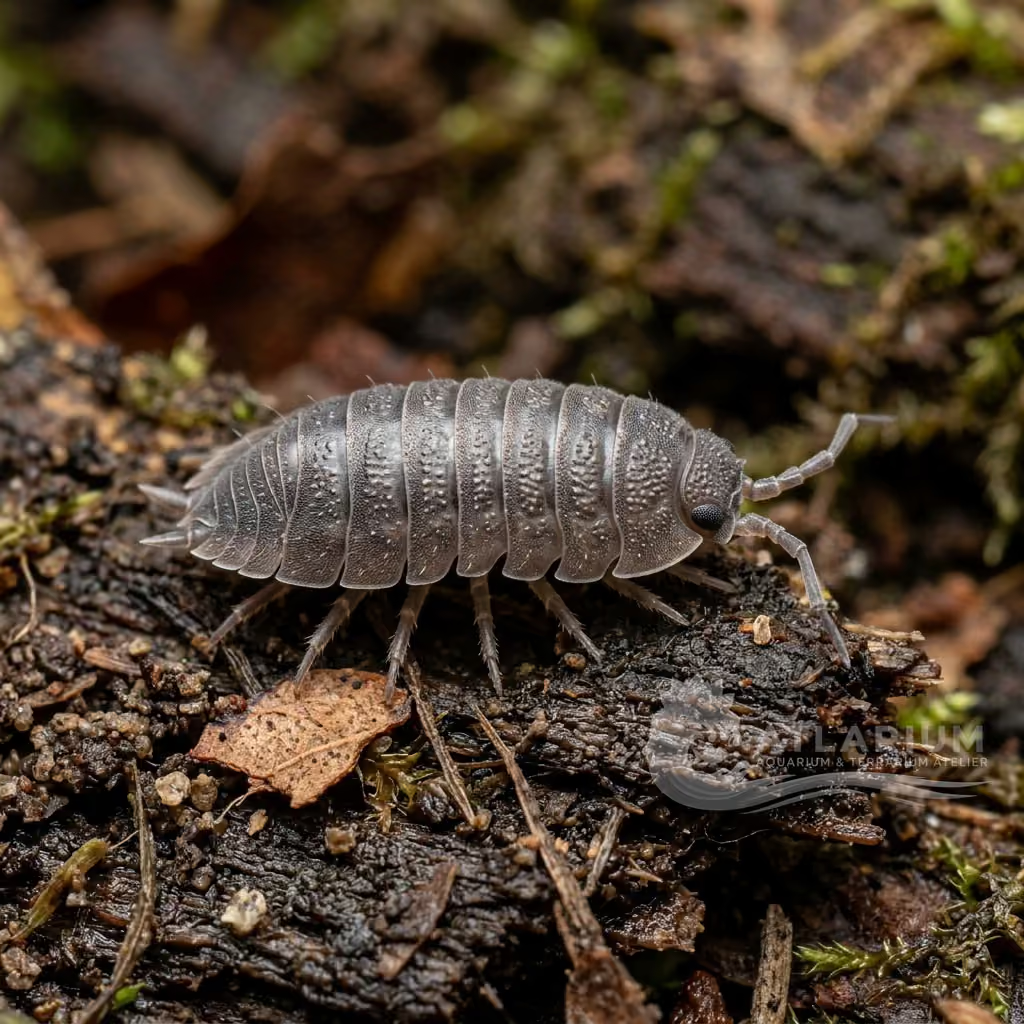
Amber Isopod (Cubaris sp.)
Cubaris sp. 'Amber'
The Cubaris 'Amber' Isopod. A magnificent Asian isopod (0.6 inches) renowned for its fiery color. It presents itself with a shiny armor that resembles fossil amber resin: a translucent shade that from honey yellow descends to dark orange or caramel brown. Like many Cubaris, it requires a hot and very humid karst forest environment, but well ventilated. Its size and hypnotic coloring make it an elite species of inestimable visual value.
Environment
Terrestrial
Humidity
70 - 85 %
Day temperature
23 - 27 °C
Night temperature
20 - 23 °C

Species description
Geographical Origin and Habitat: Asphyxiating tropical caves and forests of Thailand, hidden among the crevices of limestone rock wrapped in wet moss.
Taxonomy and Genetics: Family Armadillidae. (Asian Jewel Isopod). It is one of the largest Cubaris on the market (together with the Jupiter). Unlike the Rubber Ducky or the Panda King, the Cubaris Amber does not present clear facial patterns or decisive two-tone contrasts, but enchants with its uniform chromatic gradient, which resembles a drop of polished prehistoric resin.
Behavior and Habits: Underground amber ingots. Shy and nocturnal. They hate direct light that dehydrates their waxy carapaces. They live buried deep or under huge blocks of wet wood, rarely surfacing. The reproduction rate is exasperatingly low and the colonies stabilize only after many months of uninterrupted peace.
Morphology: Oval, smooth and armored dome (Up to 0.6 inches / 1.5 cm). Splendid fiery Amber color: the armor is semi-translucent on the edges, shining with a warm yellow-orange or caramel red, which darkens in the center in more full-bodied shades. Unlike the European Armadillidium, the animal appears as if it were made of molten glass or hard candy. Perfect conglobation.

Care, breeding and tankmates
Terrarium Setup: DEEP-SOIL TROPICAL BINS WITH KARST ROCK. They need a mixture of spongy peat, rotting wood in abundance and, crucial factor, limestone. Build piles of stones or rough rocks under which they will gather en masse. Live moss (Sphagnum or Java moss) must be present in tons to retain the humidity necessary for their breath.
Lighting and Heating: ABSENCE OF DIRECT LIGHT. Stable tropical humid heat (73-82°F / 23-28°C). Sensitive to cold drafts. If temperatures fall below 70°F their metabolism slows down dangerously and the colony ceases to feed, risking not passing the molt.
Humidity and Hydration: MONSOON AND SATURATED (75-90%). The vital essence of Cubaris is well-managed condensation. One side of the box must be perpetually soaked (swampy but not fetid), maintaining high humidity. It is MANDATORY to provide ventilation from the upper holes: the stagnation of stale air will cause lethal fungal infections on the abdominal lungs (pleopods).
Feeding and Supplementation: Asian Calcareous Fungivores. They demand very high quality protein fish pellets, blanched carrots and pumpkin. Their primary food remains however the putrefied white wood and the cuttlefish bone, from which they draw the minerals to maintain the robustness of the incredible amber carapace. They tolerate food competition with more voracious species poorly.
Compatibility: Exclusive for Collection (Total Isolation). Incompatible with frogs, geckos or aggressive clean-up crews. Cubaris Ambers are slow animals, vulnerable to predation and lethal for the wallet in case of colony failure. An osmotic error in the terrarium caused by too much water or too dry leads to sudden unrecoverable massacres.
Health and Common Diseases: Dryness Syndrome / Molt Failure (Lethal collapse ). Like all oriental jewels, the lack of humidity will dry the liquids between the segments of the armor, paralyzing them. They will die crumpled, unable to unroll, asphyxiated and with the old molt that slowly suffocates them in a grip of amber plaster.

Geographic origin and distribution
Asphyxiating tropical caves and forests of Thailand, hidden among the crevices of limestone rock wrapped in wet moss.
Origin
Central America and CaribbeanEurope, Mediterranean, and West AsiaSouth and Southeast Asia

Terrestrial invertebrate profile
- Diet
- Detritivore
- This species thrives on a varied diet rich in decaying organic matter. They primarily consume high-quality leaf litter and soft rotting wood. Supplemental calcium and occasional vegetable scraps are essential for maintaining proper health and a strong exoskeleton.
- Adult size
- 2 cm
- Lifestyle/Microhabitat
- Terrestrial
- They are robust terrestrial invertebrates that thrive in a well-maintained terrarium environment. A distinct moisture gradient is crucial to prevent both fatal dehydration and harmful fungal infections. They spend the vast majority of their time navigating the complex microhabitats of the damp forest floor.
- Activity cycle
- Nocturnal
- This species is primarily active during the night and the dimmer crepuscular hours. They typically remain hidden during the peak daylight hours to conserve vital moisture and avoid predators. Providing a natural day-night light cycle helps regulate their natural foraging and resting behaviors.
- Sociality
- Solitary
- They are social and must be housed in colonies. They utilize communal burrowing to maintain their desired microclimates, often clustering together in the deepest, dampest parts of the terrarium.
- Reproduction
- Marsupial
- Reproduction occurs consistently throughout the year when kept under optimal terrarium conditions. Females incubate their developing eggs within a specialized ventral brood pouch known as a marsupium. The young emerge as fully formed miniatures and require stable moisture to survive their initial delicate molts.
- Venomous
- No
- Handling tolerance
- Tolerant
- Handling should be kept to an absolute minimum to avoid causing unnecessary stress. Their incredibly delicate bodies and limbs can be easily injured by improper or forceful grasping. If relocation is absolutely necessary, gently move them by scooping up the bark or leaf they are resting on.
- Brumation
- Not required
- They generally do not require any brumation period when kept in a controlled captive environment. Maintaining stable and appropriately warm temperatures ensures continuous year-round activity and breeding success. It is important to avoid extreme cold to prevent potential and sudden colony crashes.
- Molting
- Regular
- Molting occurs in two very distinct phases to allow the isopod continuous mobility during the process. Adequate environmental humidity is absolutely essential for them to successfully shed their old exoskeleton without complications. They will usually consume their freshly shed skin in order to rapidly reclaim lost calcium.

Related species
Recommendations grouped by close relatives, companion choices, and similar care.