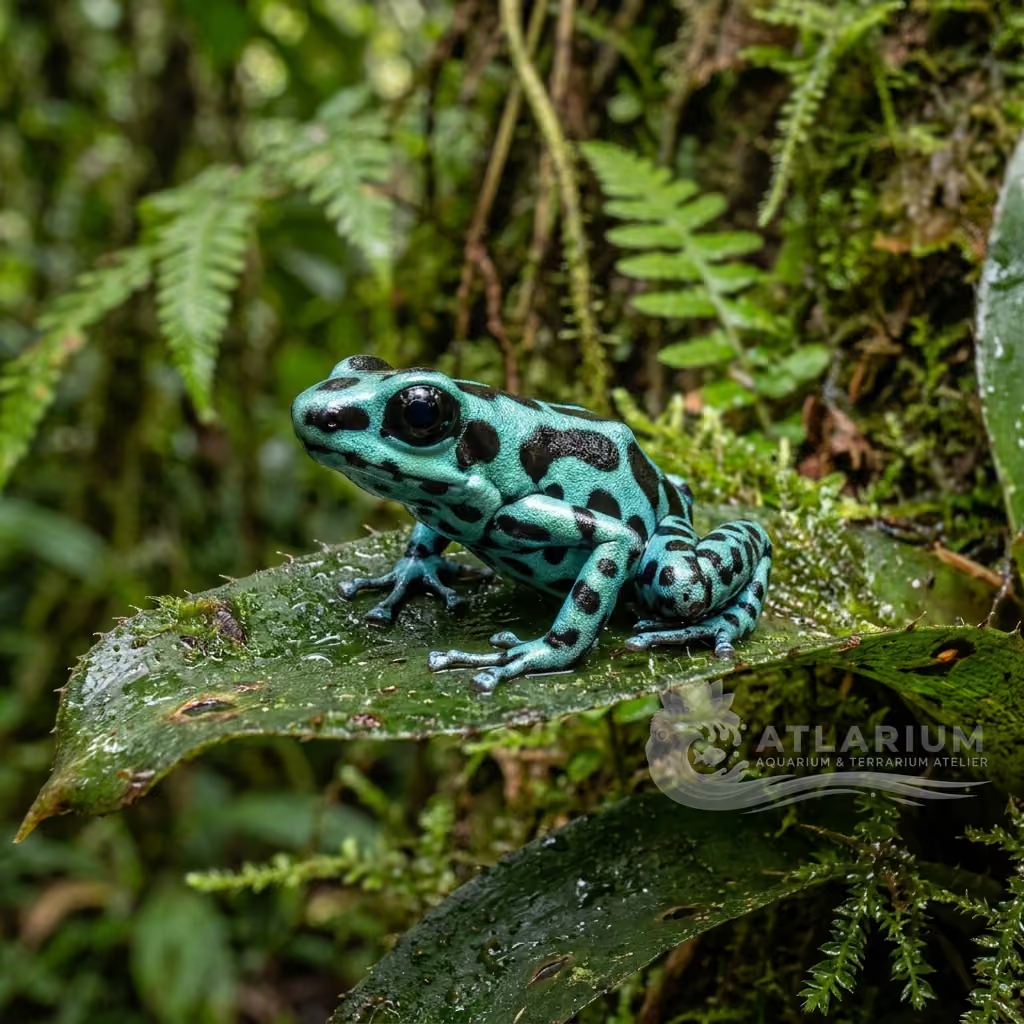
Green and Black Dart Frog "Panamanian Blue and Black"
Dendrobates auratus
The Panamanian Blue and Black Poison Dart Frog is a stunning color morph of Dendrobates auratus, featuring metallic blue to turquoise marbling on a black base.
Environment
Terrestrial
Humidity
80 - 95 %
Day temperature
23 - 26 °C
Night temperature
20 °C
Ambient temperature
23 - 26 °C
Minimum enclosure
>= 45 L
UVB
Ferguson 1-2
UVI
0 - 1 UVI

Species description
Geographical Origin and Habitat: Distributed throughout Central America, especially in Panama, inhabiting humid tropical forests, secondary growth forests, and cocoa plantations.
Taxonomy and Genetics: A member of the Dendrobatidae family. The 'Panamanian' morph is characterized by its striking metallic blue, cyan, or turquoise marbling, bands, or spots over a deep jet-black base. They reach 3.5 to 4.5 cm in size.
Behavior and Habits: Generally shy and elusive compared to other dart frogs. They spend much of their time hidden in dense foliage, emerging during early mornings or after rainfall to hunt. Males produce a soft buzzing mating call.
Morphology: Minimal sexual dimorphism. Mature females are slightly larger and rounder than males, while males may exhibit slightly broader toe pads on their front feet during breeding periods.

Care, breeding and tankmates
Terrarium Setup: Requires a horizontal terrarium with moderate height (minimum 45x45x60 cm for a small group). Provide a dense planting of Pothos, ferns, and bromeliads (Neoregelia), alongside a thick layer of oak leaf litter and hiding caves.
Lighting and Heating: Prefers moderate temperatures of 23 to 26°C during the day, with a night drop to around 20°C. Avoid temperatures above 28°C, which cause stress. Low-intensity 2-5% UVB lighting is highly beneficial.
Humidity and Hydration: Maintain high humidity levels (80-95%) through regular daily misting. Proper ventilation is essential to ensure fresh air exchange and prevent stagnant conditions that promote bacterial infections.
Feeding and Supplementation: Strictly insectivorous. Feed 4-5 times a week on wingless fruit flies (Drosophila melanogaster or hydei), springtails, and dwarf isopods. Preys must be dusted with high-quality calcium and vitamin D3 powder.
Compatibility: Relatively peaceful and social compared to D. tinctorius. They can be housed in groups or harems (one male, multiple females) in spacious setups with visual barriers. Occasional dominance wrestling may occur.
Health and Common Diseases: Highly sensitive to chytrid fungus and poor hygiene. Ensure skin remains glossy and free from retained shed. Lethargy and half-closed eyes are early signs of stress, nutritional deficiencies, or overheating.

Geographic origin and distribution
Distributed throughout Central America, especially in Panama, inhabiting humid tropical forests, secondary growth forests, and cocoa plantations.
Origin
Selective breeding and cultivarsExtra-Amazon South AmericaCentral America and CaribbeanNorth AmericaEast AsiaTropical oceans and reefsCosmopolitan or introduced

Amphibian profile
- Diet
- Insectivore
- In the wild, these frogs feed on a diverse array of minute invertebrates, particularly ants and mites, which contribute to their natural toxicity. In captivity, they thrive on a steady diet of appropriately sized insects, predominantly flightless fruit flies (Drosophila melanogaster and D. hydei) and springtails. It is crucial to regularly dust their feeder insects with high-quality calcium and multivitamin supplements to prevent nutritional deficiencies. They are active and voracious foragers that hunt continuously throughout the day.
- Life expectancy
- 10-15 years
- Adult size
- 4 cm
- Lifestyle/Microhabitat
- Terrestrial
- This species occupies a terrestrial to semi-arboreal lifestyle within the dense understory of tropical rainforests. They are deeply dependent on high humidity environments characterized by abundant leaf litter, complex root systems, and epiphytic plants. A successful captive habitat must closely mimic this complex three-dimensional environment to fulfill their psychological and physiological needs.
- Activity cycle
- Diurnal
- They exhibit a strictly diurnal activity pattern, remaining active and alert during daylight hours and resting at night. Their activity levels peak during the morning and late afternoon, often correlating with periods of increased humidity and slightly cooler temperatures. Adequate broad-spectrum lighting in the terrarium is essential to regulate their natural circadian rhythms and promote healthy behavioral patterns.
- Sociality
- Gregarious
- These frogs are highly active, diurnal amphibians that spend the majority of their day exploring their environment and actively hunting for food. They display complex social interactions and territorial behaviors, particularly among males competing for breeding sites or female attention. Their bold nature, coupled with their striking colors, makes them exceptionally visible and engaging subjects for observation in a well-planted vivarium.
- Reproduction
- Oviparous
- Reproduction is characterized by elaborate courtship behaviors involving vocalizations and tactile interactions. Females deposit small clutches of eggs on broad leaves or inside secluded shelters, which are then fertilized by the male. A fascinating aspect of their reproductive strategy is parental care; males typically guard the eggs and transport the resulting tadpoles to rearing water bodies, ensuring their survival in the complex rainforest environment.
- Toxicity
- Toxic
- While wild individuals possess potent lipophilic alkaloid toxins derived from their specific natural diet, captive-bred specimens are completely harmless and non-toxic. The lack of dietary alkaloid precursors in captivity prevents them from synthesizing these defensive chemicals. However, despite their lack of toxicity in captivity, their bright warning coloration (aposematism) remains a stunning display of evolutionary adaptation. Basic hygiene practices should still be observed after terrarium maintenance.
- Life stage
- Neotenic
- The life cycle begins with eggs laid in moist, terrestrial locations, which develop into aquatic tadpoles over a period of a few weeks. The adult frog actively transports the newly hatched tadpoles on its back to small pools of water, such as bromeliad axils, to complete their development. Metamorphosis into tiny froglets takes several months, and the resulting adults can live for 10 to 15 years or more under exceptional captive care.
- Handling tolerance
- Display only
- Direct physical handling should be strictly avoided due to the extreme fragility of their delicate, semi-permeable skin. Human skin oils, salts, and standard household chemicals can easily be absorbed and cause severe, life-threatening stress or toxicity to the frog. When transferring individuals, it is highly recommended to gently coax them into a clean, smooth container rather than grasping them by hand.
- Brumation
- As tropical amphibians originating from consistently warm and humid equatorial environments, this species does not undergo brumation or hibernation. They require stable, warm temperatures and high humidity year-round to maintain their metabolic processes and overall health. Any significant or prolonged drop in temperature can compromise their immune system and lead to serious health complications or death.
- Molting
- Periodic
- Like all healthy amphibians, they shed their outer layer of skin on a regular basis, a process that occurs more frequently during periods of rapid growth. The shedding process is remarkably quick and involves the frog contorting its body to loosen the skin before pulling it forward and consuming it. This natural behavior helps the animal recycle vital nutrients and is often completed in a secluded area, making it rarely observed by keepers.

Related species
Recommendations grouped by close relatives, companion choices, and similar care.