Yellow-banded Poison Dart Frog
Dendrobates leucomelas
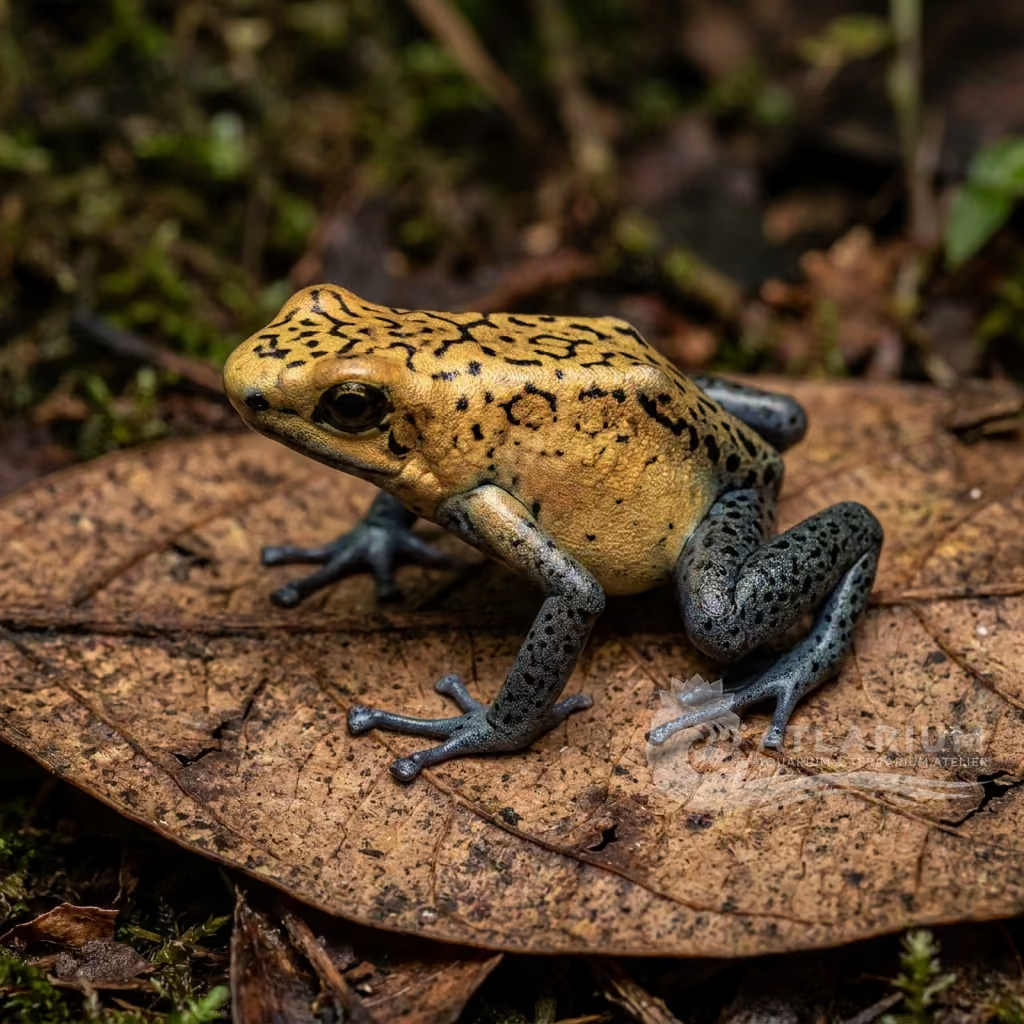
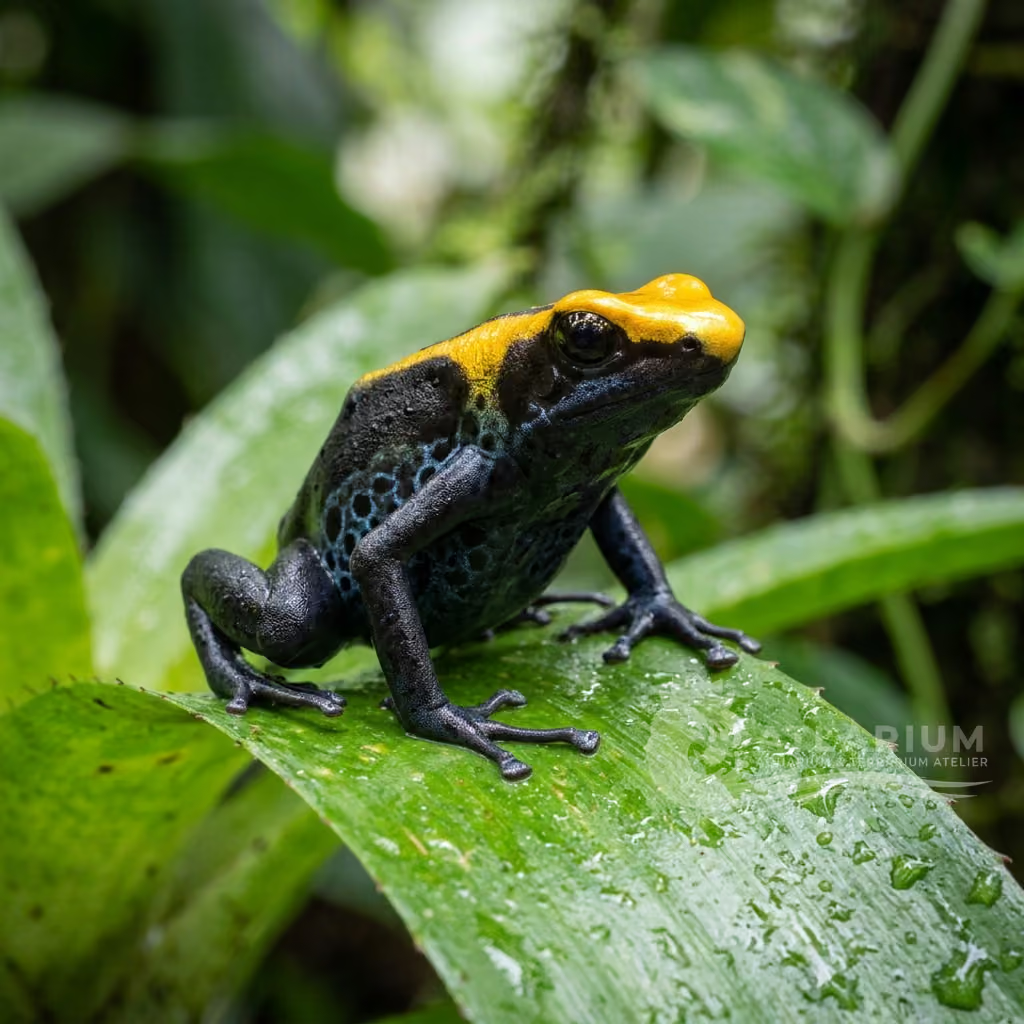
Bumblebee poison dart frog. An excellent choice for beginners, famous for its bright yellow and black bands, active diurnal behavior, and loud canary-like trill.
Environment
Terrestrial
Humidity
70 - 90 %
Day temperature
23 - 27 °C
Night temperature
18 - 21 °C
Ambient temperature
25 °C
Minimum enclosure
>= 50 L
UVB
Ferguson 1-2
UVI
0 - 1 UVI

Species description
Geographical Origin and Habitat: Native to northern South America, including southern Venezuela, Guyana, northern Brazil, and eastern Colombia. They inhabit humid rainforest floors but are highly resilient to drier forest margins and gallery forests, often climbing low trees.
Taxonomy and Genetics: Reach a size of 3.5–4.0 cm. Features a striking warning (aposematic) coloration of bright yellow or orange and jet-black bands. As they age, the black bands often break into small spots.
Behavior and Habits: Active, bold, and highly visible. They actively climb plants and glass surfaces. Males are famous for their loud, musical, canary-like mating trill, which is often stimulated by misting or rain.
Morphology: Sexual dimorphism is subtle: adult females are typically larger and rounder, while adult males have a darker vocal sac under the chin that becomes wrinkled during calling.

Care, breeding and tankmates
Terrarium Setup: Provide a vertically-oriented terrarium of at least 45x45x60 cm for a small group. Furnish with climbing branches, 3D backgrounds, elevated cork bark tubes, and broad-leafed plants (bromeliads). Maintain a bioactive base of leaf litter at the bottom.
Lighting and Heating: Prefer slightly warmer conditions than other dart frogs. Maintain a daytime range of 24–27°C. Do not exceed 28°C. Provide low-level UVB lighting to mimic sunlit forest patches and support active diurnal foraging. Keep night temperatures around 20–22°C.
Humidity and Hydration: Maintain target humidity of 75–85%. Drier periods during winter simulate their natural seasonal cycle; increasing misting in spring acts as a strong breeding trigger. Never keep the substrate soggy.
Feeding and Supplementation: Voracious diurnal hunters. Feed daily with Drosophila fruit flies, aphids, and small pinhead crickets. Dust all prey with high-quality calcium powder at each feeding, and add a multivitamin with D3 once a week.
Compatibility: Excellent choice for social colonies. They can easily coexist in groups of 4–6 individuals in a spacious terrarium. Both males and females show minimal intraspecific aggression.
Health and Common Diseases: Very robust, but monitor for obesity as dominant females may overeat. Distribute food across different spots in the terrarium to ensure equal access. Avoid handling to prevent stress and toxic absorption through the skin.

Geographic origin and distribution
Native to northern South America, including southern Venezuela, Guyana, northern Brazil, and eastern Colombia. They inhabit humid rainforest floors but are highly resilient to drier forest margins and gallery forests, often climbing low trees.
Origin
Selective breeding and cultivarsAmazon, Orinoco, and Guianas

Amphibian profile
- Diet
- Insectivore
- The diet of Dendrobates leucomelas must be carefully managed to ensure optimal health and longevity. In its natural habitat, Dendrobates leucomelas typically consumes a variety of specific prey items or plant matter. Captive specimens require a similarly balanced intake, often supplemented with essential vitamins and calcium. It is important to offer food that is appropriately sized to avoid choking or digestive issues. Regular monitoring of their feeding response helps in identifying any potential health problems early.
- Life expectancy
- 10-15 years
- Adult size
- 4 cm
- Lifestyle/Microhabitat
- Terrestrial
- The lifestyle of Dendrobates leucomelas varies greatly depending on whether they are terrestrial, arboreal, aquatic, or semi-aquatic. Designing an enclosure that accommodates their specific mode of living is essential for their physical and mental health. This includes providing the right substrate, climbing branches, or water features as needed. A proper setup allows Dendrobates leucomelas to exercise, hide, and thermoregulate effectively. Understanding their lifestyle choices helps in creating a thriving captive environment.
- Activity cycle
- Diurnal
- The activity pattern of Dendrobates leucomelas typically dictates when they feed, explore, and rest. Depending on their biology, they may be predominantly active during the day, night, or twilight hours. Replicating appropriate lighting and temperature cycles is crucial for maintaining their natural rhythm. Disruptions to this schedule can lead to stress and a decline in the health of Dendrobates leucomelas. Keepers should try to interact with them during their most active periods to minimize disturbance.
- Sociality
- Gregarious
- The behavior of Dendrobates leucomelas is deeply influenced by its natural instincts and environment. These creatures exhibit unique social and territorial behaviors that must be respected in captivity. Providing a habitat that mimics their wild surroundings can greatly reduce stress and encourage natural activities. Dendrobates leucomelas may show specific defensive or communicative displays when interacting with its environment. Observing these behaviors is key to understanding their overall well-being and comfort.
- Reproduction
- Oviparous
- Reproduction in Dendrobates leucomelas requires specific environmental triggers such as temperature and humidity changes. Breeding these animals in captivity can be challenging and often demands a dedicated setup. Once successful mating occurs, careful attention must be given to the incubation of eggs or the care of live young. The offspring of Dendrobates leucomelas are usually fragile and require highly specific conditions to thrive. Keepers must thoroughly research their reproductive cycle to achieve positive breeding results.
- Toxicity
- Harmless
- In its natural habitat, the yellow-banded poison dart frog secretes powerful alkaloid toxins through its skin to deter predators. These toxic compounds are synthesized from their natural diet of specific ants and mites. Captive-bred individuals lack access to these dietary sources and are completely harmless and non-toxic.
- Life stage
- Metamorphosis
- The life cycle begins as aquatic tadpoles that feed on detritus, algae, and occasionally unfertilized eggs in small water catchments. Over the course of several weeks, the tadpoles undergo metamorphosis, developing limbs and absorbing their tails. The emerging froglets are miniature versions of the adults and quickly transition to a fully terrestrial lifestyle.
- Handling tolerance
- Display only
- They are strictly display-only. While captive-bred individuals lose their toxicity, their skin is incredibly delicate and human contact can introduce deadly pathogens or absorb toxic skin oils.
- Brumation
- They do not brumate but can endure slightly drier periods in the wild. In captivity, maintaining stable tropical conditions (70-80°F) is recommended.
- Molting
- Periodic
- They molt their skin constantly to maintain hygiene, immediately stretching and consuming the skin. A high humidity environment (80-100%) is strictly required.

Related species
Recommendations grouped by close relatives, companion choices, and similar care.