Dyeing Poison Dart Frog "Matecho"
Dendrobates tinctorius
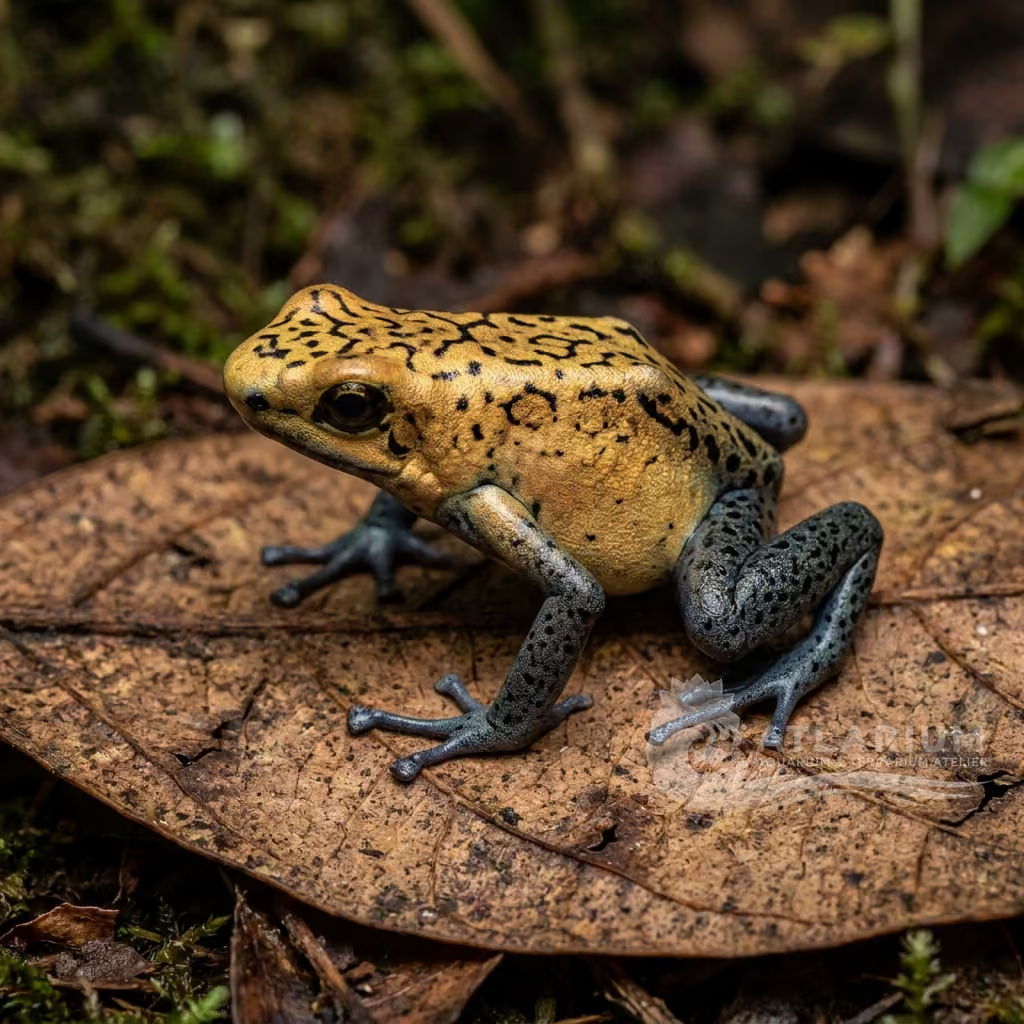
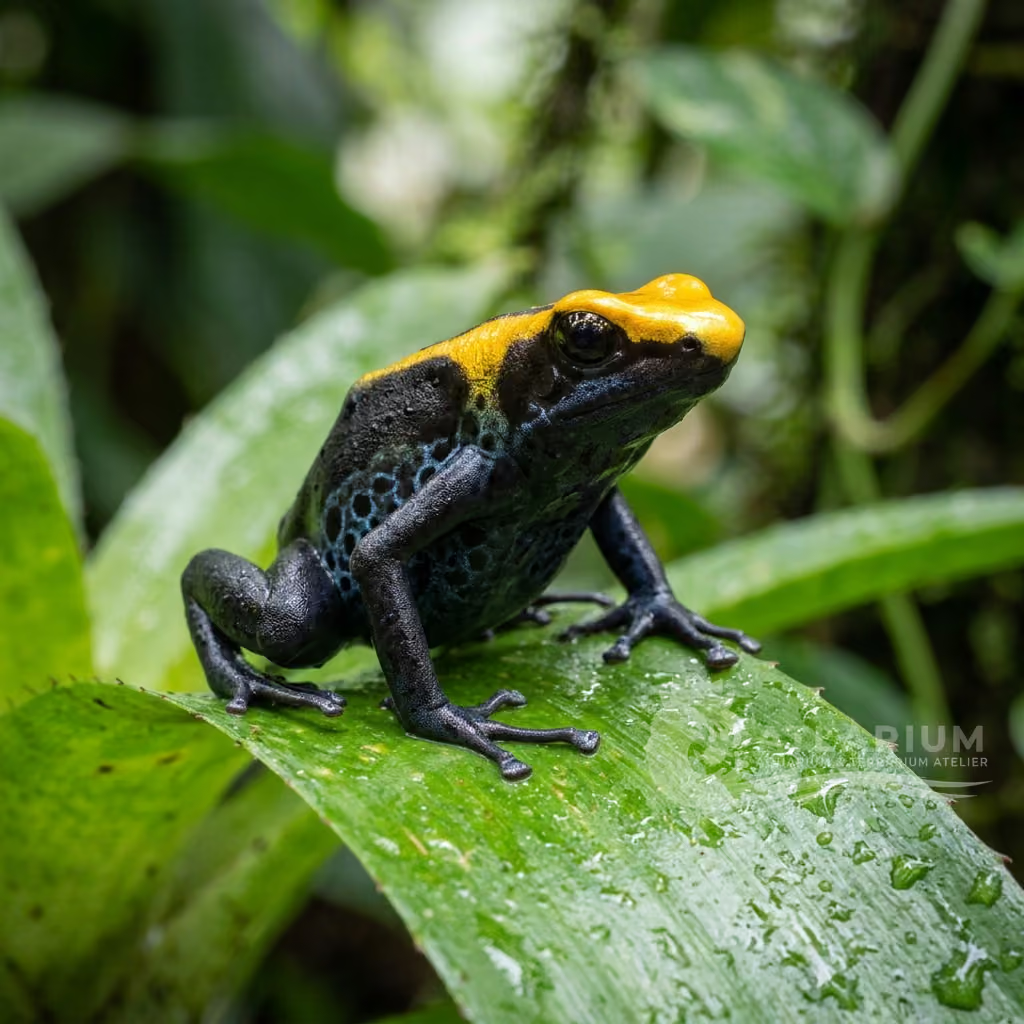
A classic and spectacular color morph of Dendrobates tinctorius from French Guiana, known for its golden-yellow saddle and cobalt blue limbs. Active and robust.
Environment
Terrestrial
Humidity
80 - 100 %
Day temperature
22 - 26 °C
Night temperature
19 - 21 °C
UVB
Ferguson 1-2
UVI
0 - 1 UVI

Species description
Geographical Origin and Habitat: This geographic morph of Dendrobates tinctorius is native to the central territory of French Guiana, specifically around the forested region of Mount Matecho. It inhabits primary tropical rainforests characterized by heavy annual rainfall and constant humidity. It lives on the forest floor, active among the leaf litter, buttress roots of giant trees, and decaying logs.
Taxonomy and Genetics: Belongs to the family Dendrobatidae, genus Dendrobates. Described as part of the highly polymorphic D. tinctorius species complex. The 'Matecho' genetic lineage is geographically isolated and represents one of the most stable and representative phenotypes of the yellow-and-blue coloration. Natural selection has favored this bright warning coloration (aposematism) to deter predators.
Behavior and Habits: Diurnal and predominantly terrestrial. It is a highly active, bold, and energetic frog. Males establish feeding territories which they actively defend against rivals through visual displays and physical wrestling matches. Females are also territorial and will compete aggressively for dominant males. Displays great curiosity and actively explores the terrarium.
Morphology: A large poison dart frog, with adults reaching a length of 5.0 to 6.0 centimeters. Males have larger, wider front toe pads than females, which they use to climb and grip rivals during territorial fights. The coloration features a sharp contrast: a large golden-yellow saddle or mantle on the back, occasionally marked with small black spots, and solid deep cobalt blue legs.

Care, breeding and tankmates
Terrarium Setup: Requires a bioactive terrarium measuring at least 50x50x50 cm for a pair. The substrate should be a mix of peat moss, coco fiber, and sphagnum moss covered with a thick layer of Catappa or oak leaves. Provide cork bark shelters, halved coconut shells, and live plants (Neoregelia bromeliads, Pothos, Cryptanthus) for hiding and egg deposition sites.
Lighting and Heating: Daytime temperature should be kept between 24°C and 26°C (75.2°F - 78.8°F), with a night drop to 20-22°C (68°F - 71.6°F). Temperatures above 28°C (82.4°F) can cause heat stress and mortality. Provide a 12-hour photoperiod using plant-grow LEDs or T5 lights, and a low-output (2.0) UVB bulb is recommended to support bone metabolism.
Humidity and Hydration: Humidity must be kept high, consistently between 80% and 95%. Mist the enclosure twice daily with reverse osmosis water to avoid mineral buildup on leaves and the frogs' skin. The substrate must be damp but never waterlogged; use a bottom drainage layer. Provide a shallow water dish (just a few millimeters deep).
Feeding and Supplementation: Feeds exclusively on tiny live insects. Provide flightless fruit flies (Drosophila melanogaster and Drosophila hydei), springtails, pinhead crickets, and aphids daily. Dust prey at every feeding with a high-quality calcium and multivitamin supplement containing Vitamin A (retinol) to prevent bone diseases and breeding issues.
Compatibility: Best housed as a single male-female pair. Keeping multiple specimens of the same sex leads to territorial aggression and severe stress, especially among females. Do not house with other morphs of D. tinctorius to prevent cross-breeding, nor with other amphibian species to avoid cross-contamination.
Health and Common Diseases: Common illnesses include bacterial or fungal skin infections caused by poor air circulation or unsanitary conditions, and metabolic bone disease due to lack of calcium. Good ventilation (mesh screens) and strict hygiene are vital. Avoid handling the frogs unless necessary, always using wet nitrile gloves.

Geographic origin and distribution
This geographic morph of Dendrobates tinctorius is native to the central territory of French Guiana, specifically around the forested region of Mount Matecho. It inhabits primary tropical rainforests characterized by heavy annual rainfall and constant humidity. It lives on the forest floor, active among the leaf litter, buttress roots of giant trees, and decaying logs.
Origin
Selective breeding and cultivarsAmazon, Orinoco, and GuianasNorth America

Amphibian profile
- Diet
- Insectivore
- They consume small invertebrates like ants and mites in the wild. Captive diets consist primarily of flightless fruit flies dusted with calcium. They actively forage using their keen vision to spot prey.
- Life expectancy
- 10-15 years
- Adult size
- 5 cm
- Lifestyle/Microhabitat
- Terrestrial
- They are predominantly terrestrial amphibians living in the dense leaf litter of tropical rainforests. They occasionally climb lower vegetation to transport tadpoles or seek mates. An extremely high humidity environment between 80% and 100% is required.
- Activity cycle
- Diurnal
- These frogs are strictly diurnal and actively forage during the daylight hours. Bright aposematic colors allow them to move boldly without fearing predators. They retreat to leaf litter shelters during the hottest parts of the day.
- Sociality
- Gregarious
- They are bold and active frogs that make excellent display animals in planted terrariums. Males are quite territorial and will wrestle others to establish dominance over calling sites. Females are notoriously aggressive and will fiercely fight competing females over resources.
- Reproduction
- Oviparous
- Males attract females using soft buzzing calls from hidden locations under leaves. The female lays a small clutch of gelatinous eggs on a smooth surface after courtship. Males tend to the moist eggs and carry hatched tadpoles to tiny water pools.
- Toxicity
- Toxic
- In their native habitat, they sequester potent lipophilic alkaloid toxins from specialized ants. These toxins are secreted through skin glands as a powerful defense mechanism. In captivity, a fruit fly diet causes them to gradually lose all their toxicity completely.
- Life stage
- Neotenic
- Their life cycle begins as an egg hatching into an aquatic tadpole with gills. Over 8 to 12 weeks, the tadpole undergoes profound metamorphosis by developing legs. The miniature froglet eventually leaves the water to begin its fully terrestrial life.
- Handling tolerance
- Display only
- They possess highly permeable skin that easily absorbs toxins and oils from human hands. Handling must be strictly avoided unless absolutely necessary for health checks. When handling is required, caretakers must use moistened powder-free nitrile gloves.
- Brumation
- Not required
- This tropical species originates from warm rainforests and does not undergo true brumation. They require consistently warm temperatures maintained between 72°F and 80°F year-round. Any significant temperature drop below 65°F can quickly compromise their immune system.
- Molting
- Yes
- These frogs shed their skin regularly to remain clean and completely free of pathogens. The rapid molting process involves stretching and yawning motions to loosen dead skin. They immediately consume the shed skin to recycle valuable nutrients like calcium.

Related species
Recommendations grouped by close relatives, companion choices, and similar care.