Strawberry Poison-dart Frog "Cauchero"
Oophaga pumilio
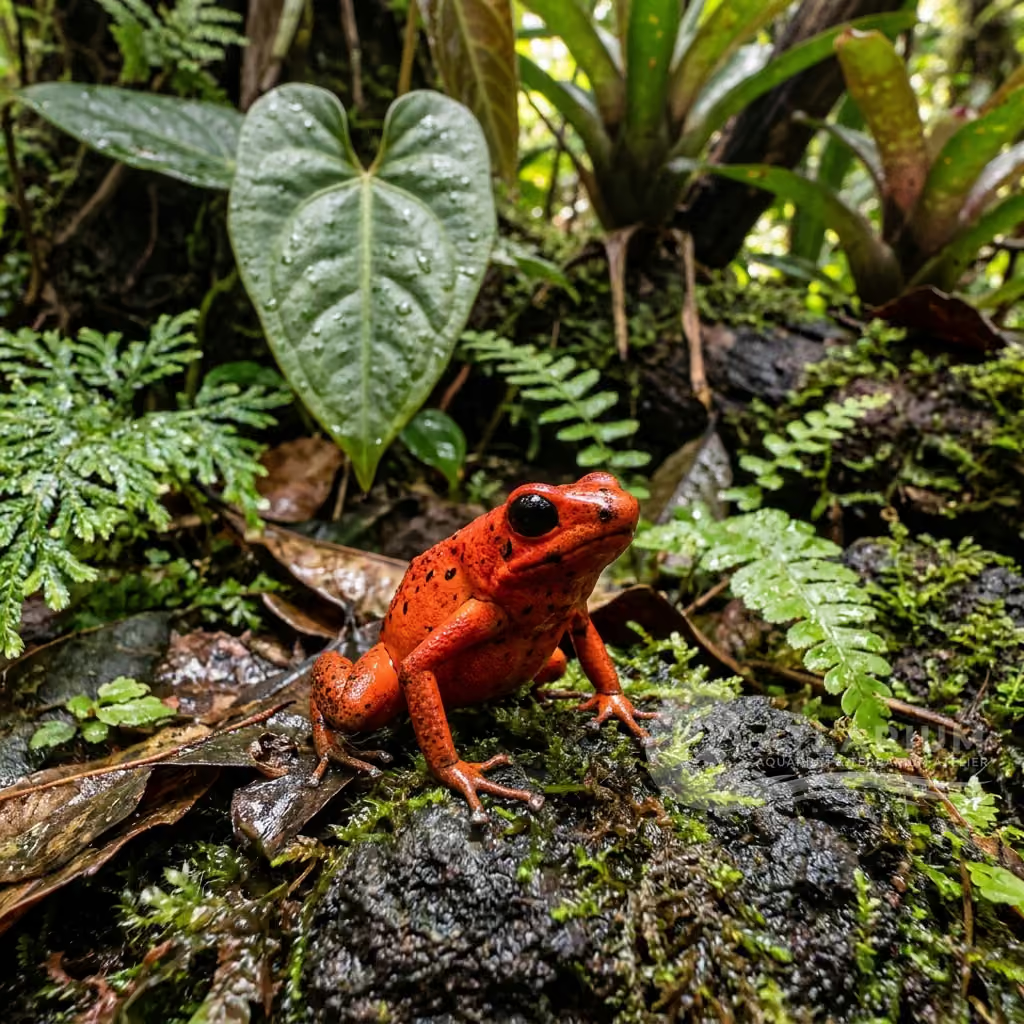
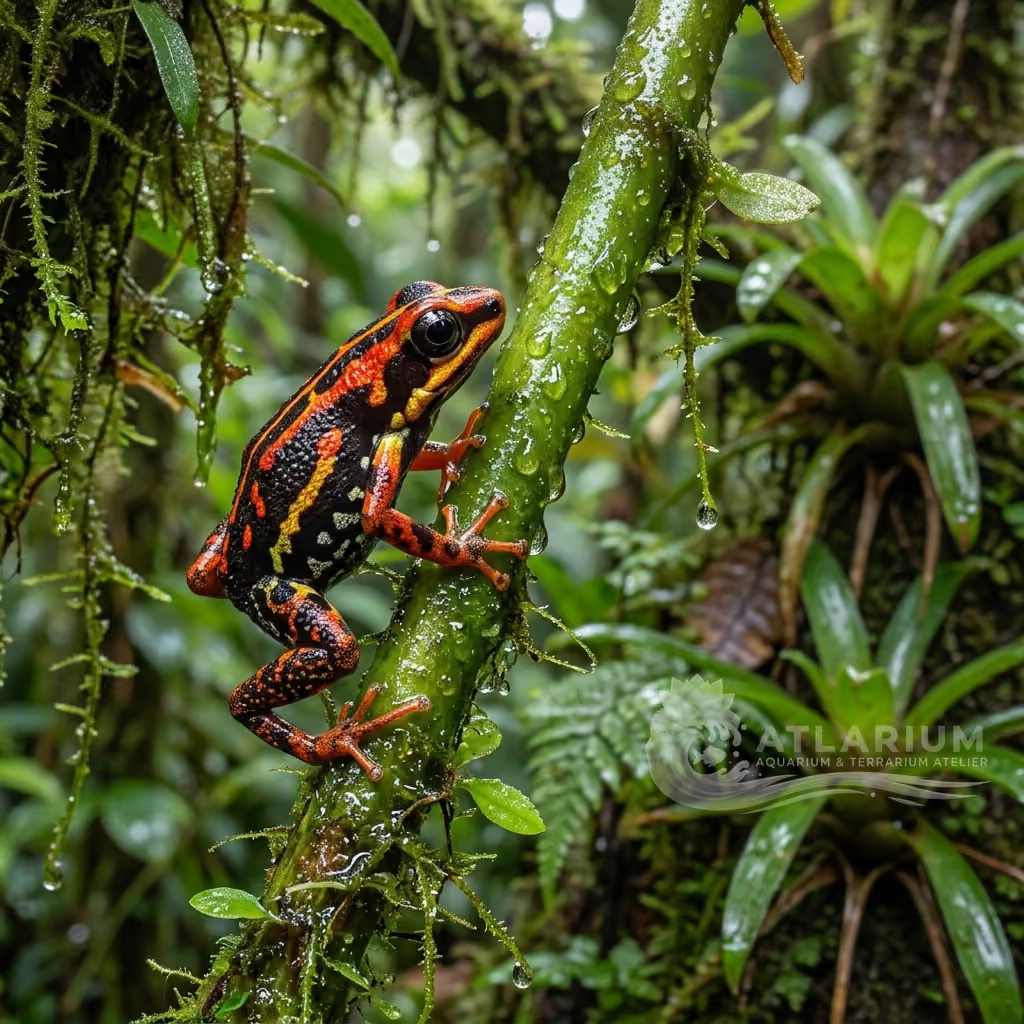
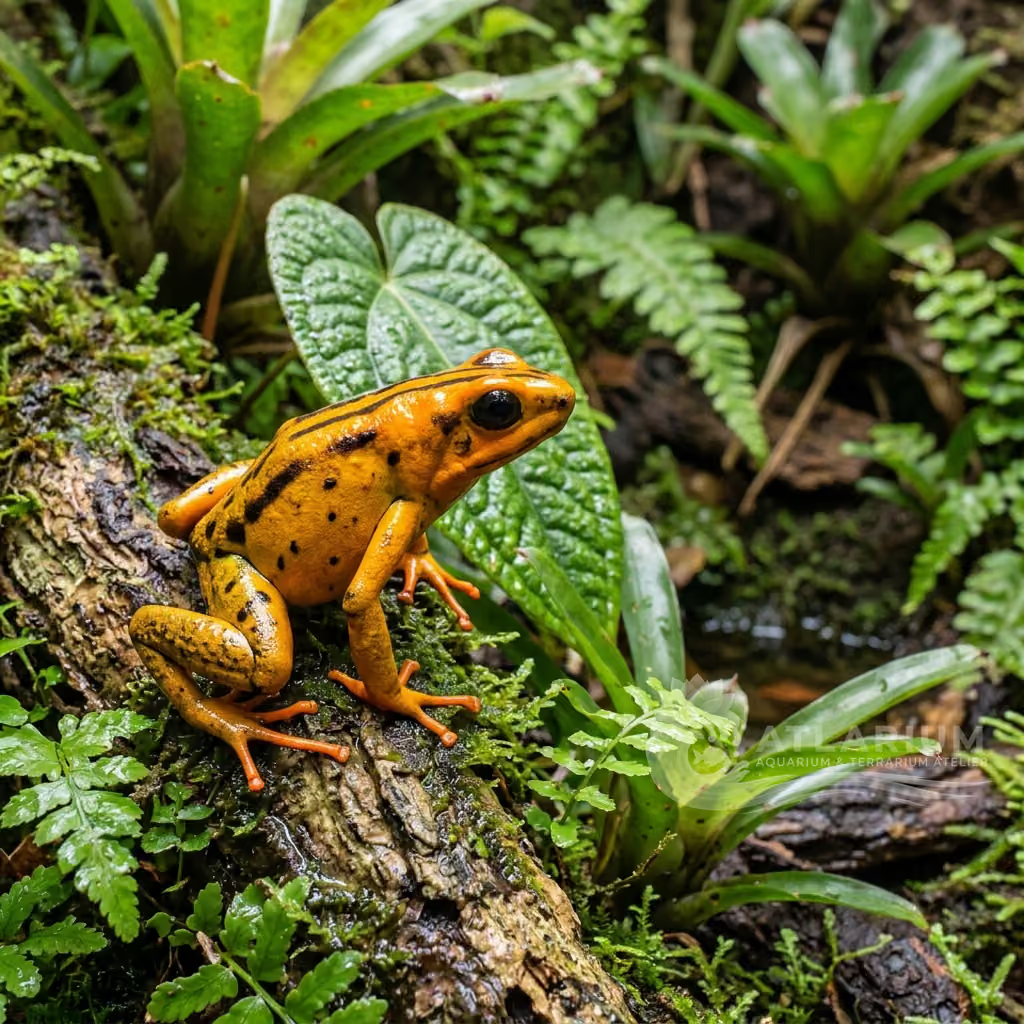
This Panamanian pumilio morph exhibits varying shades of red, orange, or green with heavy dark spotting. It is territorial, arboreal, and requires a vertical bioactive enclosure.
Environment
Terrestrial
Humidity
80 - 100 %
Day temperature
22 - 26 °C
Night temperature
19 - 21 °C
UVB
Ferguson 2
UVI
0.7 - 1 UVI

Species description
Geographical Origin and Habitat: Endemic to the Cauchero region in the Bocas del Toro province of Panama. They inhabit the humid leaf litter, disturbed forests, and cacao plantations, relying on epiphytic bromeliads for shelter and breeding.
Taxonomy and Genetics: Belonging to the family Dendrobatidae. Oophaga pumilio is a highly polymorphic species; the Cauchero locale is distinguished by its unique color combination of a red-orange torso and slate-blue legs.
Behavior and Habits: Diurnal and highly active. Territorial males call from elevated leaves to define their territory. Reproduction is specialized, with females carrying tadpoles to individual water-filled bromeliad axils and feeding them unfertilized trophic eggs.
Morphology: A tiny frog reaching 1.8–2.4 cm in total length. Males and females are similar in size. Males are distinguished by their dark, wrinkled vocal sac on the throat and calling behavior.

Care, breeding and tankmates
Terrarium Setup: A vertical rainforest terrarium (minimum 45x45x60 cm) is required. Live bromeliads (Neoregelia) are mandatory to provide pools of water for tadpole development. Furnish with branches, moss, and a thick layer of leaf litter.
Lighting and Heating: Keep daytime temperatures at 24–27°C, with a night drop to 21–23°C. Avoid temperatures above 28°C. Provide bright light for plants and low-output (2–5%) UVB.
Humidity and Hydration: Maintain high humidity levels of 80–100%. Daily misting is required, and bromeliad cups must remain filled with water.
Feeding and Supplementation: Strictly feed micro-prey, such as springtails and small fruit flies (Drosophila melanogaster). Dust food with a high-quality calcium, vitamin A, and D3 supplement three times a week.
Compatibility: High intraspecific aggression, particularly among males. Best kept in single compatible pairs (1.1). Do not mix different morphs or species of poison frogs.
Health and Common Diseases: Highly sensitive to starvation and dehydration; their rapid metabolism requires daily feeding. Handle only when strictly necessary, using wet, powder-free gloves.

Geographic origin and distribution
Endemic to the Cauchero region in the Bocas del Toro province of Panama. They inhabit the humid leaf litter, disturbed forests, and cacao plantations, relying on epiphytic bromeliads for shelter and breeding.
Origin
Selective breeding and cultivarsCentral America and Caribbean

Amphibian profile
- Diet
- Insectivore
- Their natural diet consists of highly specialized micro-invertebrates like mites and ants, but in captivity, they thrive on a diet of flightless fruit flies and springtails. Because of their incredibly small size, they require the smallest available prey items. Frequent, daily feedings are necessary due to their fast metabolisms. All feeder insects must be dusted with vitamin supplements to maintain their vibrant health.
- Life expectancy
- 10-15 years
- Adult size
- 2.4 cm
- Lifestyle/Microhabitat
- Terrestrial
- They are predominantly arboreal compared to other small dart frogs, heavily utilizing the vertical space. A terrarium dense with bromeliads is an absolute requirement for them to thrive and breed. They spend substantial time perched on leaves surveying their surroundings for food and rivals. High humidity and stable tropical temperatures must be maintained constantly.
- Activity cycle
- Diurnal
- As diurnal amphibians, they are constantly active during the day hunting and defending territory. Morning hours often trigger the most vocalizations from males. They prefer to forage while the tank is well-lit and humidity is high. At night, they seek refuge deep within bromeliad leaves or tucked away in dense vegetation.
- Sociality
- Gregarious
- They are highly territorial, and males will frequently engage in wrestling matches if housed together in small enclosures. Despite their small stature, they are bold, active, and highly visible throughout the day. Their sharp, chirping calls can be heard frequently as males establish boundaries and court females. They are best kept in pairs or harems with ample space and visual barriers.
- Reproduction
- Oviparous
- This species exhibits fascinating obligate egg-feeding behavior where the female feeds her tadpoles unfertilized eggs. Males fiercely defend a calling territory to attract mates into bromeliads or leaf litter. After eggs hatch, the female carries the tadpoles to individual water-filled bromeliad axils. Raising the young requires a well-established planted tank, as artificial rearing is extremely difficult.
- Toxicity
- Toxic
- Non-toxic in captivity due to an alkaloid-free diet.
- Life stage
- Neotenic
- Tadpoles are aquatic and often cannibalistic, requiring separate rearing.
- Handling tolerance
- Display only
- Considered a display-only species, they should never be handled unless absolutely necessary for health checks or enclosure transfers. Their semi-permeable skin is highly sensitive to the oils, salts, and chemicals found on human hands, and handling causes them extreme stress.
- Brumation
- Not required
- As a tropical amphibian native to the consistently warm and humid environments of Central America, this species does not undergo brumation. They require stable, warm temperatures and high humidity year-round to thrive and maintain their active metabolism.
- Molting
- Periodic
- Like all dart frogs, they shed their skin regularly, a process that relies heavily on maintaining a high ambient humidity (80-100%). The shedding process is quick and often goes unnoticed by keepers, as the frog uses its legs to push the shed forward and promptly consumes it to recycle vital nutrients.

Related species
Recommendations grouped by close relatives, companion choices, and similar care.