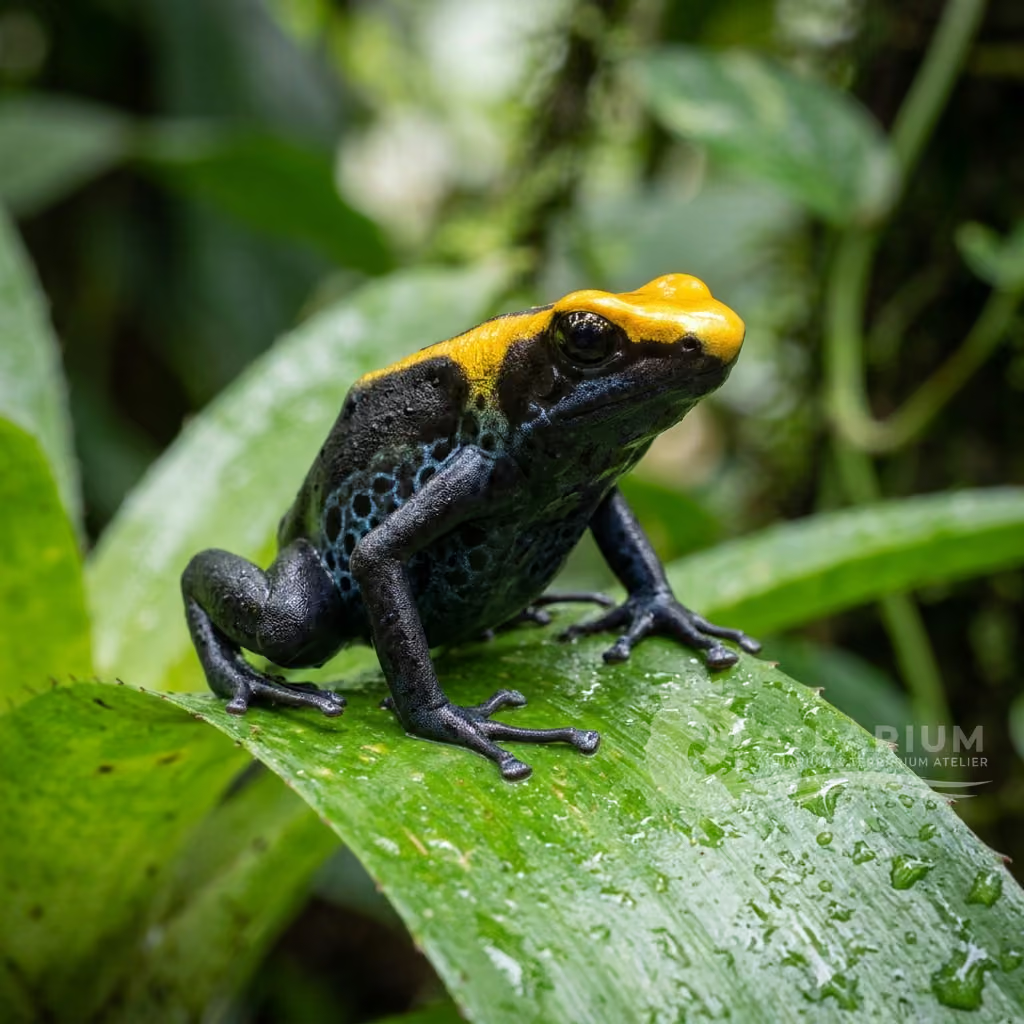
Summers' Poison Frog
Ranitomeya summersi
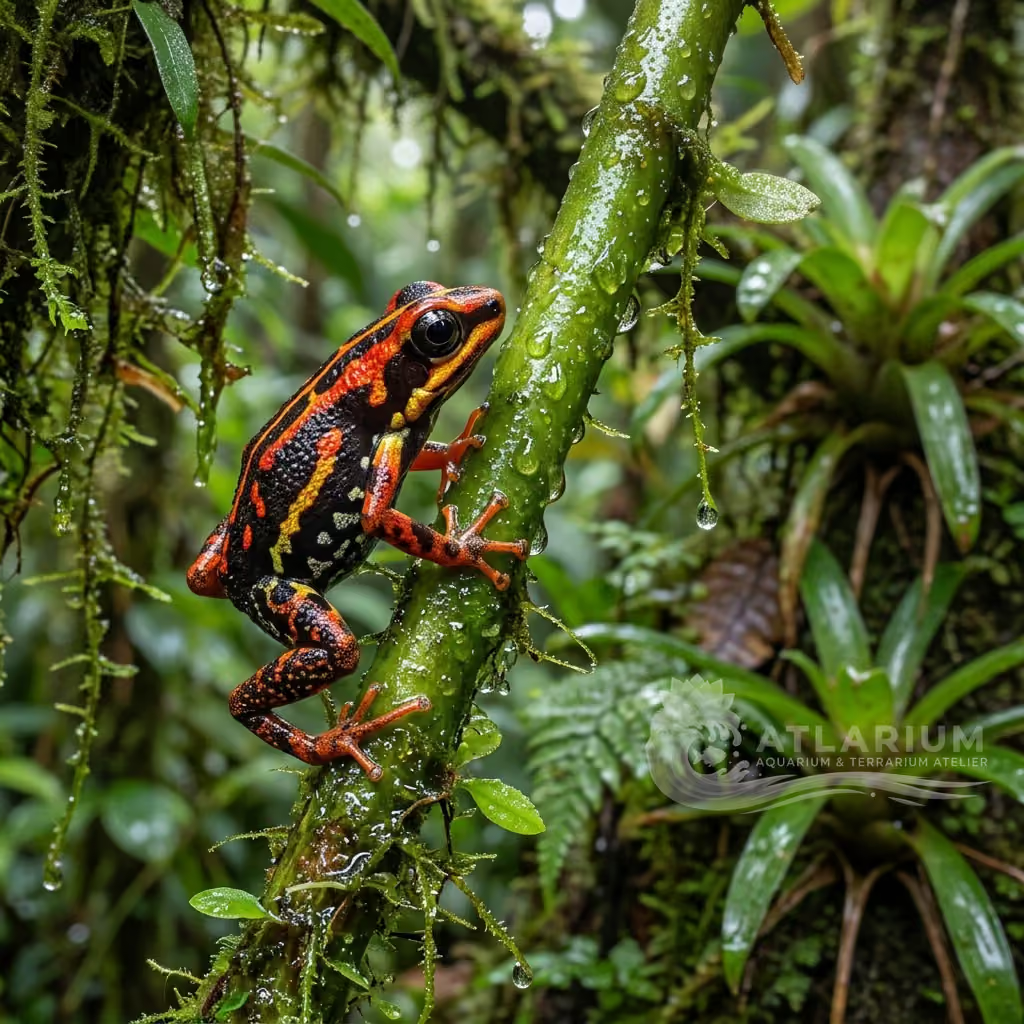
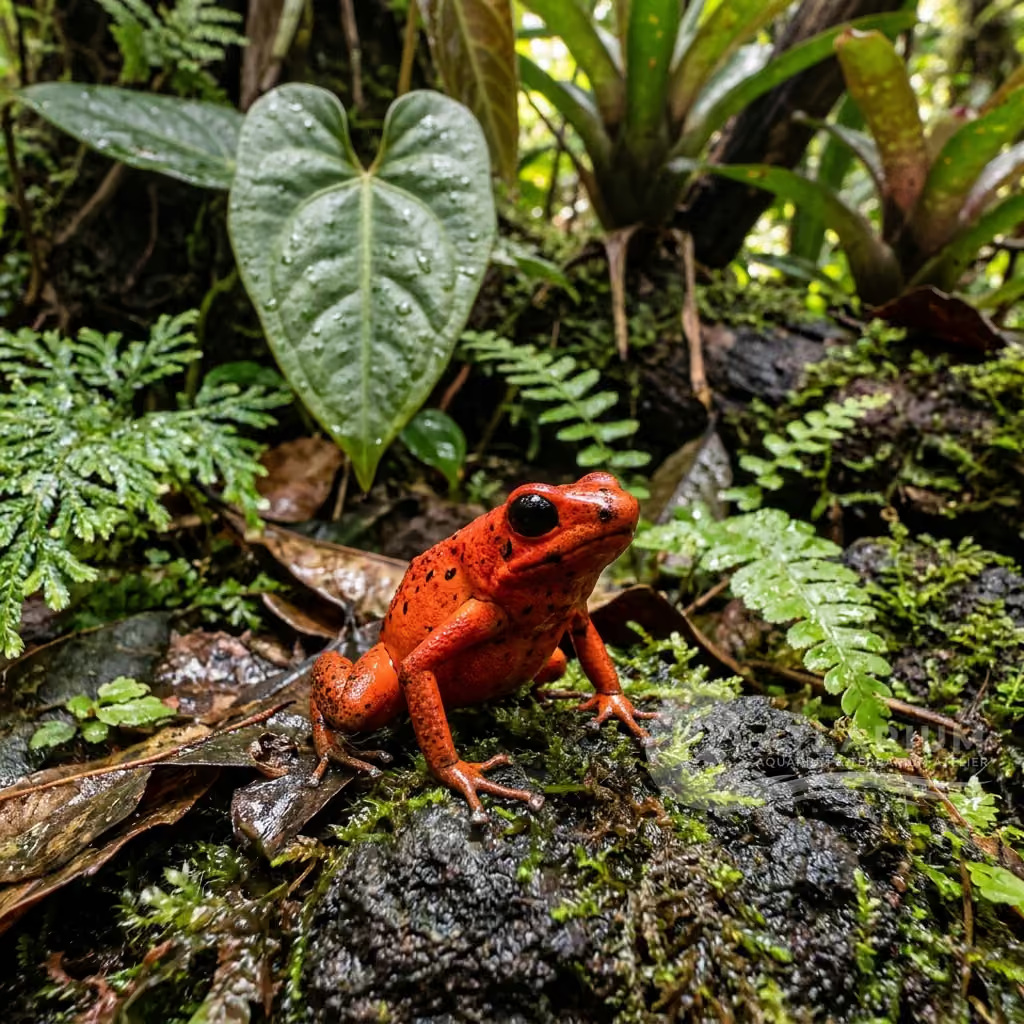
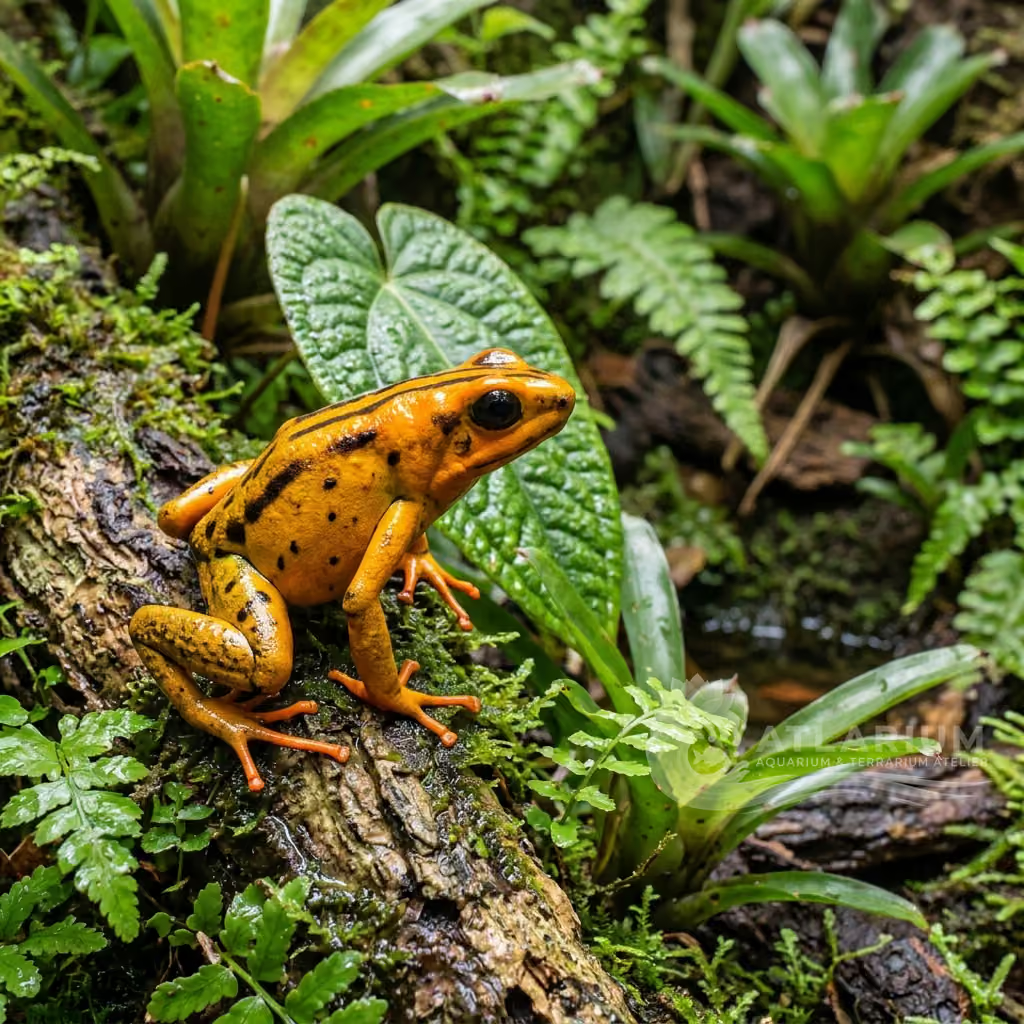
A gorgeous Peruvian poison dart frog decorated with bold orange bands on a black body, ideal for heavily planted humid vivariums.
Environment
Terrestrial
Humidity
80 - 100 %
Day temperature
21 - 26 °C
Night temperature
18 - 21 °C

Species description
Geographical Origin and Habitat: This captivating poison frog is native to central Peru, specifically restricted to the Huallaga River drainage and surrounding areas within the San Martín Region. It primarily inhabits dry tropical forests and pre-montane valleys at altitudes between 200 and 700 meters above sea level. It lives in the shady leaf litter of the forest floor, seeking shelter under fallen logs, rocks, and within the humid leaf axils of epiphytic bromeliads.
Taxonomy and Genetics: Belonging to the Dendrobatidae family and the Ranitomeya genus, this species was formally described in 2008. It is a member of the Ranitomeya fantastica species group. Genetically, it shares a close evolutionary relationship with Ranitomeya fantastica but is distinguished by its unique color pattern and the specific acoustic structure of the male advertisement call.
Behavior and Habits: It is a diurnal and highly active amphibian that spends most of its day foraging for tiny insects in the leaf litter. Despite its terrestrial nature, it is an agile climber, frequently scaling vertical vegetation to search for moisture or transport tadpoles. Males are territorial and defend their calling sites by emitting a soft, buzzing vocalization.
Morphology: This is a small-sized dart frog, with adults reaching a snout-to-vent length of 18 to 21 mm. It features a slender, jet-black body adorned with striking bright orange or yellow-orange bands. These bands encircle the snout, the mid-body, and the hind limbs, creating a dramatic, high-contrast warning coloration pattern.

Care, breeding and tankmates
Terrarium Setup: Requires a vertically oriented or cubic vivarium of at least 45x45x45 cm (18x18x18 inches) for a single pair. The setup must mimic a tropical rainforest, containing live plants such as bromeliads (Neoregelia), creeping figs (Ficus pumila), mosses, and ferns. The substrate should consist of a drainable layer, topped with coconut fiber and a thick layer of leaf litter (oak or Indian almond leaves) for shelter and microfauna propagation.
Lighting and Heating: Full-spectrum LED lighting is required to sustain the growth of live plants. A low-output UVB light (2-5%) is highly recommended to aid in vitamin D3 synthesis. Daytime temperatures should be kept between 24°C and 26°C (75-79°F), with a nighttime drop to 20-22°C (68-72°F). Avoid temperatures exceeding 28°C (82°F) as overheating can be fatal.
Humidity and Hydration: Relative humidity must be kept consistently high, between 80% and 95%. This is achieved using an automatic misting system spraying RO/DI water 2 to 4 times daily. A constant supply of clean water must remain in the axils of the bromeliads, where the frogs rehydrate and lay eggs or deposit their tadpoles.
Feeding and Supplementation: The diet consists entirely of live micro-prey. Flightless fruit flies (Drosophila melanogaster and Drosophila hydei), springtails, aphids, and pinhead crickets are excellent choices. Feeder insects must be dusted with a high-quality calcium and vitamin D3 supplement at least three times a week to prevent metabolic bone disease.
Compatibility: Best kept in pairs or small single-species groups in larger vivariums. Do not cohouse with other Ranitomeya species to prevent hybridization and territorial aggression. Avoid placing them with larger amphibians, reptiles, or aggressive predators.
Health and Common Diseases: Highly susceptible to chytridiomycosis and other fungal or bacterial skin infections if the enclosure is kept dirty or has stagnant water. Lack of proper calcium supplementation leads to metabolic bone disease (MBD). Ensure adequate ventilation through mesh tops while maintaining high humidity.

Geographic origin and distribution
This captivating poison frog is native to central Peru, specifically restricted to the Huallaga River drainage and surrounding areas within the San Martín Region. It primarily inhabits dry tropical forests and pre-montane valleys at altitudes between 200 and 700 meters above sea level. It lives in the shady leaf litter of the forest floor, seeking shelter under fallen logs, rocks, and within the humid leaf axils of epiphytic bromeliads.
Origin
Extra-Amazon South AmericaEast Asia

Amphibian profile
- Diet
- Insectivore
- This species is primarily insectivorous, consuming a wide variety of small invertebrates like crickets, flies, and roaches in the wild. In captivity, a similar varied diet should be provided, dusted regularly with calcium and multivitamin supplements. Appropriately sized live food is essential to trigger their natural feeding response.
- Life expectancy
- 10-15 years
- Adult size
- 2.1 cm
- Lifestyle/Microhabitat
- Arboreal
- Depending on their morphology, they may live exclusively in trees, on the forest floor, or near bodies of water. A properly designed vivarium must provide the correct balance of humidity, temperature, and specific microhabitats. Ample vertical climbing space or deep substrate should be provided accordingly.
- Activity cycle
- Diurnal
- Most are strictly nocturnal, becoming active at dusk to hunt and vocalize under the cover of darkness. This pattern helps them avoid diurnal predators and prevents desiccation from the heat of the sun. During daylight hours, they remain motionless in hidden spots to conserve energy and retain moisture.
- Sociality
- Gregarious
- They exhibit fascinating behaviors that vary depending on their exact habitat, often relying on camouflage to avoid predators. Many display remarkable agility and jumping prowess when startled or while hunting. Social interactions are generally limited to breeding seasons when males become highly territorial.
- Reproduction
- Oviparous
- Breeding typically occurs following heavy rainfall or during the wet season. Males attract females with distinctive vocalizations from specific calling sites near water. Depending on the exact species, eggs may be laid in water, on foliage overhanging water, or in specialized foam nests.
- Toxicity
- Toxic
- Produces toxic skin secretions if disturbed or injured.
- Life stage
- Neotenic
- Aquatic larval development (tadpoles) followed by metamorphosis.
- Handling tolerance
- Display only
- Display only. Like all poison dart frogs, their delicate semi-permeable skin easily absorbs oils and salts from human hands. In captivity, they lose their toxicity due to their diet, but handling should be avoided to prevent stress and injury.
- Brumation
- Not required
- They do not brumate. Being a tropical species from Peru, they require stable, warm temperatures (70-80°F) and high humidity year-round to thrive.
- Molting
- Periodic
- They frequently shed their skin as they grow, which they quickly consume to recycle nutrients. This process is rarely seen by keepers and requires consistent high humidity (80-100%) to occur flawlessly.

Related species
Recommendations grouped by close relatives, companion choices, and similar care.