Generated via Deepmind Antigravity AI
Encyclopaedia
Giant African Land Snail
Lissachatina fulica (Achatina fulica)
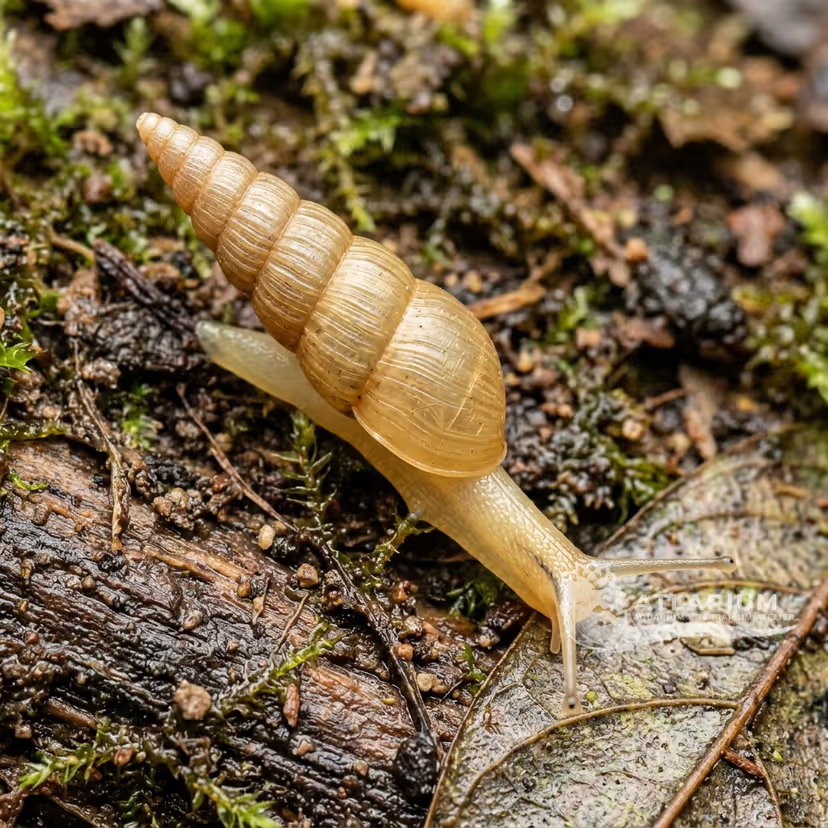
The slow and peaceful giant. The largest and most popular terrestrial snail in the world. Famous for its monstrous dimensions (as large as a shoe), its tapered conical shell, and its incredible ease of reproduction (if you don't freeze the eggs, they will overrun the house in months). Requires humid terrariums and tons of raw vegetables with massive calcium support for the shell.
- Family
- Achatinidae
- Origin
- Africa Orientale
- Origin
- Tropical oceans and reefsExtra-Amazon South AmericaCentral America and CaribbeanNorth AmericaAfrica and Madagascar
- Tank use
- Used in 0 tanks
Share
22 °C - 26 °C
n/a
Terrestrial
75 % - 90 %
15 cm
Description
Geographical Origin and Habitat: Native to the rainforests and coastal regions of East Africa (Kenya, Tanzania). Due to human intervention (often irresponsible), it has become naturalized and turned into a devastating agricultural plague in many tropical Asian and Caribbean countries, devouring entire crops.
Taxonomy and Genetics: Achatinidae family. Currently classified as Lissachatina fulica. Spectacular commercial color morphs exist: the 'Jadatzi' form (blinding pure white body and neon yellow shell), the 'Rodatzi' (dark body, yellow shell) and 'White Jade' (white body, classic brown shell). This species is strictly illegal in the USA and several other countries due to its voracious invasive nature.
Behavior and Habits: Peaceful, nocturnal creatures and unstoppable eaters. They love to move and climb on the terrarium glass in the dark. They are famous for 'Aestivation' (Summer brumation): if conditions become dry or cold, they retreat into the shell, secrete a rigid mucus plug (epiphragm) to seal the opening, and can sleep in this state for months to avoid dying of dehydration.
Morphology and Sexual Dimorphism: They reach 8 inches (20 cm) in conical shell length and considerable weight. The soft body is incredibly extendable and equipped with four tentacles (two large upper ones carrying the primitive eyes and two lower ones for sensory and olfactory purposes). HERMAPHRODITES: there is no sexual dimorphism. Every single snail possesses both male and female reproductive organs. To mate, they exchange genetic material via calcareous 'love darts', and *both* snails will proceed to lay hundreds of eggs.
Care and observations
Terrarium Setup: A large faunabox or horizontal glass terrarium (minimum 24x18 inches for two adults). The CORE is the substrate: requires 4-6 inches (10-15 cm) of coco coir mixed with neutral peat moss (NEVER acidic peat, which would corrode their calcareous shells). They love to bury themselves to sleep during the day. Strictly forbidden to use rocks, stones, or ceramic pots: being clumsy and frequently falling from the glass ceiling, landing on hard rocks will cause fatal cracks to the shell and the animal's subsequent death.
Lighting and Heating: Shade-loving tropical beings. They hate direct light. Room temperatures (72-79°F / 22-26°C) are perfect almost year-round. If kept too hot (>82°F / 28°C) they secrete the plug and aestivate, just as they do if kept too cold (<64°F / 18°C). A small side heat mat is useful in winter to maintain a constant 73°F (23°C). No need for UVB light.
Humidity and Hydration: Absolute soaking wet conditions. 75-90% humidity. Mist the enclosure heavily every evening. The soil must be constantly damp. A small water bowl can be provided, but it MUST be extremely shallow and made of soft plastic/silicone (snails can easily drown in 1 inch of water if trapped upside down). Many owners give them periodic baths under a lukewarm faucet (which they adore, stretching their bodies to the absolute limit).
Feeding and Supplementation: The ultimate organic 'garbage disposals'. Strict but ravenous vegetarians (they scrape food using a rough tongue equipped with microscopic teeth called a 'Radula'). Provide lettuce, raw zucchini, sweet potatoes, grated carrots, apples, pears daily. THE RULE OF LIFE: CUTTLEBONE IS MANDATORY. They must have constant, uninterrupted access to gigantic blocks of calcium carbonate (whole bird cuttlebone blocks or calcium powder mounds). Without it, the shell will not grow or will grow fragile, paper-thin, and will shatter, leading to lethal evisceration.
Compatibility and Cohabitation: Very sociable, they love the proximity of their own kind. Keeping at least two is recommended. EXTREME CAUTION WITH BREEDING: they will lay clusters of hundreds of yellowish, round eggs underground every few weeks. The owner HAS THE MORAL AND LEGAL DUTY to sift the soil weekly to find the eggs and *freeze* them in the freezer for 48 hours before throwing them in the trash. NEVER release live snails or eggs into the wild (a massive environmental crime).
Health and Common Diseases: Falls from the lid: shell breaks. If it's a small hole, the shell will regrow (if fed plenty of cuttlebone). If the apex (the tip of the cone) breaks exposing the internal organs, the situation is critical. Deep Retraction Syndrome: the snail retreats into the shell so deeply it disappears from sight; often fatal, indicating prolonged incorrect parameters (cold/dryness) or a diet lacking nutrients/calcium.
Terrestrial invertebrate profile
- Diet
- Erbivoro
- Humidity
- 75 % - 90 %
- Temperature
- 24 °C
- Sociality
- Gregarious
- Venom level
- None
- Substrate depth
- 15 cm
Image gallery
Licensed images linked to the species or, when marked, to the closest representative taxon.
Generated via AI