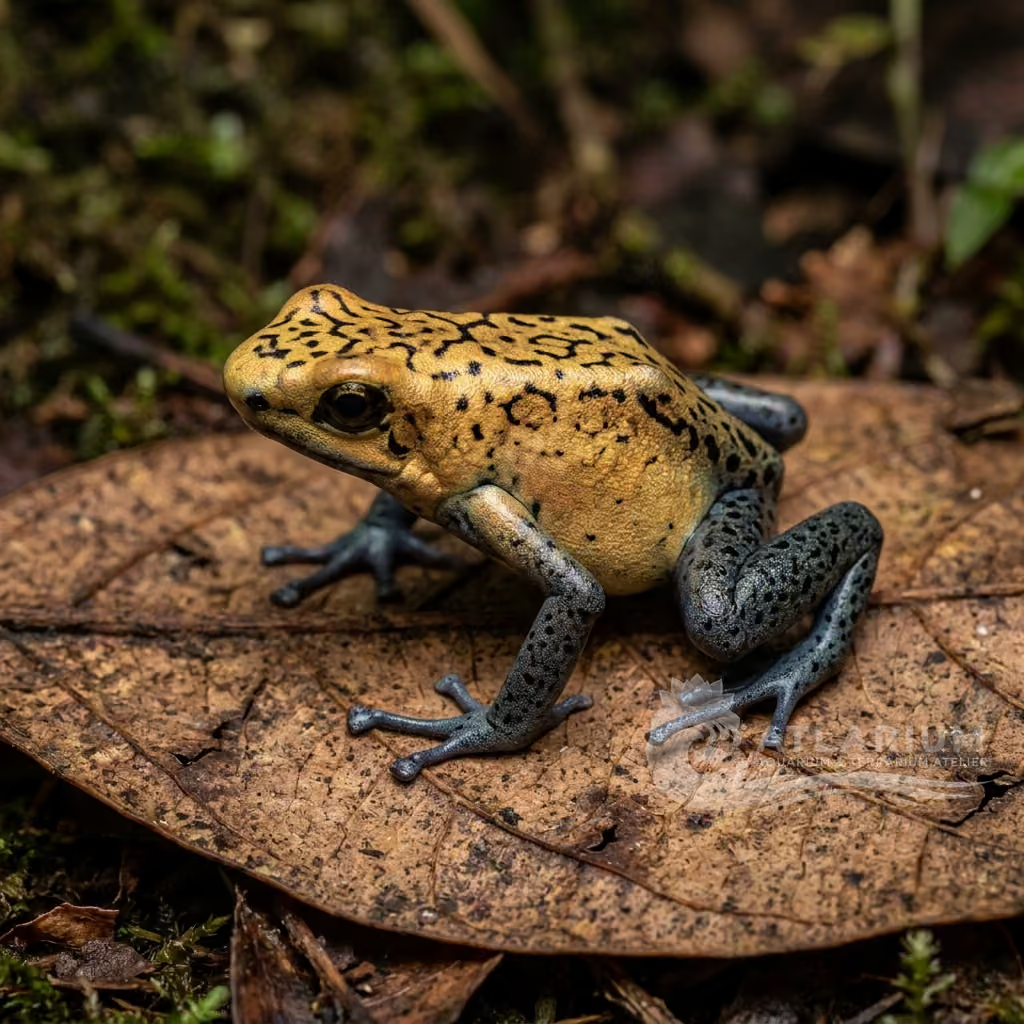
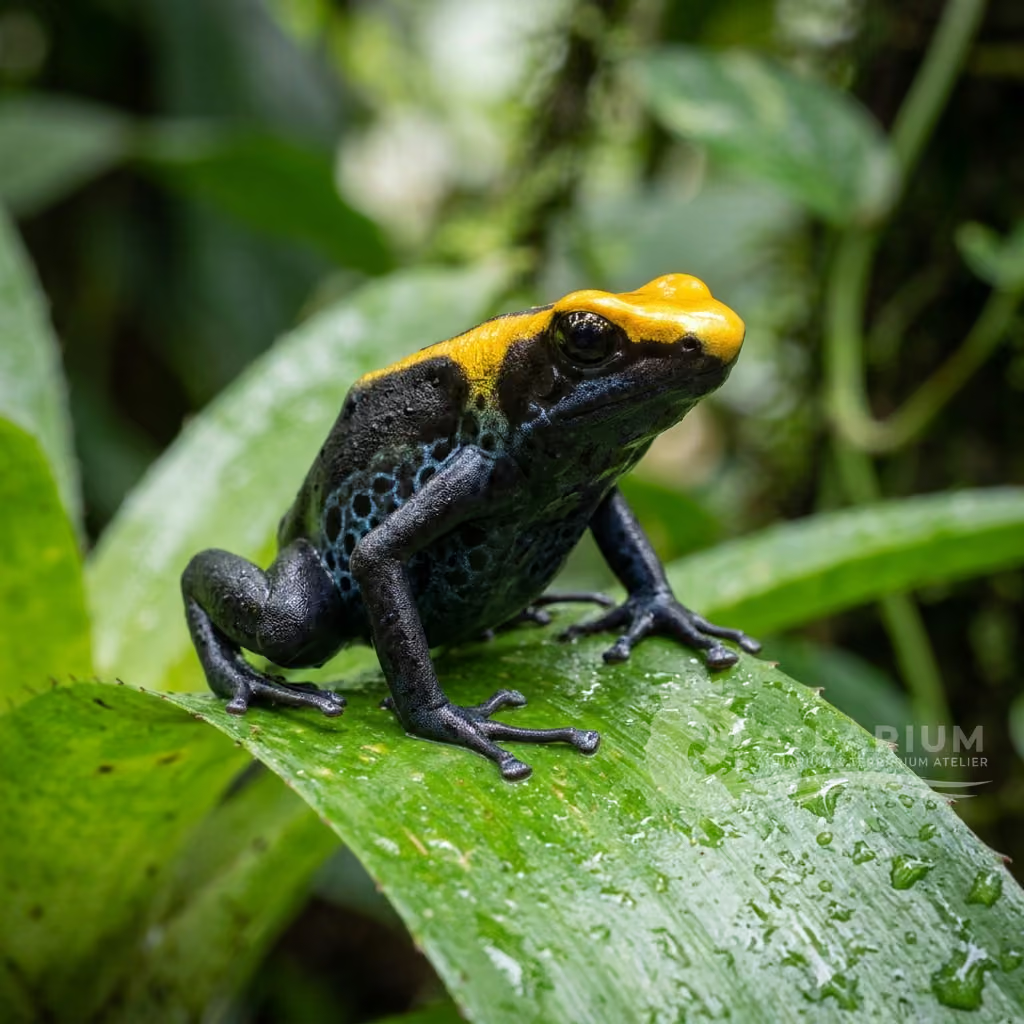
Darwin-Wallace Poison Frog
Epipedobates espinosai
A recently reclassified species bearing the names of the two fathers of evolutionary theory. It stands out for its darker, slightly bulkier build compared to its slender cousins.
Environment
Terrestrial
Humidity
80 - 100 %
Day temperature
22 - 26 °C
Night temperature
20 - 22 °C

Species description
Geographical Origin and Habitat: Endemic to the western Andean slopes and foothill forests of northwestern Peru and southwestern Ecuador. This terrestrial species inhabits the humid leaf litter of the forest floor, living among decaying organic matter, root networks, and damp soils under dense canopy shade.
Taxonomy and Genetics: A small, robust poison frog, with adults reaching 2 to 2.5 cm in length. Coloration is dark and cryptic, featuring a rich mahogany or dark coffee-brown body with variable cream, pale yellow, or white stripes along the flanks and back. The belly is lighter and smooth.
Behavior and Habits: Highly active, diurnal, and inquisitive frogs. Males display elaborate courtship behaviors, emitting a distinct high-pitched metallic trill. Parental care is highly developed: after eggs are laid in damp, sheltered terrestrial spots, the male carries the hatched tadpoles on his back to deposit them in water-filled leaf axils.
Morphology: Sexual dimorphism is visible in adult specimens. Gravid females are noticeably rounder and larger. Males are smaller, more slender, and exhibit darker throat coloration associated with their vocal sacs, which expand during calling.

Care, breeding and tankmates
Terrarium Setup: Best housed in a horizontal, bioactive terrarium (minimum 45x45x45 cm for a small group). Use a deep layer of sterilized oak or magnolia leaf litter over a well-draining clay substrate to prevent waterlogging. Provide low hides like coconut huts, cork bark, and live plants such as bromeliads for tadpole deposition.
Lighting and Heating: Prefers moderate temperatures reflective of Andean foothills, ideally 24-25°C during the day and dropping to 20-21°C at night. Temperatures above 28°C can be fatal. Provide low-intensity LED lighting and a 2-5% UVB lamp to support plant growth and prevent metabolic bone disease.
Humidity and Hydration: Maintain high humidity levels between 80% and 90%. Excellent ventilation is critical to prevent stagnant, bacteria-heavy conditions. Lightly mist the enclosure daily using reverse osmosis or declorinated water. They absorb water through their skin and do not require deep water dishes.
Feeding and Supplementation: Requires tiny live prey due to their small mouth size. Offer wingless fruit flies (Drosophila melanogaster), springtails, and micro-crickets. Dust all feeders with a high-quality calcium and vitamin D3 supplement 2-3 times a week to ensure healthy bone development.
Compatibility: Exceptionally social and can be housed in small groups or harems. Unlike some other poison frogs, intraspecific aggression is minimal, though ample hiding spots must be provided. Keep housed in species-specific tanks to prevent hybridization with related species (like E. tricolor).
Health and Common Diseases: Never handle with bare hands, as human skin oils, soaps, and body heat can damage their permeable skin and lead to systemic toxicity. They are susceptible to metabolic bone disease (MBD) and bacterial infections (like red leg syndrome) if kept in unhygienic or waterlogged conditions.

Geographic origin and distribution
Endemic to the western Andean slopes and foothill forests of northwestern Peru and southwestern Ecuador. This terrestrial species inhabits the humid leaf litter of the forest floor, living among decaying organic matter, root networks, and damp soils under dense canopy shade.
Origin
Extra-Amazon South AmericaNorth America

Amphibian profile
- Diet
- Insectivore
- Eat bugs. Feed daily. Add vitamins.
- Life expectancy
- 5-12 years
- Adult size
- 1.6 cm
- Lifestyle/Microhabitat
- Terrestrial
- Need high humidity. Forage constantly. Stable temps.
- Activity cycle
- Diurnal
- Strictly diurnal. Morning peaks. 12h cycle.
- Sociality
- Gregarious
- Very active. Males defend. Add barriers.
- Reproduction
- Oviparous
- Breed in rain. Males call. Tads swim.
- Toxicity
- Harmless
- The Epipedobates darwinwallacei is known to possess mild skin toxins in the wild, which provide a basic level of defense against natural predators. Like other dart frogs, they derive these defensive compounds from their wild insect diet, meaning captive-bred specimens are completely non-toxic. While they pose no danger to humans, their skin remains incredibly sensitive to environmental contaminants. Always wash your hands thoroughly and use powder-free gloves if contact is necessary. This ensures that no harmful residues are transferred to the amphibian during routine maintenance.
- Life stage
- Metamorphosis
- For Epipedobates darwinwallacei, the life cycle begins with a small clutch of eggs laid in a dark, humid terrestrial or phytotelm (plant water) location. Once the eggs develop and hatch, the resulting tadpoles are meticulously transported on the back of a parent to a suitable rearing pool. The tadpoles develop in these small bodies of water over the course of two to three months. Following metamorphosis, tiny, fully-formed froglets emerge onto land, requiring consistently high humidity to survive. These froglets are extremely small and must be fed large quantities of microscopic prey, such as springtails, until they grow larger.
- Handling tolerance
- Display only
- Handling of Epipedobates darwinwallacei should be strictly avoided unless absolutely necessary for health inspections or transferring enclosures. Like all amphibians, they possess highly permeable, sensitive skin that quickly absorbs toxins, salts, and oils from human hands, which can be fatal. If a transfer is required, the safest and least stressful method is to gently coax the frog into a clean plastic catch cup rather than using your hands. If physical contact is entirely unavoidable, you must wear powder-free nitrile gloves thoroughly moistened with dechlorinated water. Even then, the interaction should be kept as brief as possible to minimize the severe physiological stress handling causes.
- Brumation
- Not required
- Originating from consistent tropical or subtropical environments, the Epipedobates darwinwallacei does not undergo a true brumation period. In their natural habitat, they experience relatively stable temperatures year-round, with environmental shifts primarily driven by wet and dry seasons rather than extreme cold. In captivity, it is critical to maintain steady, optimal temperatures and high humidity levels throughout the entire year. Exposing these amphibians to significant temperature drops can severely compromise their immune system and lead to respiratory or digestive failures. While a slight reduction in humidity and a few degrees of temperature drop can simulate a dry season to cycle breeders, severe cooling must be completely avoided.
- Molting
- Periodic
- Like all amphibians, the Epipedobates darwinwallacei undergoes a regular molting process to shed its outer layer of skin as it grows and to maintain skin health. This shedding process occurs frequently but is usually very rapid and highly secretive, meaning keepers rarely witness it occurring. The frog will typically contort its body, repeatedly open and close its mouth, and use its limbs to push the loosened skin forward over its head. Once the shed is removed, the frog will almost always consume the old skin to recycle valuable nutrients and proteins. Maintaining ideal humidity levels in the terrarium is paramount, as dry conditions can cause the skin to adhere, leading to deadly infections or restricted blood flow.

Related species
Recommendations grouped by close relatives, companion choices, and similar care.