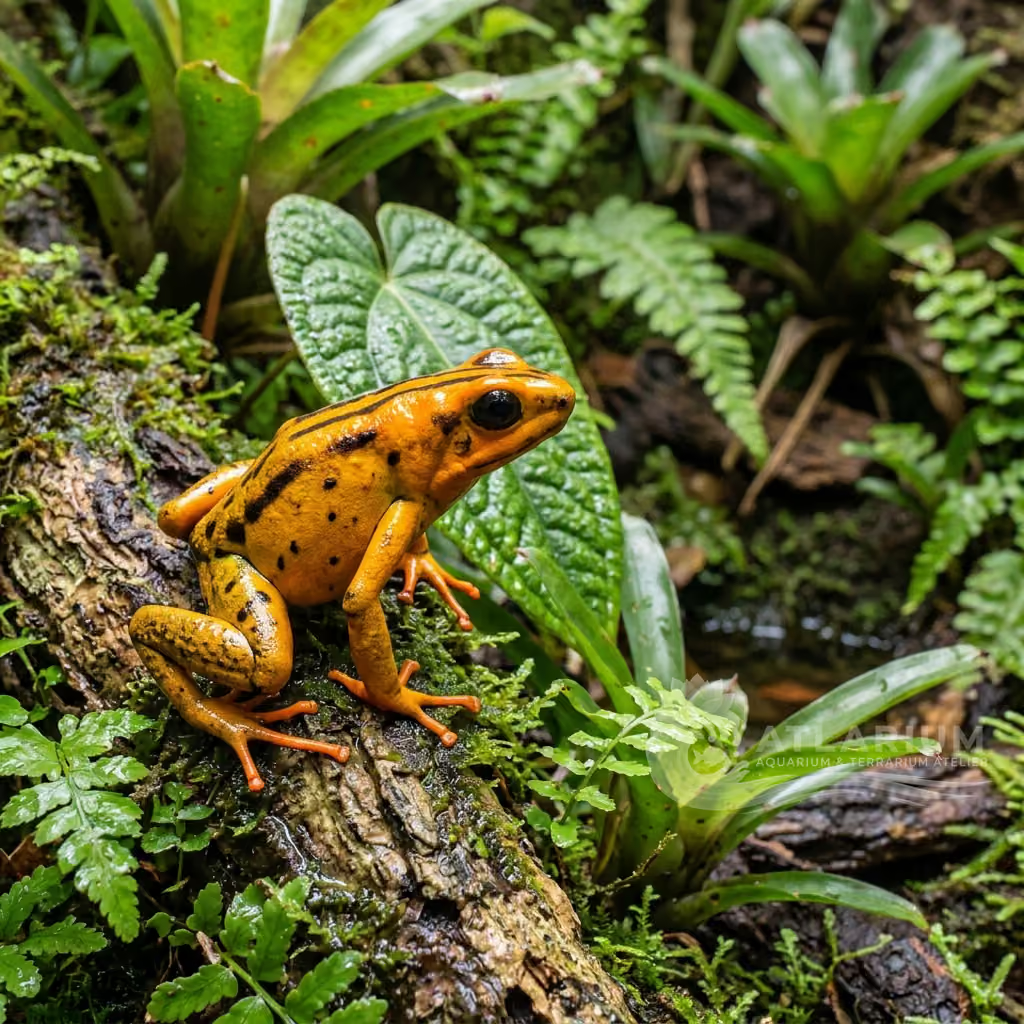
Orange Golden Poison Frog
Phyllobates terribilis
A brilliant orange color morph of the most toxic frog in the world in the wild. In captivity, it loses its toxicity and becomes a hardy, active, and gregarious amphibian ideal for bioactive setups.
Environment
Terrestrial
Humidity
70 - 100 %
Day temperature
21 - 26 °C
Night temperature
18 - 21 °C
UVB
Ferguson 2
UVI
0.7 - 1 UVI

Species description
Geographical Origin and Habitat: This extraordinary color morph is native to the humid tropical rainforests of the Pacific coast of Colombia, specifically within the Chocó department. It inhabits the dense forest floor, characterized by a thick accumulation of wet leaf litter, fallen branches, and a level of relative humidity that remains constantly near saturation under stable temperatures.
Taxonomy and Genetics: Belonging to the Dendrobatidae family and the genus Phyllobates. The "Orange" variant is a stable geographical color morph or selective strain, defined by the absence of the typical bright yellow coloration in favor of a deep, vivid metallic orange. The inheritance of this pigmentation is controlled by genetic pathways regulating carotenoid deposition in the dermal layers.
Behavior and Habits: Unlike many other poison dart frogs, this species is remarkably bold, active during the day (diurnal), and shows minimal shyness. They are highly social and gregarious, living in cohesive groups. Males produce a loud, melodious, trill-like call to establish territories and attract females during the breeding season.
Morphology: It is one of the largest species of poison dart frogs, reaching a snout-to-vent length of 45-50 mm at adulthood. It has a robust, stocky body covered in a uniform metallic orange skin, except for dark adhesive discs on the toes. The eyes are large, black, and prominent, offering excellent binocular vision. Sexual dimorphism is subtle, with adult females being slightly larger and rounder than males.

Care, breeding and tankmates
Terrarium Setup: Requires a horizontally oriented terrarium measuring at least 60x40x40 cm for a pair or a small group. The ideal substrate consists of a base of coco coir topped with a thick layer of dried oak or magnolia leaves, sphagnum moss, and live plants such as bromeliads, pothos, and ferns. Provide thick branches and cork bark flats to create visual barriers and dry resting areas.
Lighting and Heating: A standard 12-hour photoperiod is recommended. Use a plant-growth LED along with a low-output 2% or 5% UVB source to assist with vitamin D3 synthesis. Daytime temperatures should range between 22°C and 25°C, with a gentle nighttime drop to 18-20°C. Ambient temperatures exceeding 27°C can be rapidly fatal.
Humidity and Hydration: Humidity must be kept constantly high, between 80% and 95%. Installing an automatic misting system configured to spray RO or declorinated water 2-3 times daily is highly recommended. A very shallow, clean water dish is necessary, although they absorb most moisture through their specialized pelvic patch from the environment.
Feeding and Supplementation: They are voracious predators. In captivity, they must be fed exclusively live foods of appropriate sizes, including flightless fruit flies (Drosophila hydei and melanogaster), pinhead crickets, springtails, and pea aphids. Because captive-bred individuals lack the dietary source of wild alkaloids, they are completely non-toxic. Dust all feeders with calcium, vitamin D3, and a multivitamin supplement at every feeding.
Compatibility: Exceptionally peaceful and social. They thrive when kept in same-species groups, provided there is ample space and multiple hiding spots. They should never be housed with other dendrobatid species to prevent hybridization or stress from interspecific competition.
Health and Common Diseases: The most common issue is thermal stress caused by overheating. They are also highly susceptible to fungal infections like chytridiomycosis and bacterial dermatological infections resulting from poor sanitation. Adequate terrarium ventilation coupled with high humidity is vital to prevent stagnant air conditions.

Geographic origin and distribution
This extraordinary color morph is native to the humid tropical rainforests of the Pacific coast of Colombia, specifically within the Chocó department. It inhabits the dense forest floor, characterized by a thick accumulation of wet leaf litter, fallen branches, and a level of relative humidity that remains constantly near saturation under stable temperatures.
Origin
Selective breeding and cultivarsExtra-Amazon South America

Amphibian profile
- Diet
- Insectivore
- They are voracious eaters, preying on a wide variety of insects, including crickets, fruit flies, and small roaches. In captivity, their diet should be dusted with high-quality vitamin and calcium supplements at every feeding. They require larger prey items compared to smaller dart frog species.
- Life expectancy
- 10-15 years
- Adult size
- 5.5 cm
- Lifestyle/Microhabitat
- Terrestrial
- Primarily terrestrial, they require a spacious terrarium with plenty of floor space, leaf litter, and hiding spots. They inhabit lowland tropical forests and thrive in warm, humid conditions. A shallow water feature or heavy misting is necessary for hydration.
- Activity cycle
- Diurnal
- Diurnal and highly active throughout the day. They spend much of their time foraging on the forest floor or terrarium substrate. Providing a bright, well-lit enclosure encourages natural behaviors.
- Sociality
- Gregarious
- They are incredibly bold, active, and social frogs that make excellent display animals. They do well in groups, although minor squabbles over food may occur. Wild specimens are the most toxic vertebrates on earth, but captive-bred individuals lack this toxicity.
- Reproduction
- Oviparous
- Breeding involves the male calling to attract a female, followed by the female laying eggs on a smooth surface like a leaf or petri dish. The male guards and hydrates the eggs until they hatch. He then carries the tadpoles on his back to a larger body of water where they develop.
- Toxicity
- Harmless
- While wild specimens are notoriously lethal due to batrachotoxin sequestered from their specific natural diet, captive-bred "Orange" morphs are completely harmless. Deprived of the unique alkaloid-rich insects found in their native Colombian habitat, they are biologically incapable of synthesizing their famous defensive toxins. They are perfectly safe for hobbyists to keep and pose no threat to humans or pets.
- Life stage
- Metamorphosis
- The aquatic tadpoles are robust and omnivorous, requiring clean water and a varied diet of fish flakes or specialized tadpole food to metamorphose successfully. Juvenile froglets grow very quickly, demanding a constant supply of calcium-dusted insects to support their rapid skeletal development. Adult frogs are large, terrestrial, and display a brilliant, uniform orange coloration, commanding attention within their enclosure.
- Handling tolerance
- Display only
- Because their semi-permeable skin is highly sensitive to chemical residues, salts, and oils, direct handling with bare hands should be strictly avoided. Even minor handling can cause immense stress and compromise their protective mucous layer, leaving them susceptible to dangerous bacterial infections. The only safe way to handle them is by coaxing them into a clean plastic cup or using damp, powder-free nitrile gloves for brief, necessary transfers.
- Brumation
- Not required
- They are endemic to the consistently hot and humid Chocó rainforest and lack any biological mechanism for brumation or surviving cold temperatures. Their vivarium must be kept consistently warm year-round, with ideal daytime temperatures ranging from 74°F to 80°F. Exposing these tropical amphibians to sudden or prolonged temperature drops will result in severe immune suppression and likely fatality.
- Molting
- Periodic
- Frequent shedding is necessary for these frogs to accommodate their rapid growth and to keep their highly permeable skin clean and functional. The frog will contort its body and use its limbs to push the old skin forward, ultimately consuming it to recycle valuable nutrients. It is absolutely essential to maintain high humidity in the vivarium to prevent the shedding skin from drying out and adhering to the frog, which can cause severe health issues.

Related species
Recommendations grouped by close relatives, companion choices, and similar care.