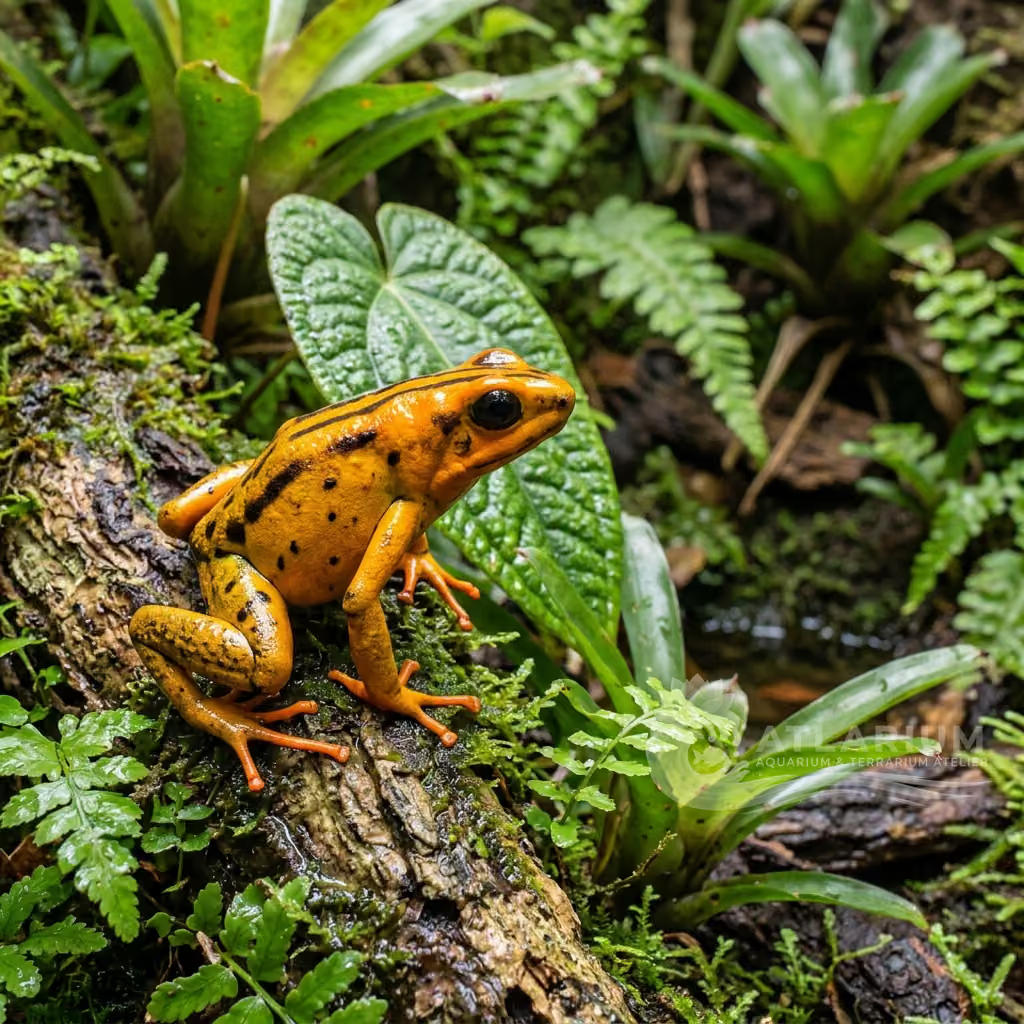
Yellow-banded Dart Frog "Standard"
Dendrobates leucomelas
The yellow-banded poison dart frog is bold, active, and semi-arboreal. Known for its bright yellow and black bands, it thrives in groups within a tall, well-planted terrarium.
Environment
Terrestrial
Humidity
75 - 85 %
Day temperature
24 °C
Night temperature
20 °C
Ambient temperature
24 °C
Minimum enclosure
>= 45 L
UVB
Ferguson 1-2
UVI
0 - 1 UVI

Species description
Geographical Origin and Habitat: They mainly inhabit the north of South America (southern Venezuela, Guyana, parts of northern Brazil, and eastern Colombia). They adapt to humid rainforests but are very frequently found in dry seasons or gallery forests, demonstrating a unique resistance to periods of aridity. They are very agile at climbing and love to perch on the large leaves of low trees.
Taxonomy and Genetics: Family Dendrobatidae. Known universally as the Yellow-banded Poison Frog or Bumblebee Dart Frog. Compared to other species, they connect genetically a smaller number of morphs: the "Standard" form is dominant in nature, accompanied by niche variants recently discovered such as the "Fine Spot" or the "British Guyana", distinguishable by a more fragmented reticulated pattern.
Behavior and Habits: Exuberant, bold, and highly visible frogs in the terrarium. They love the front view and regularly climb the glass and backgrounds. The male is one of the most tireless singers in the family: his mating call, a prolonged and high-pitched trill that resembles the song of a canary, can be heard even in other rooms of the house and is often triggered by rain or misting.
Morphology: They have an average size of about 3.5 - 4 cm. They wear an unmistakable aposematic warning coloration: intense yellow or orange bands or wide patches distributed over an intense jet-black base color. With age, the black often tends to break up the yellow, creating small islands and spots on the back. Sex is difficult to determine visually; the male is recognized almost exclusively by the vocal sac which becomes dark and wrinkled on the chin.

Care, breeding and tankmates
Terrarium Setup: They must have vertical space for climbing; a 45x45x60h cm terrarium is excellent for a small group. Install large diagonal branches, textured 3D backgrounds or cork/xaxim walls, and bromeliads high up to allow them to dominate the environment. Despite their arboreal tendency, the bottom always requires a classic bioactive oak leaf litter to house springtails.
Lighting and Heating: They appreciate a slightly higher temperature than other dendrobates: they tolerate 24-27°C well, but do not push beyond it. Exposure to lighting is fundamental for them, as they are bold diurnal animals. A zonal low-intensity UVB lighting is highly recommended to mimic open understory conditions and optimize D3 absorption.
Humidity and Hydration: They are more tolerant of variations and modest drops in humidity. The target humidity is 75-85%. It is often recommended to provide a slightly drier period during winter to simulate the dry season, and then increase misting in spring: this strong seasonal change acts as a powerful reproductive trigger.
Feeding and Supplementation: Voracious sight predators. They hunt by launching their tongue lightning-fast at Drosophila melanogaster and hydei. Given their size and boldness, they also attack slightly larger prey such as small crickets (pinheads) or pea aphids. It is essential to dust every meal with supplement powders, paying attention to the expiration dates of multivitamin products (which lose efficacy 6 months after opening).
Compatibility: Excellent frogs for social colonies. They often cohabitate wonderfully in groups of 4-6 individuals in the same terrarium (as long as the size allows), forming harmonious dynamics. Males and females can live in a group with very little aggression; males will limit themselves to singing contests to attract females, offering an invaluable behavioral display.
Health and Common Diseases: Rather robust and suitable even for beginners, as long as strict hygienic standards are respected (no thermal stress and never handle with bare hands). Obesity must be monitored closely: in a group, some alpha females tend to consume a disproportionate amount of prey. Feeding in different areas of the terrarium helps prevent a single individual from monopolizing all available food and developing hepatic lipidosis.

Geographic origin and distribution
They mainly inhabit the north of South America (southern Venezuela, Guyana, parts of northern Brazil, and eastern Colombia). They adapt to humid rainforests but are very frequently found in dry seasons or gallery forests, demonstrating a unique resistance to periods of aridity. They are very agile at climbing and love to perch on the large leaves of low trees.
Origin
Selective breeding and cultivarsAmazon, Orinoco, and Guianas

Amphibian profile
- Diet
- Insectivore
- Their diet consists mainly of fruit flies, springtails, and other very small live insects. Regular dusting with calcium and multivitamin supplements is necessary to prevent nutritional deficiencies. They have an excellent appetite and will actively pursue fast-moving prey. Feeding small amounts daily helps mimic their natural foraging habits.
- Life expectancy
- 10-15 years
- Adult size
- 5 cm
- Lifestyle/Microhabitat
- Arboreal
- Although they are primarily terrestrial frogs, they are surprisingly adept climbers. It is common to find them scaling backgrounds, wood branches, and broad-leaved plants. Their habitat should incorporate both a deep leaf litter floor and vertical climbing opportunities. They require high humidity and plenty of microclimates to regulate their temperature effectively.
- Activity cycle
- Diurnal
- Being diurnal, they exhibit their most energetic behaviors during the daylight hours. They are particularly active in the early morning and late afternoon when humidity is highest. A strong, full-spectrum lighting schedule encourages natural activity and breeding behaviors. During the night, they will seek out secure spots among the foliage to sleep.
- Sociality
- Gregarious
- They are generally bold and make excellent display frogs in the terrarium. Known to be highly active, they will utilize all levels of the enclosure, constantly exploring their surroundings. Groups can be kept together successfully, though minor squabbles over feeding or territory may occur. Their loud, trilling call is a unique characteristic that adds a lively element to the vivarium.
- Reproduction
- Oviparous
- Males will call loudly from elevated perches to attract females during the breeding season. Eggs are usually laid on broad leaves or in smooth artificial deposition sites like petri dishes. The male guards the eggs and later carries the hatched tadpoles on his back to water sources. Providing numerous water-filled bromeliads or small cups is essential for successful tadpole rearing.
- Toxicity
- Toxic
- While wild individuals possess potent lipophilic alkaloid toxins derived from their specific natural diet, captive-bred specimens are completely harmless and non-toxic. The lack of dietary alkaloid precursors in captivity prevents them from synthesizing these defensive chemicals. However, despite their lack of toxicity in captivity, their bright warning coloration (aposematism) remains a stunning display of evolutionary adaptation. Basic hygiene practices should still be observed after terrarium maintenance.
- Life stage
- Neotenic
- The life cycle begins with eggs laid in moist, terrestrial locations, which develop into aquatic tadpoles over a period of a few weeks. The adult frog actively transports the newly hatched tadpoles on its back to small pools of water, such as bromeliad axils, to complete their development. Metamorphosis into tiny froglets takes several months, and the resulting adults can live for 10 to 15 years or more under exceptional captive care.
- Handling tolerance
- Display only
- Direct physical handling should be strictly avoided due to the extreme fragility of their delicate, semi-permeable skin. Human skin oils, salts, and standard household chemicals can easily be absorbed and cause severe, life-threatening stress or toxicity to the frog. When transferring individuals, it is highly recommended to gently coax them into a clean, smooth container rather than grasping them by hand.
- Brumation
- As tropical amphibians originating from consistently warm and humid equatorial environments, this species does not undergo brumation or hibernation. They require stable, warm temperatures and high humidity year-round to maintain their metabolic processes and overall health. Any significant or prolonged drop in temperature can compromise their immune system and lead to serious health complications or death.
- Molting
- Periodic
- Like all healthy amphibians, they shed their outer layer of skin on a regular basis, a process that occurs more frequently during periods of rapid growth. The shedding process is remarkably quick and involves the frog contorting its body to loosen the skin before pulling it forward and consuming it. This natural behavior helps the animal recycle vital nutrients and is often completed in a secluded area, making it rarely observed by keepers.

Related species
Recommendations grouped by close relatives, companion choices, and similar care.