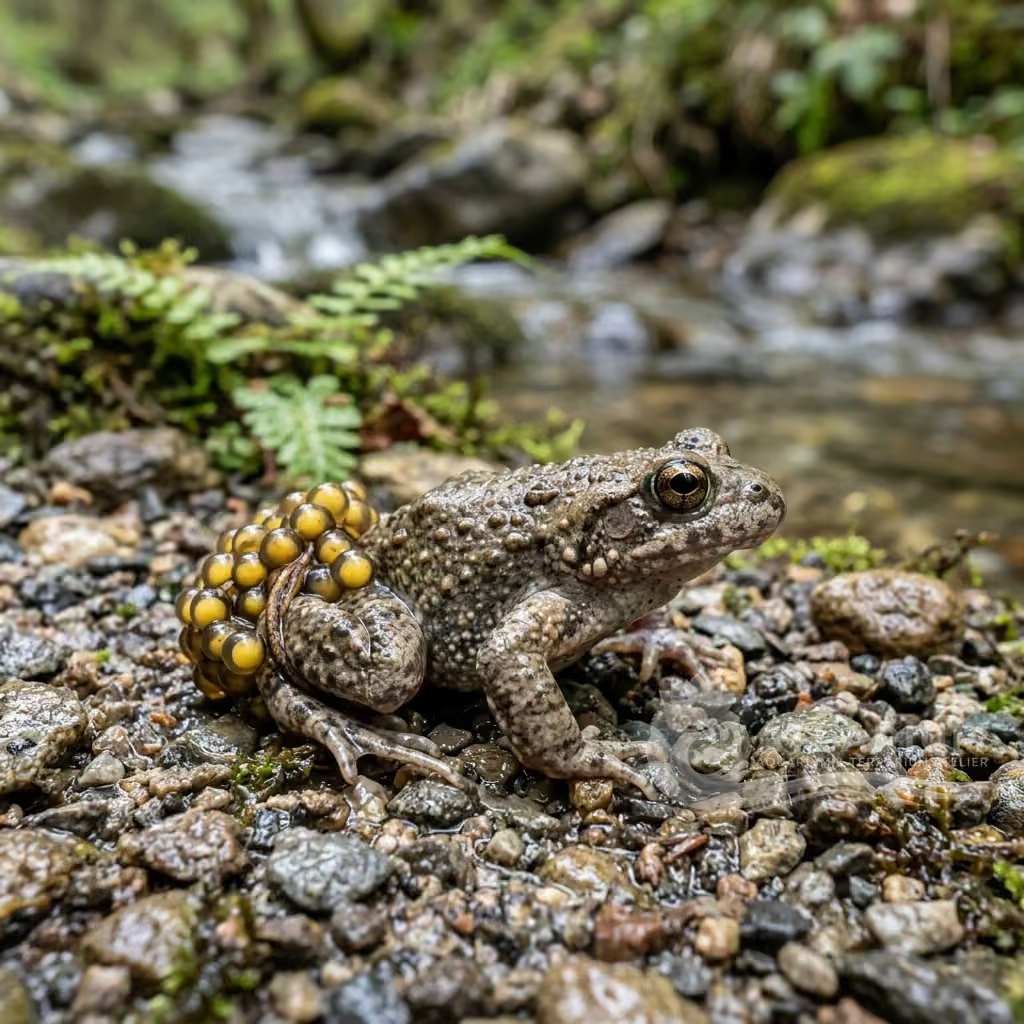
Common Spadefoot Toad
Pelobates fuscus
The Common Spadefoot Toad is a nocturnal European amphibian featuring vertical pupils. It is famed for its sharp metatarsal spades, allowing it to rapidly reverse-burrow out of sight into the soil.
Environment
Terrestrial
Humidity
50 - 70 %
Day temperature
18 - 24 °C
Night temperature
12 - 18 °C

Species description
Geographical Origin and Habitat: Pelobates fuscus is widely distributed across Central and Eastern Europe, extending into Western Asia. It inhabits open landscapes such as grasslands, agricultural fields, heaths, and sandy pine forests. The species is strictly dependent on loose, sandy, or loamy soils, avoiding hard clay or stony ground where digging would be impossible.
Taxonomy and Genetics: Belonging to the family Pelobatidae and the genus Pelobates, this species shows distinct evolutionary lineages. Some eastern populations are sometimes classified as subspecies, such as Pelobates fuscus fuscus and Pelobates fuscus vespertinus. Genetic research indicates ancient adaptations associated with their specialized fossorial lifestyle.
Behavior and Habits: Exclusively nocturnal and fossorial. During the day, it remains buried deep in the ground (up to one meter) to prevent desiccation and avoid predators, emerging only on humid nights to hunt. When threatened, it produces a strong, garlic-scented skin secretion to deter predators and can emit a loud, screaming alarm call.
Morphology: A medium-sized toad, males grow up to 5-6 cm while females can reach 8 cm. It features a large head with prominent eyes and vertical, cat-like pupils. Its defining physical feature is the large, spade-like, yellowish metatarsal tubercle on the inner side of its hind feet, used to dig backward into the soil. The skin is smooth with grey-brown marbled patterns.

Care, breeding and tankmates
Terrarium Setup: A horizontal enclosure of at least 80x40x40 cm is required for a pair. The most critical component is a deep substrate layer of 15-20 cm, composed of organic topsoil, coco coir, and play sand. This mixture must be kept damp to allow burrowing. Provide cork bark hides, leaf litter, and sturdy plants on the surface.
Lighting and Heating: Prefers cool to temperate conditions. Daytime temperatures should be kept between 20°C and 23°C, with a nighttime drop to 16-18°C. Do not use strong basking bulbs. A low-intensity 2% UVB light can be provided on a 10-hour cycle, ensuring there are plenty of dark, shady retreats throughout the enclosure.
Humidity and Hydration: Maintain ambient humidity at 60-80%. The substrate must remain consistently damp to the touch but never waterlogged, as stagnant wet conditions invite bacterial rot. Mist the enclosure daily with dechlorinated water and provide a shallow water dish, ensuring it is easy for the toad to climb out.
Feeding and Supplementation: Insectivorous. Feed a varied diet of live crickets, roaches, earthworms, and silkworms. Feed items must be gut-loaded. Dust the prey with calcium and vitamin D3 supplements twice a week for growing juveniles and once a week for mature adults to prevent nutritional metabolic diseases.
Compatibility: Best housed individually or in pairs of identical sizes. Due to their opportunistic feeding habits, smaller individuals will be targeted as food by larger ones. Never house with other amphibian or reptile species, as the stressful interactions and differing care requirements can be harmful.
Health and Common Diseases: Keep handling to an absolute minimum to protect their sensitive skin from oils and salts on human hands. Poor husbandry can lead to bacterial dermatosis, chytridiomycosis, or respiratory infections. Ensure the substrate is free of small gravel, which can cause lethal intestinal impactions if swallowed.

Geographic origin and distribution
Pelobates fuscus is widely distributed across Central and Eastern Europe, extending into Western Asia. It inhabits open landscapes such as grasslands, agricultural fields, heaths, and sandy pine forests. The species is strictly dependent on loose, sandy, or loamy soils, avoiding hard clay or stony ground where digging would be impossible.
Origin
Europe, Mediterranean, and West Asia

Amphibian profile
- Diet
- Insectivore
- The Common Spadefoot Toad is a nocturnal hunter that feeds on a wide array of ground-dwelling invertebrates. Its diet in the wild primarily consists of beetles, earthworms, spiders, and various insect larvae. In a terrarium, they readily accept a diet of crickets, roaches, and mealworms, which must be supplemented with calcium and vitamins.
- Life expectancy
- 10-12 years
- Adult size
- 8 cm
- Lifestyle/Microhabitat
- Fossorial
- As obligate fossorial amphibians, they require habitats with loose, sandy, or easily diggable soils. They inhabit agricultural fields, sandy heaths, and soft-soiled woodlands across Europe and Asia. A captive enclosure absolutely must feature a very deep layer of sandy loam substrate to allow for their continuous burrowing.
- Activity cycle
- Nocturnal
- These toads are strictly nocturnal and highly dependent on rainfall and high humidity for surface activity. During dry or cold spells, they remain buried deep in the soil and are completely inactive. In captivity, they will only emerge at night, usually when the substrate is heavily moistened.
- Sociality
- Gregarious
- They are highly specialized burrowers, using the hardened 'spades' on their hind feet to rapidly sink backward into loose soil. They spend the vast majority of their lives hidden deep underground, emerging only under very specific weather conditions. They are generally timid and will quickly attempt to re-bury themselves if exposed.
- Reproduction
- Oviparous
- Reproduction is strongly tied to heavy spring rains, which prompt the toads to migrate to temporary breeding ponds. Males call from underwater with a distinct 'cluck' to attract females, an unusual behavior among anurans. Females lay thick bands of eggs that become wrapped around submerged aquatic vegetation.
- Toxicity
- Harmless
- When severely threatened or handled roughly, they can exude a mild, garlic-smelling secretion from their skin glands. This secretion acts as a mild deterrent against predators and can cause irritation if it enters human eyes or mucous membranes. Handlers should always wash their hands thoroughly after interacting with the toad or its environment.
- Life stage
- Metamorphosis
- They breed in temporary pools where their eggs rapidly hatch into large, fast-growing tadpoles. The tadpole stage is relatively short to ensure metamorphosis before the ephemeral water bodies evaporate completely. The emerging juveniles look like miniature adults and immediately begin their fossorial, digging lifestyle.
- Handling tolerance
- Display only
- Handling should be infrequent to minimize stress and protect their highly permeable skin from human oils. If handling is necessary, it is best to gently scoop the toad from underneath using moistened, clean hands or gloves. Excessive handling can provoke their garlic-smelling defensive secretion and lead to rapid dehydration.
- Brumation
- Required
- In their natural temperate range, they undergo a long, deep brumation during the cold winter months. They use their spades to dig deep below the frost line, remaining dormant until the spring rains warm the soil. In captivity, simulating this cool, dry winter period is generally essential to trigger their natural reproductive cycle.
- Molting
- Periodic
- Like all amphibians, they shed their skin periodically to accommodate growth and remove external parasites. They perform standard shedding behaviors, utilizing their limbs to rub the skin loose and push it into their mouth. The shed skin is immediately ingested, a critical behavior for recycling the proteins and nutrients lost during the molt.

Related species
Recommendations grouped by close relatives, companion choices, and similar care.