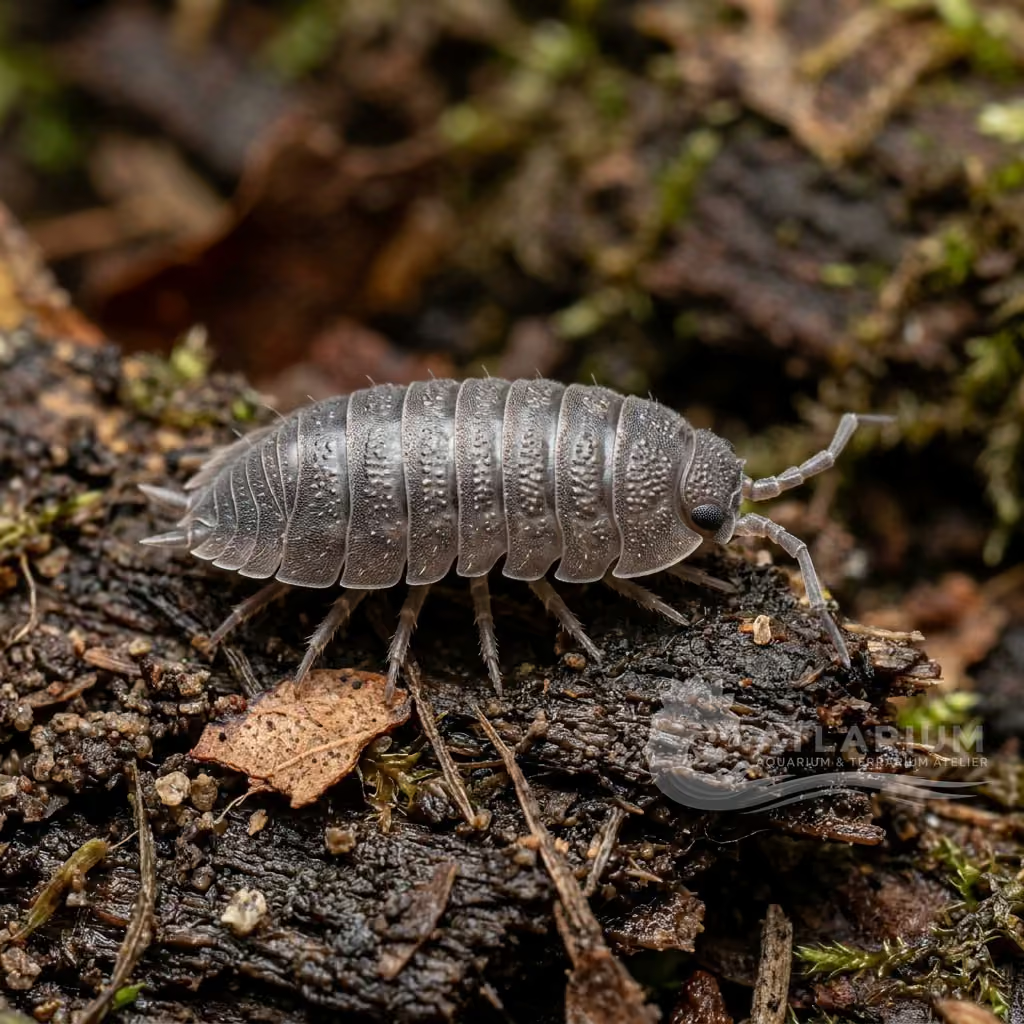
Swift woodlouse
Porcellio laevis
An exceptionally fast-moving and prolific terrestrial isopod, featuring a smooth gray exoskeleton. A highly popular clean-up crew for bioactive setups.
Environment
Terrestrial
Humidity
50 - 70 %
Day temperature
20 - 26 °C
Night temperature
18 - 22 °C

Species description
Geographical Origin and Habitat: Porcellio laevis is a cosmopolitan species of terrestrial isopod. It is native to Europe and the Mediterranean basin but has been widely introduced and established across the globe. In nature, it thrives in damp microhabitats such as temperate forest floors, agricultural lands, gardens, compost piles, and beneath rotting logs, large rocks, and loose bark. It is highly synanthropic, often found in close proximity to human settlements where organic waste is abundant.
Taxonomy and Genetics: Belonging to the class Malacostraca, order Isopoda, family Porcellionidae, and the genus Porcellio. Described by Latreille in 1804, this species exhibits high genetic stability. In captivity, hobbyists have selectively bred and isolated various color mutations (morphs). These morphs breed true and allow for interesting genetic projects, making the species a staple in the exotic pet trade.
Behavior and Habits: Known for its impressive speed and active behavior, hence the common name 'swift woodlouse'. It is primarily nocturnal and crepuscular, though it will forage during the day in shaded, food-rich conditions. They live in dense colonies and display social aggregation behavior to conserve moisture. As efficient decomposers, they play a critical role in soil nitrification and nutrient recycling.
Morphology: Features a flattened, oval body shape that can reach a length of 2.0 to 2.5 centimeters at maturity. The dorsal surface of its carapace is smooth and highly polished (the specific name 'laevis' is Latin for smooth), distinguishing it from other heavily textured Porcellio species. It has long, slender antennae and prominent, projecting uropods at the rear. The wild-type coloration is a uniform slate grey.

Care, breeding and tankmates
Terrarium Setup: Can be easily maintained in simple plastic tubs or glass enclosures measuring at least 30x20x20 cm. The substrate should be 5-8 cm deep, consisting of organic topsoil, peat moss, coconut coir, and a massive amount of decaying hardwood leaves (oak, beech) and rotten wood. Provide flat pieces of cork bark on the surface to serve as hides and resting areas.
Lighting and Heating: No specialized lighting is necessary; ambient room light is sufficient. The ideal temperature range is between 20°C and 26°C (68-79°F). While they can survive temporary drops to 15°C (59°F) or brief increases to 30°C (86°F), long-term exposure to extreme temperatures will halt reproduction and increase mortality. Standard household temperatures are usually perfect.
Humidity and Hydration: Establishing a moisture gradient inside the enclosure is vital for their survival. Keep one side of the substrate damp (around 70-80% humidity) by adding wet sphagnum moss, while leaving the opposite side dry with dry leaf litter. This allows the isopods to thermoregulate and hydrate their pleopodal lungs as needed.
Feeding and Supplementation: A varied detritivorous diet is key. Decaying leaves and rotting wood form the bulk of their diet. Supplement this regularly with fresh vegetables (carrots, zucchini, squash), fish flakes, dry dog/cat food for protein, and occasional yeast. A constant source of calcium, such as cuttlebone or crushed eggshells, is mandatory to support healthy exoskeleton shedding.
Compatibility: Can be kept with other color morphs of the same species, though cross-breeding will occur. They make an excellent clean-up crew (CUC) in bioactive terrariums housing larger, non-insectivorous reptiles and amphibians. Avoid placing them with small, delicate, or slow-moving animals, as their high activity levels and opportunistic nibbling can cause stress.
Health and Common Diseases: Desiccation is the fastest killer; if the enclosure dries out completely, the colony will perish. Conversely, poor ventilation will lead to stagnant air and toxic mold growth. They are not prone to specific pathogens, but pest mites and gnats can bloom if uneaten fresh food is left in the enclosure for more than 24-48 hours.

Geographic origin and distribution
Porcellio laevis is a cosmopolitan species of terrestrial isopod. It is native to Europe and the Mediterranean basin but has been widely introduced and established across the globe. In nature, it thrives in damp microhabitats such as temperate forest floors, agricultural lands, gardens, compost piles, and beneath rotting logs, large rocks, and loose bark. It is highly synanthropic, often found in close proximity to human settlements where organic waste is abundant.
Origin
Selective breeding and cultivarsEurope, Mediterranean, and West AsiaCosmopolitan or introduced

Terrestrial invertebrate profile
- Diet
- Detritivore
- The diet of Porcellio laevis consists of specific nutrients. It forages for a variety of food sources. A well-balanced feeding regimen is essential.
- Adult size
- 2 cm
- Lifestyle/Microhabitat
- Terrestrial
- Porcellio laevis leads a lifestyle adapted to its niche. It utilizes various elements of its habitat. Providing a complex enclosure is crucial for its enrichment.
- Activity cycle
- Nocturnal
- The activity pattern of Porcellio laevis dictates when it is most active. It exhibits periods of rest aligned with light cycles. Understanding these rhythms helps create a suitable schedule.
- Sociality
- Gregarious
- Highly social and thrive in large colonies. They do not exhibit cannibalistic tendencies towards healthy individuals, though they may consume dead or dying members to recycle nutrients within the colony.
- Reproduction
- Marsupial
- Reproduction for Porcellio laevis involves specific mating behaviors. Females seek out appropriate nesting sites. Successful breeding requires mimicking natural conditions.
- Venomous
- No
- Handling tolerance
- Tolerant
- Handling Porcellio laevis should be done with care. It is recommended to allow the animal to adjust first. Gentle movements are key when handling is necessary.
- Brumation
- Not required
- Brumation for Porcellio laevis is triggered by temperature changes. During this period, its metabolism slows down. Proper preparation is essential to ensure a healthy emergence.
- Molting
- Periodic
- The molting process of Porcellio laevis allows it to shed old layers. Adequate humidity is vital for facilitating a smooth shed. Caretakers must regularly check for retained pieces.

Related species
Recommendations grouped by close relatives, companion choices, and similar care.