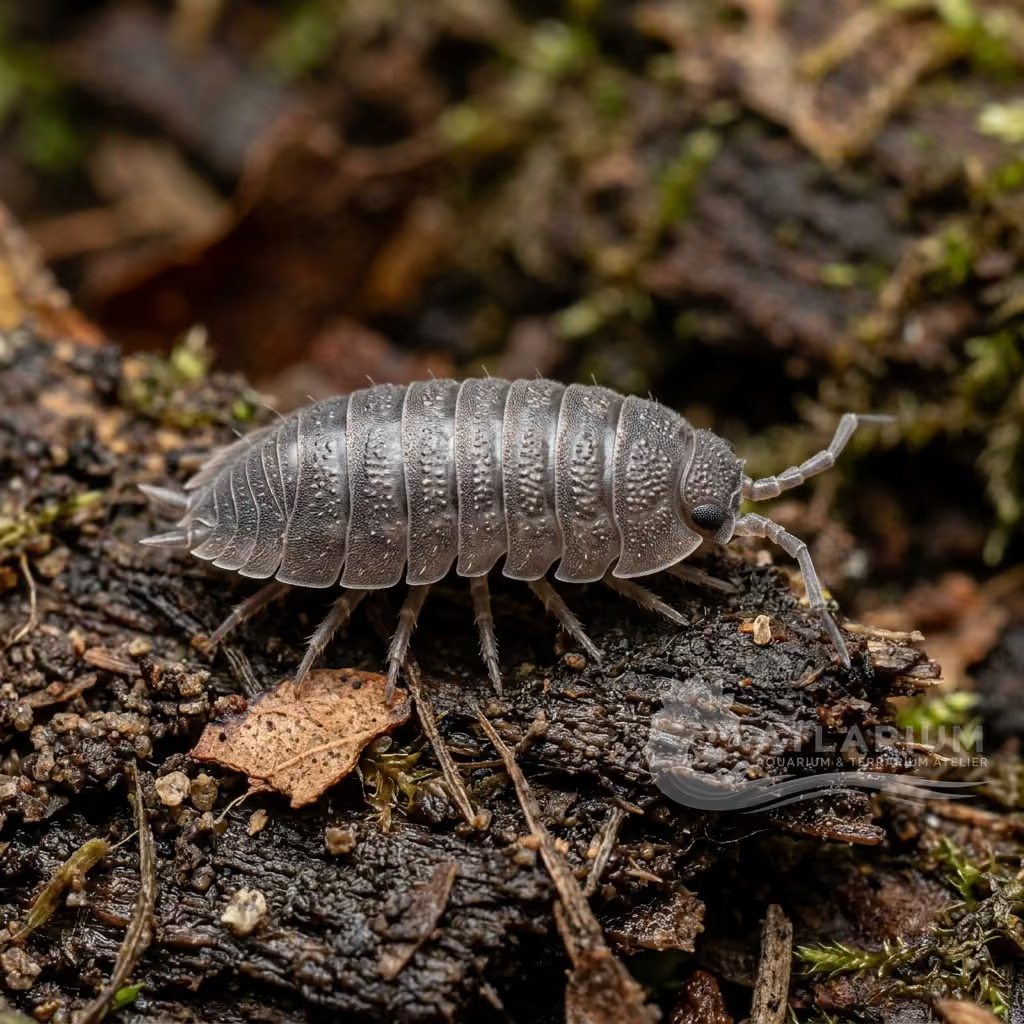
Pallas's Isopod (A. pallasii)
Armadillidium pallasii
Pallas's Isopod (Armadillidium pallasii). A giant and stubby conglobator (up to 0.9 inches) of the southwestern Mediterranean. Renowned for its disproportionate size and the fantastic 'Orange morph' that transforms it into a massive living orange basketball. Extremely shy and burrowing, loves humid forests and offers formidable resilience. Slow keeping but very rewarding thanks to the spectacular size reached by veteran females.
Environment
Terrestrial
Humidity
50 - 70 %
Day temperature
21 - 26 °C
Night temperature
18 - 22 °C

Species description
Geographical Origin and Habitat: Widespread in the warm Mediterranean basin (North Africa, coasts of southern Europe, southern France and Balearic Islands.
Taxonomy and Genetics: Family Armadillidiidae. (The Giant Armadillidium). If the Gestroi is giant and yellow with polka dots, the Pallasii is giant and solid opaque/earthy color. The mutations on the market have concentrated on fixing and intensifying the 'Orange' genome transforming it into a coral/burnt orange colossus without the cousin zebra patterns.
Behavior and Habits: Underground basketballs. Exactly like the common vulgare, pallasii are crazy diggers. They almost never climb. They build dense networks of tunnels under huge masses of cork or earth and do not come out in the open during the day. Less active and confident than the maculatum, encapsulated pregnant females ('in pill-mode') weigh a lot to the touch.
Morphology: Total smooth rounded dome (Over 0.9 inches / 2.3 cm). Incredibly stubby and wide, they are smooth boulders ('Smooth') brick rust/dark gray color. In the Orange Morph the whole animal is a solid opalescent pastel orange, with a shell so thick that it looks like colored porcelain. Absolutely perfect defensive conglobation without gaps.

Care, breeding and tankmates
Terrarium Setup: DEEP STANDARD BINS OR MIXED BIOACTIVE TERRARIUMS. Panzer resistant species. Requires very thick layers of organic soil mixed with buried dry leaves (3 inches minimum) because they will spend their life in the deep dark of the peat. Tons of mixed soggy wood and huge massive pieces of heavy flat bark on the bottom to allow congregation and protected gestation.
Lighting and Heating: ABSENCE OF DIRECT LIGHT. Rustic Mediterranean animals (constant 64-77°F / 18-25°C). Very slow growth exponentially slowed down by winter cold. They do not like temperatures above 81°F (27°C) closed in too asphyxiating display tanks.
Humidity and Hydration: BALANCED STANDARD GRADIENT (50-80%). No extremes: perfect gradient (half dry ventilated and leafy, half wet with deeply hydrated dark earth). Tolerates sudden changes exceptionally well by closing into a 'pill' and burrowing to the base of the box if external conditions vary disastrously escaping superficial dryness or upper mud.
Feeding and Supplementation: Ravenous Underground Detritivores. They devour mountains of soggy white wood mixed with the earth. They demand moderate proteins (fish food 1 time a week, do not let them lack or the aggressiveness of the giant manchae will trigger silent cannibalism), and eternal supplies of very hard calcified calcium blocks or vital cuttlefish bone to develop that monstrous 0.9 inch 'heavy duty' exoskeleton.
Compatibility: Excellent Giant Protected Cleaning Crew. Very useful in massive terrariums of large European saurians or snakes (not recommended with small frogs due to the ravenous bite that giant pallasii can deal if very hungry and the slowness of the amphibians). Their massive jaw-proof ball blunts accidental ingestion by predators.
Health and Common Diseases: Decay from lack of Air or Calcium ('Molt Stagnation' ). Such a heavy and thick animal almost always risks dying choked by its own immense molt split if calcium powder is missing. It gets stuck with the exiting legs if the tanks are not ventilated in the high holes, causing a stinking rotting biological disaster.

Geographic origin and distribution
Widespread in the warm Mediterranean basin (North Africa, coasts of southern Europe, southern France and Balearic Islands.
Origin
Selective breeding and cultivarsAfrica and MadagascarEurope, Mediterranean, and West Asia

Terrestrial invertebrate profile
- Diet
- Detritivore
- This species thrives on a varied diet rich in decaying organic matter. They primarily consume high-quality leaf litter and soft rotting wood. Supplemental calcium and occasional vegetable scraps are essential for maintaining proper health and a strong exoskeleton.
- Adult size
- 1.83 cm
- Lifestyle/Microhabitat
- Terrestrial
- They are robust terrestrial invertebrates that thrive in a well-maintained terrarium environment. A distinct moisture gradient is crucial to prevent both fatal dehydration and harmful fungal infections. They spend the vast majority of their time navigating the complex microhabitats of the damp forest floor.
- Activity cycle
- Nocturnal
- This species is primarily active during the night and the dimmer crepuscular hours. They typically remain hidden during the peak daylight hours to conserve vital moisture and avoid predators. Providing a natural day-night light cycle helps regulate their natural foraging and resting behaviors.
- Sociality
- Gregarious
- They are a social species that does well in colonies. Due to their large size, ensure the enclosure is adequately sized so they do not feel overcrowded, which can cause stress.
- Reproduction
- Marsupial
- Reproduction occurs consistently throughout the year when kept under optimal terrarium conditions. Females incubate their developing eggs within a specialized ventral brood pouch known as a marsupium. The young emerge as fully formed miniatures and require stable moisture to survive their initial delicate molts.
- Venomous
- No
- Handling tolerance
- Tolerant
- Handling should be kept to an absolute minimum to avoid causing unnecessary stress. Their incredibly delicate bodies and limbs can be easily injured by improper or forceful grasping. If relocation is absolutely necessary, gently move them by scooping up the bark or leaf they are resting on.
- Brumation
- Not required
- They generally do not require any brumation period when kept in a controlled captive environment. Maintaining stable and appropriately warm temperatures ensures continuous year-round activity and breeding success. It is important to avoid extreme cold to prevent potential and sudden colony crashes.
- Molting
- Periodic
- Molting occurs in two very distinct phases to allow the isopod continuous mobility during the process. Adequate environmental humidity is absolutely essential for them to successfully shed their old exoskeleton without complications. They will usually consume their freshly shed skin in order to rapidly reclaim lost calcium.

Related species
Recommendations grouped by close relatives, companion choices, and similar care.