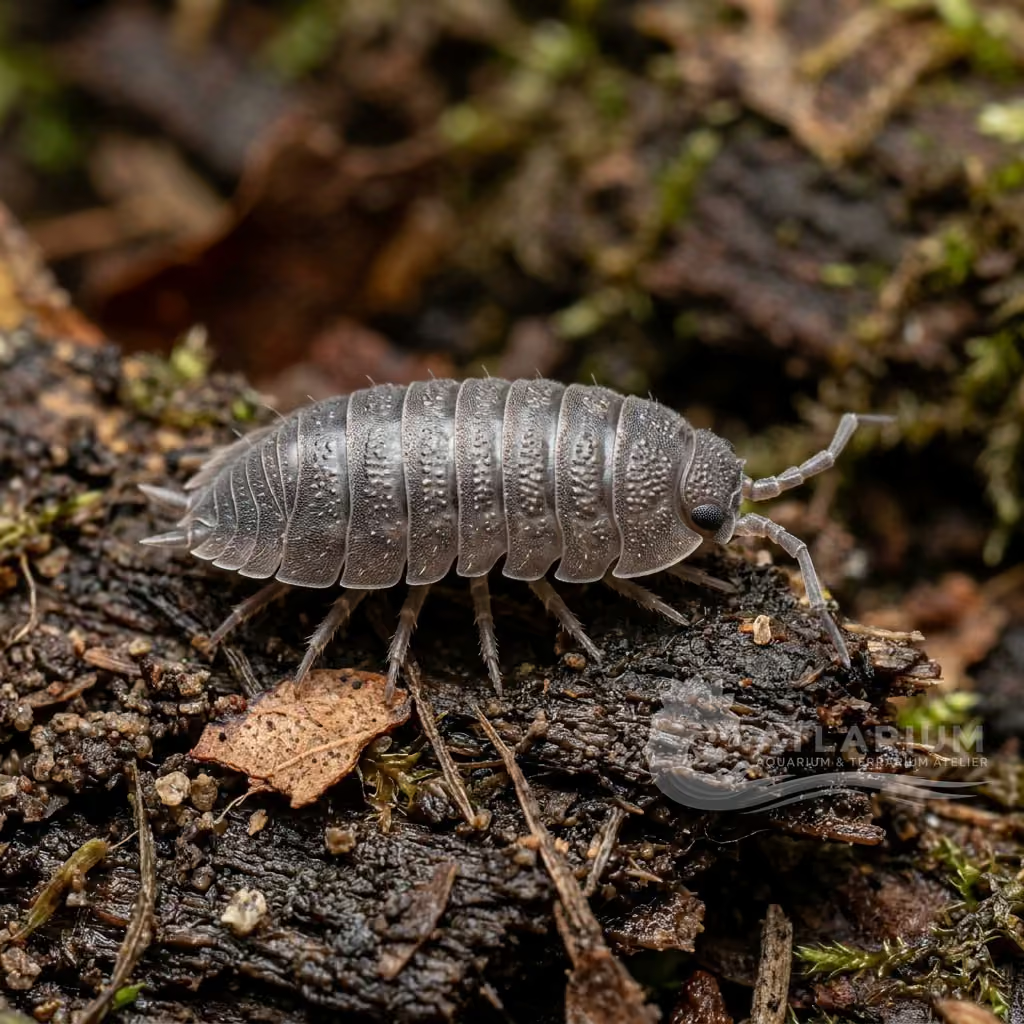
Rough Woodlouse
Porcellio scaber
The Rough Woodlouse is a resilient terrestrial isopod found worldwide. Excellent as a cleanup crew in bioactive enclosures, this small crustacean thrives in damp environments with abundant leaf litter.
Environment
Terrestrial
Humidity
60 - 80 %
Day temperature
20 - 24 °C
Night temperature
18 - 20 °C

Species description
Geographical Origin and Habitat: Native to Europe, but widely introduced and now cosmopolitan. They inhabit temperate forests, damp gardens, and urban settings, sheltering under logs, rocks, and leaf litter.
Taxonomy and Genetics: Belonging to the family Porcellionidae (terrestrial isopods). Unlike Armadillidium species, they cannot roll into a tight ball, relying on speed to escape.
Behavior and Habits: Strictly nocturnal and lucifugous (light-avoiding). They are highly gregarious, clustering in damp crevices. They act as essential decomposers, processing reptile feces, shed skins, and leaf litter into rich soil.
Morphology: Reaches 15–18 mm in size. Females are slightly wider and develop a ventral water-filled pouch (marsupium) to incubate eggs and hatchlings (mancae).

Care, breeding and tankmates
Terrarium Setup: Can be kept in ventilated culture bins (minimum 5 liters) or added directly to bioactive terrariums. Use a deep substrate (5–10 cm) of organic soil heavily mixed with decaying leaf litter (oak, beech) and crumbled rotting wood. Provide cork bark flats.
Lighting and Heating: Avoid bright lights. Keep at room temperature; they thrive between 20 and 25°C. No direct heating is required. Keep the enclosure in a shaded area.
Humidity and Hydration: They require high humidity to breathe through their modified gills. Establish a moisture gradient: keep one side of the enclosure damp by watering it regularly, leaving the opposite side dry.
Feeding and Supplementation: Generalist detritivores. Their diet is based on decaying leaves and wood. Supplement twice a week with protein sources (fish flakes, dried shrimp) and fresh vegetables. A continuous source of calcium (cuttlebone) is mandatory for exoskeleton development.
Compatibility: Safe to use as a clean-up crew in most reptile and amphibian terrariums. Avoid housing with extremely small amphibians or delicate eggs, as hungry isopods may nibble on them.
Health and Common Diseases: Quick death will occur if the substrate dries out completely. Ensure a constant supply of leaf litter and calcium to prevent cannibalism.

Geographic origin and distribution
Native to Europe, but widely introduced and now cosmopolitan. They inhabit temperate forests, damp gardens, and urban settings, sheltering under logs, rocks, and leaf litter.
Origin
Selective breeding and cultivarsCentral America and CaribbeanEurope, Mediterranean, and West AsiaCosmopolitan or introduced

Terrestrial invertebrate profile
- Diet
- Detritivore
- Their diet consists almost entirely of decaying plant matter. Leaf litter (especially oak and maple) and decaying wood are absolutely essential staples. In captivity, their diet should be supplemented with fresh vegetables (like carrots and zucchini), fish flakes for protein, and a constant source of calcium, such as cuttlebone or eggshells.
- Adult size
- 1.7 cm
- Lifestyle/Microhabitat
- Terrestrial
- This species is a highly adaptable terrestrial crustacean. They are detritivores, playing a crucial role in breaking down dead plant material and returning nutrients to the soil. They require a moist environment to breathe through their modified gills (pleopods), but they also need a dry area in their enclosure to regulate their moisture levels.
- Activity cycle
- Nocturnal
- The Rough Woodlouse is primarily nocturnal, seeking out dark, damp environments during the day to avoid desiccation. They hide under rocks, logs, and leaf litter. At night, they emerge to forage for decaying organic matter, though they may become active during the day after heavy rains when humidity levels are extremely high.
- Sociality
- Gregarious
- Porcellio scaber is a highly social and gregarious species. They thrive in large colonies and are often found clumped together in the wild to conserve moisture. Housing them in groups is highly recommended, and they serve as an excellent clean-up crew in bioactive terrariums alongside reptiles or amphibians.
- Reproduction
- Oviparous
- They are prolific breeders. Females carry fertilized eggs in a fluid-filled brood pouch (marsupium) under their abdomen. The eggs hatch into miniature, white versions of the adults, known as mancas. The mancas will remain in the pouch for a short time before emerging to join the colony, growing rapidly through successive molts.
- Venomous
- No
- Handling tolerance
- Tolerant
- Handling is easy and safe, as they are completely harmless. However, they are small and relatively fragile. They should be handled gently to avoid crushing them. Some individuals may play dead when startled, curling up slightly, though they do not form a perfect sphere like Armadillidium species. Always ensure hands are free of chemicals.
- Brumation
- Not required
- In the wild, they experience a period of dormancy during the cold winter months, burying deep into the soil to escape freezing temperatures. In captivity, brumation is not strictly necessary for survival, and they will remain active and continue breeding year-round if kept at stable room temperatures with adequate moisture.
- Molting
- Regular
- Like all isopods, they molt in two stages to conserve moisture and avoid total vulnerability. First, they shed the posterior half of their exoskeleton, and a few days later, they shed the anterior half. They will usually eat the cast-off exoskeleton to reclaim valuable calcium necessary for hardening their new shell.

Image gallery
Licensed images linked to the species or, when marked, to the closest representative taxon.

Related species
Recommendations grouped by close relatives, companion choices, and similar care.