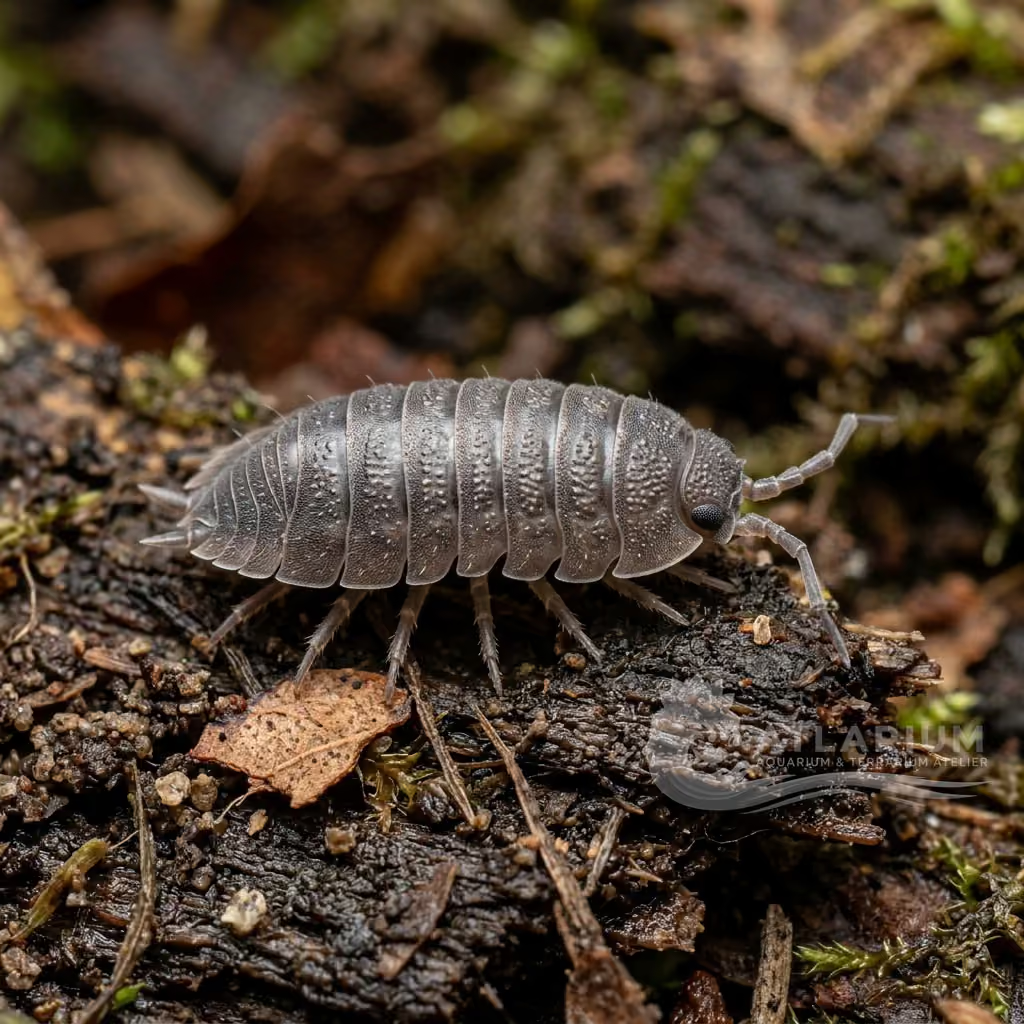
Rough Woodlouse (Porcellio scaber) (Dalmatian)
Porcellio scaber
Dalmatian morph of the rough woodlouse. Highly prolific, hardy terrestrial isopod. An excellent clean-up crew species for bioactive enclosures, processing organic waste, mold, and decaying wood.
Environment
Terrestrial
Humidity
50 - 70 %
Day temperature
20 - 25 °C
Night temperature
18 - 22 °C

Species description
Geographical Origin and Habitat: Originally native to Europe, now widely established globally due to human activity. Inhabits temperate forests, gardens, and urban organic debris, sheltering under rotting logs, stones, and leaf litter to prevent dehydration.
Taxonomy and Genetics: Belonging to the family Porcellionidae (terrestrial crustaceans). *Porcellio scaber* is highly adaptable and cannot roll into a ball like the genus *Armadillidium*. The Dalmatian morph is a stable color variety characterized by a white base body speckled with irregular black spots.
Behavior and Habits: Strictly nocturnal and lucifugous. They are highly gregarious detritivores, often clustering in large numbers in damp, dark crevices. In bioactive setups, they actively consume organic debris, leaf litter, and mold.
Morphology: Features a flattened, oval body with a rough, tuberculated cuticle, reaching up to 1.8 cm. Males and females are externally similar, but adult females can be identified by the presence of a ventral brood pouch (marsupium) where they carry eggs and young.

Care, breeding and tankmates
Terrarium Setup: Can be easily cultured in a ventilated plastic box (minimum 5 liters). Substrate should consist of 5-10 cm of organic compost or coco fiber mixed with rotting wood and crushed leaves, topped with cork bark slabs for cover.
Lighting and Heating: Keep in a shaded or dark location. Maintain temperatures between 20°C and 25°C for optimal reproduction. They do not require any special lighting and should be kept away from direct sunlight.
Humidity and Hydration: As terrestrial crustaceans, they breathe through modified gills and require constant ambient moisture. Maintain a moisture gradient by keeping one side of the substrate damp while leaving the other side dry.
Feeding and Supplementation: Diet must consist primarily of decaying deciduous leaves (oak, beech) and rotting wood. Supplement twice a week with protein sources (fish flakes, dried shrimp) and fresh vegetables. Provide a constant source of calcium, such as cuttlebone, for exoskeleton development.
Compatibility: Safe and effective clean-up crew for many reptiles, amphibians, and invertebrates. Avoid using them in enclosures housing tiny hatchlings or delicate eggs, as they may accidentally nibble on them in search of protein.
Health and Common Diseases: Vulnerable to desiccation if the enclosure dries out completely, and to drowning if the substrate becomes waterlogged. Ensure proper cross-ventilation to prevent stagnant air and mold overgrowth.

Geographic origin and distribution
Originally native to Europe, now widely established globally due to human activity. Inhabits temperate forests, gardens, and urban organic debris, sheltering under rotting logs, stones, and leaf litter to prevent dehydration.
Origin
Selective breeding and cultivarsCentral America and CaribbeanEurope, Mediterranean, and West AsiaCosmopolitan or introduced

Terrestrial invertebrate profile
- Diet
- Detritivore
- They are highly voracious, opportunistic detritivores that require a diverse diet. A constant supply of decaying hardwood leaves, white rotting wood, and a permanent calcium source is mandatory. They eagerly devour supplemental proteins like dried shrimp or fish flakes, alongside fresh vegetable scraps.
- Adult size
- 1.7 cm
- Lifestyle/Microhabitat
- Terrestrial
- They possess a completely terrestrial, surface-active lifestyle. They show little interest in burrowing deep into the substrate, preferring instead to climb aggressively over textured cork bark or hide shallowly under leaf litter. They require a distinct damp corner within an otherwise well-ventilated enclosure.
- Activity cycle
- Crepuscular
- They display a high level of activity, exhibiting both dedicated nocturnal foraging and confident diurnal exploration. Their striking white bodies covered in irregular black spots make them highly conspicuous as they continuously roam across the terrarium surface searching for food and moisture.
- Sociality
- Gregarious
- They are intensely social, communal invertebrates that perform exceptionally well in large, densely populated setups. They live peacefully alongside conspecifics, and a high population density often triggers aggressive, highly entertaining communal feeding responses whenever fresh, high-value food is introduced.
- Reproduction
- Marsupial
- They are incredibly prolific breeders, making them an excellent choice for a rapidly growing colony. Females carry large broods of developing young in their specialized ventral pouch. Under optimal conditions of warmth and abundant food, they will quickly multiply and fill their enclosure.
- Venomous
- No
- Handling tolerance
- Display only
- They are quite resilient and handle brief, gentle interaction well. However, they are prone to sudden bursts of speed if startled. They should always be handled close to the ground or over a soft catch-bin to prevent them from sprinting off a hand and suffering a fatal fall.
- Brumation
- Not required
- This highly adaptable morph does not need a brumation period and will thrive, remaining highly active and breeding continuously year-round, when kept at stable, comfortable room temperatures. While they can survive cooler temperatures, extreme cold will unnecessarily stress the colony and halt reproduction.
- Molting
- Periodic
- Like all isopods, they undergo a bipartite molting process, sequentially shedding the posterior and anterior sections of their rough exoskeleton. Access to a localized damp area is absolutely essential during this vulnerable time to prevent stuck sheds. They will eagerly consume the discarded skin for calcium.

Image gallery
Licensed images linked to the species or, when marked, to the closest representative taxon.

Related species
Recommendations grouped by close relatives, companion choices, and similar care.