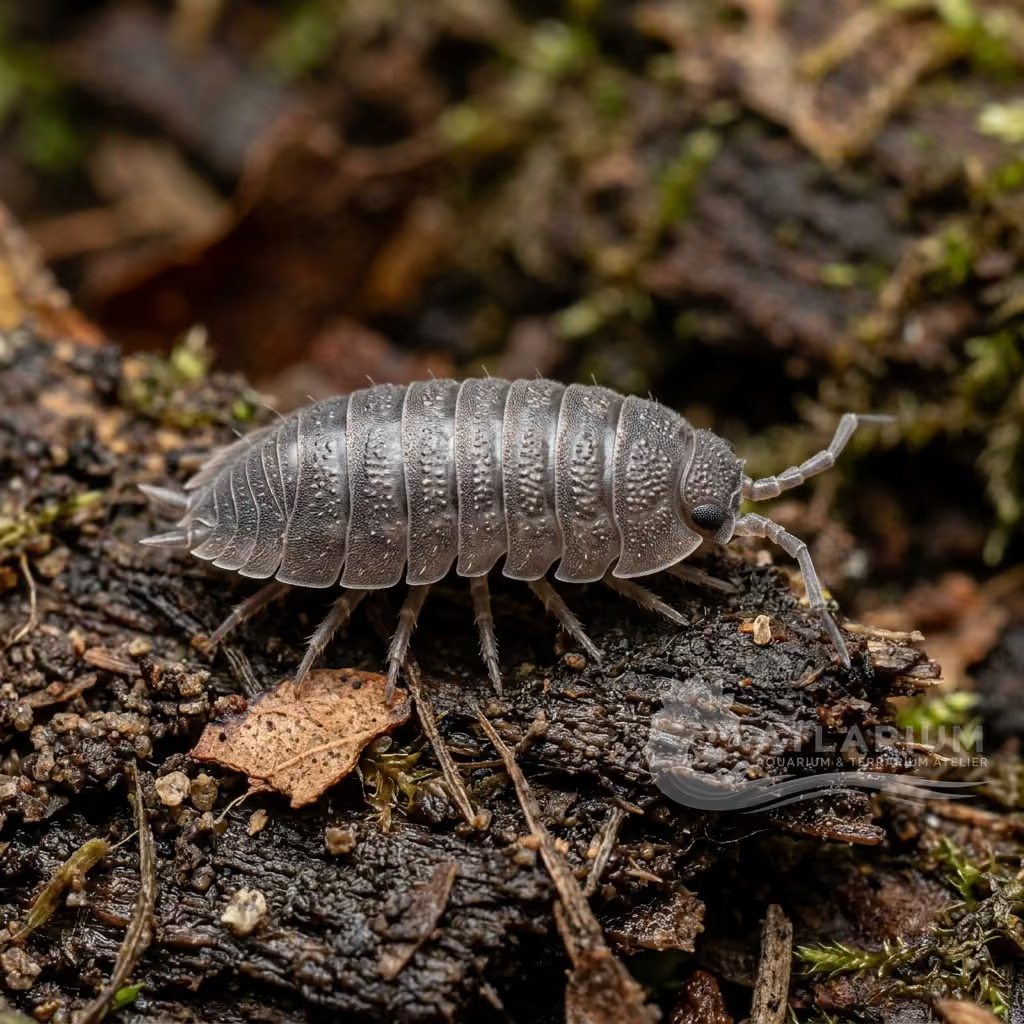
Rough Woodlouse "Orange Koi"
Porcellio scaber
Rough Woodlouse "Orange Koi". A highly attractive morph of the hardy rough woodlouse, featuring orange and white patterns. Excellent clean-up crew for bio-active setups.
Environment
Terrestrial
Humidity
50 - 70 %
Day temperature
20 - 25 °C
Night temperature
18 - 22 °C

Species description
Geographical Origin and Habitat: The species Porcellio scaber is native to temperate Europe, but has achieved a cosmopolitan distribution worldwide. It inhabits damp forest floors, deciduous woodlands, grasslands, and suburban gardens, sheltering under loose tree bark, rotting logs, and leaf litter to preserve essential moisture.
Taxonomy and Genetics: Belongs to the class Malacostraca, order Isopoda, and family Porcellionidae. It is a terrestrial crustacean featuring a segmented exoskeleton with a bumpy, heavily tuberculated texture. Unlike the genus Armadillidium, Porcellio scaber has a flatter profile and cannot roll into a ball. Grows to 18-20 mm.
Behavior and Habits: Strictly nocturnal and lucifugous (light-avoiding). It exhibits gregarious behavior, clustering in dense groups within damp, dark crevices. It functions as an essential detritivore, breaking down organic waste, decaying wood, and dry leaves into rich soil nutrients while preventing mold growth.
Morphology: The 'Orange Koi' morph is a selectively bred color variety characterized by a mottled pattern of bright orange, white, and occasionally gray blotches across the exoskeleton. Females possess a ventral brood pouch (marsupium) where they incubate eggs and carry young mancae.

Care, breeding and tankmates
Terrarium Setup: Can be housed in ventilated plastic containers or glass terrariums of at least 5-10 liters. The substrate should be 5-10 cm deep, consisting of organic soil mixed with coco fiber, peat moss, and decayed wood (flake soil). Provide cork bark slabs on top to serve as hiding places.
Lighting and Heating: Being light-avoiding, they do not require special lighting and must be kept away from direct sunlight. Maintain temperatures between 18°C and 25°C. Basking or heating lamps are not required; standard room temperature is ideal for colony growth and reproduction.
Humidity and Hydration: Moisture is critical as they breathe through modified gills (pleopodal lungs) and need humidity to survive. Maintain a moisture gradient inside the enclosure by spraying one side with dechlorinated water regularly while leaving the other side dry so they can self-regulate.
Feeding and Supplementation: Primarily detritivorous. Their main diet must consist of decaying organic material, especially dried hardwood leaves (oak, beech) and rotting wood. Supplement twice a week with protein sources (fish flakes, dried shrimp) and fresh vegetables (zucchini, carrots). A cuttlebone is vital for calcium.
Compatibility: Extremely prolific and compatible as a clean-up crew (CUC) in bioactive setups for robust frogs, geckos, lizards, and tarantulas. Avoid keeping them with very tiny, delicate amphibians or reptile eggs, as a dense population of hungry isopods may nibble on them.
Health and Common Diseases: Desiccation (drying out) is the primary risk and can wipe out the entire colony within hours if the substrate dries completely. Ensure adequate ventilation to prevent stagnant, waterlogged conditions. Supply constant calcium to ensure successful molting of the chitinous exoskeleton.

Geographic origin and distribution
The species Porcellio scaber is native to temperate Europe, but has achieved a cosmopolitan distribution worldwide. It inhabits damp forest floors, deciduous woodlands, grasslands, and suburban gardens, sheltering under loose tree bark, rotting logs, and leaf litter to preserve essential moisture.
Origin
Selective breeding and cultivarsCentral America and CaribbeanNorth AmericaEurope, Mediterranean, and West AsiaCosmopolitan or introduced

Terrestrial invertebrate profile
- Diet
- Detritivore
- Their diet consists primarily of decaying organic matter such as hardwood leaf litter, rotting wood, and occasional vegetable scraps. It is crucial to supplement their diet with a reliable calcium source, such as cuttlebone or crushed eggshells, to ensure proper exoskeleton development and successful molting cycles throughout their lifespan.
- Adult size
- 1.7 cm
- Lifestyle/Microhabitat
- Terrestrial
- As a terrestrial crustacean, this isopod leads an epigean lifestyle, meaning it primarily inhabits the soil surface rather than burrowing deep underground. They are detritivores, constantly foraging through the top layer of organic matter, breaking down dead plant material, and contributing significantly to the nutrient cycling process in their ecosystem.
- Activity cycle
- Crepuscular
- This species primarily exhibits nocturnal behaviors, becoming highly active during the nighttime hours when humidity levels are generally higher and temperatures drop. During the day, they prefer to seek refuge underneath decaying wood, leaf litter, or rocks to prevent desiccation and avoid potential daytime predators in their natural environment.
- Sociality
- Gregarious
- They are highly gregarious invertebrates that thrive when kept in large colonies with numerous individuals. They are frequently observed congregating together under pieces of bark or leaf litter, which helps them collectively conserve moisture and creates a microclimate that is highly beneficial for their overall survival and comfort.
- Reproduction
- Marsupial
- Reproduction occurs rapidly under optimal conditions, with females carrying fertilized eggs in a specialized brood pouch called a marsupium on their underside. After an incubation period, fully formed but miniature juvenile isopods, known as mancae, are released. These mancae will undergo several molts before reaching full sexual maturity.
- Venomous
- No
- Handling tolerance
- Display only
- Handling should be kept to a minimum to avoid stressing the isopods. If necessary, gently coax them onto a soft brush or a piece of leaf litter rather than picking them up directly with fingers. Their exoskeleton, while somewhat sturdy, can still be easily crushed by the unintentional pressure of human hands.
- Brumation
- Not required
- While they do not enter a true brumation, a slight decrease in temperature during the winter months can slow their metabolism and reproductive rates. They will remain somewhat active as long as the temperature does not drop below freezing, but providing a stable year-round temperature is generally preferred for optimal colony growth.
- Molting
- Periodic
- Isopods undergo a biphasic molting process, shedding the posterior half of their exoskeleton first, followed by the anterior half a few days later. During this vulnerable time, they require adequate humidity to prevent getting stuck in their old exoskeleton, and they will often consume the shed exoskeleton to recycle essential calcium.

Related species
Recommendations grouped by close relatives, companion choices, and similar care.