Giant woodlouse
Porcellio dilatatus
A rather large, highly active terrestrial isopod perfectly ideal as a cleanup crew in bioactive terrariums, noted for being exceptionally resilient, fast breeding, and very easy to maintain.
Environment
Terrestrial
Humidity
60 - 80 %
Ambient temperature
22 °C
Day temperature
22 °C
Night temperature
18 °C
Substrate depth
>= 5 cm

Species description
Geographical Origin and Habitat: Porcellio dilatatus is native to Western Europe but has been widely introduced to other continents. It inhabits moist, sheltered microhabitats protected from direct sunlight, such as under decaying logs, compost heaps, leaf litter, rotting organic matter, and stone crevices in temperate regions.
Taxonomy and Genetics: Belonging to the family Porcellionidae and the genus Porcellio. This species has a highly resilient genetic structure, allowing small founder colonies to multiply successfully in captivity without suffering from inbreeding depression. A few color selections exist, though the wild grey type is standard.
Behavior and Habits: Strictly nocturnal and cryptic. During the day, they remain hidden beneath wood or leaf layers to prevent desiccation. They are active detritivores, constantly consuming decaying plant matter, fungal mycelium, and animal detritus, making them essential ecological decomposers.
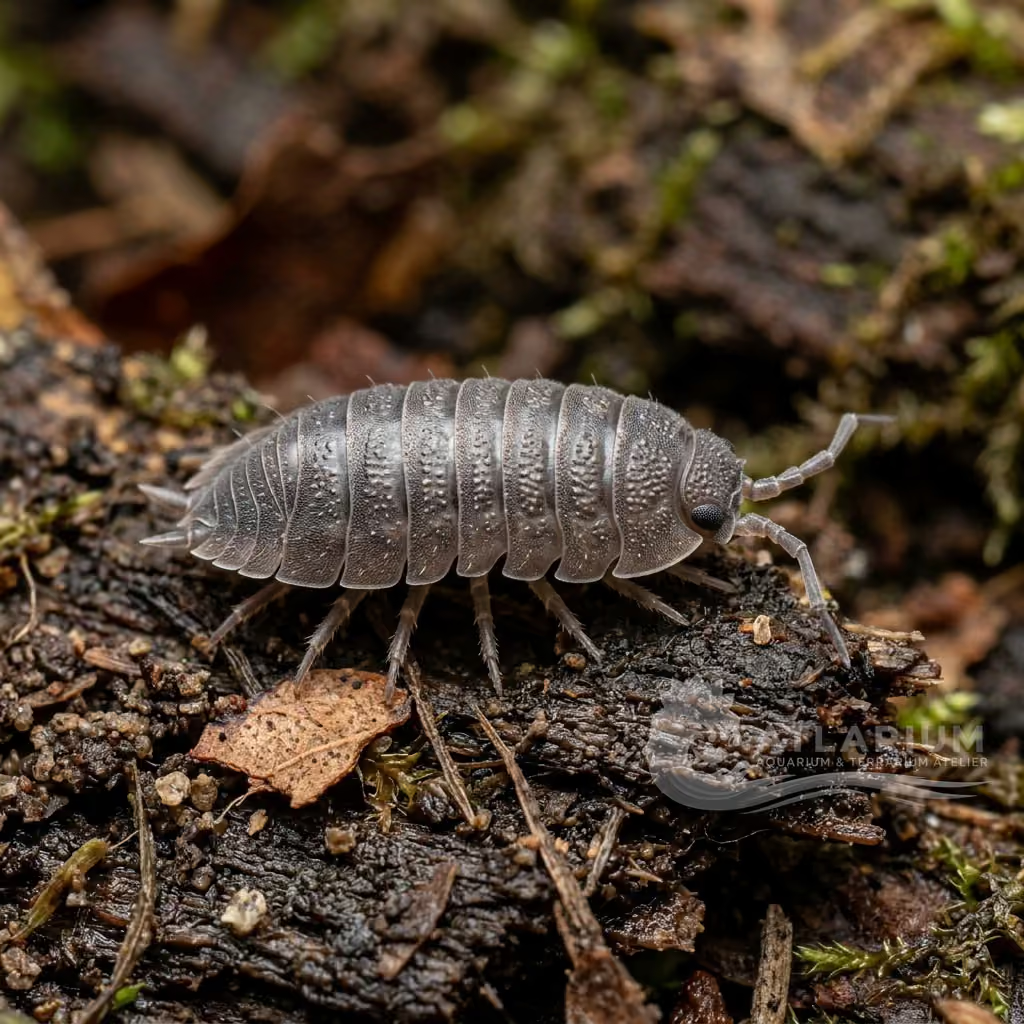
Morphology: Characterized by a remarkably broad, flat, and wide body (hence the species name 'dilatatus'). It grows to an adult size of 15 to 20 mm. The dorsal color is a uniform slate grey to brownish-grey with a slightly textured surface. Sexual dimorphism is minimal, with males having slightly longer uropods.

Care, breeding and tankmates
Terrarium Setup: Can be housed in plastic storage bins with ventilation holes or small glass terrariums. Provide a substrate bed at least 5 cm deep composed of organic soil, coco coir, and a massive amount of decaying hardwood leaves and rotten wood, which serve as both shelter and food.
Lighting and Heating: Subdued room lighting is sufficient, as they actively avoid bright light. The optimal temperature range is 18 °C to 24 °C. High temperatures above 28 °C can be fatal, especially if the enclosure lacks moisture. No heating elements or UVB lamps are required.
Humidity and Hydration: Requires moderate moisture levels of 60-70%. It is critical to establish a moisture gradient: keep one side of the enclosure damp by misting it regularly (covering it with wet sphagnum moss helps), while leaving the opposite side dry to let the isopods choose their comfort zone.
Feeding and Supplementation: The primary diet must consist of decaying leaves and rotted wood. Supplement with fresh vegetables (sweet potato, squash), fish flakes or yeast for protein, and a constant calcium source (cuttlebone or limestone powder). Calcium is mandatory for them to rebuild their calcified exoskeletons.
Compatibility: Performs exceptionally well as a cleanup crew in bioactive terrariums for medium-sized reptiles and amphibians. They are generally too large to be eaten by very small geckos or frogs. If kept with other isopod species, they may eventually be outcompeted by faster-breeding species.
Health and Common Diseases: The primary cause of mortality is desiccation due to a dry environment. Conversely, a saturated enclosure with zero ventilation will trigger mold growth and mite infestations, which can decimate the colony. Molting occurs in two halves (anterior and posterior) over a few days.

Geographic origin and distribution
Porcellio dilatatus is native to Western Europe but has been widely introduced to other continents. It inhabits moist, sheltered microhabitats protected from direct sunlight, such as under decaying logs, compost heaps, leaf litter, rotting organic matter, and stone crevices in temperate regions.
Origin
Cosmopolitan or introducedNorth AmericaEurope, Mediterranean, and West Asia

Terrestrial invertebrate profile
- Diet
- Detritivore
- Giant woodlice are detritivores, acting as nature's cleanup crew by consuming a massive variety of decaying plant matter. Their primary diet consists of rotting hardwood leaves, decaying wood, and soft bark, which are essential for their gut flora. In captivity, this staple diet is frequently supplemented with calcium sources like cuttlebone, as well as fresh vegetables and commercial isopod diets. Providing constant access to decaying leaf litter is absolutely critical for their survival and ongoing reproductive success.
- Adult size
- 1.5 cm
- Lifestyle/Microhabitat
- Terrestrial
- A terrestrial crustacean. They inhabit the forest floor, acting as nature's cleanup crew by breaking down decaying leaf litter and wood.
- Activity cycle
- Nocturnal
- Largely nocturnal, these giant isopods spend the daylight hours buried to avoid desiccation, becoming active foragers at night.
- Sociality
- Gregarious
- These terrestrial isopods are highly gregarious creatures that thrive when kept in large colonies with many conspecifics. They actively cluster together under pieces of cork bark or rotting wood, utilizing communal grouping to minimize moisture loss and regulate temperature. They exhibit no aggression toward one another, and multiple generations cohabitate peacefully within the same small area. Keeping them alone is detrimental to their well-being, as they depend heavily on the microclimates created by the group.
- Reproduction
- Ovoviviparous
- Giant woodlice reproduce quite readily and prolifically as long as conditions remain adequately moist and warm. Females carry fertilized eggs in a specialized brood pouch under their bodies, known as a marsupium. The eggs hatch within this pouch, and the female later releases fully formed, microscopic, pale versions of the adults called mancas. Given an abundance of food and optimal humidity, a small starter colony can rapidly explode into a massive population over just a few months.
- Venomous
- No
- Handling tolerance
- Tolerant
- They are completely harmless and docile. They can be gently scooped up without issue, though care must be taken not to crush their soft bodies.
- Brumation
- Not required
- They do not brumate, but reproduction will slow down significantly if temperatures drop too low.
- Molting
- Periodic
- Isopods molt in two halves (anterior and posterior). A highly humid microclimate is essential for them to shed successfully and survive.

Related species
Recommendations grouped by close relatives, companion choices, and similar care.