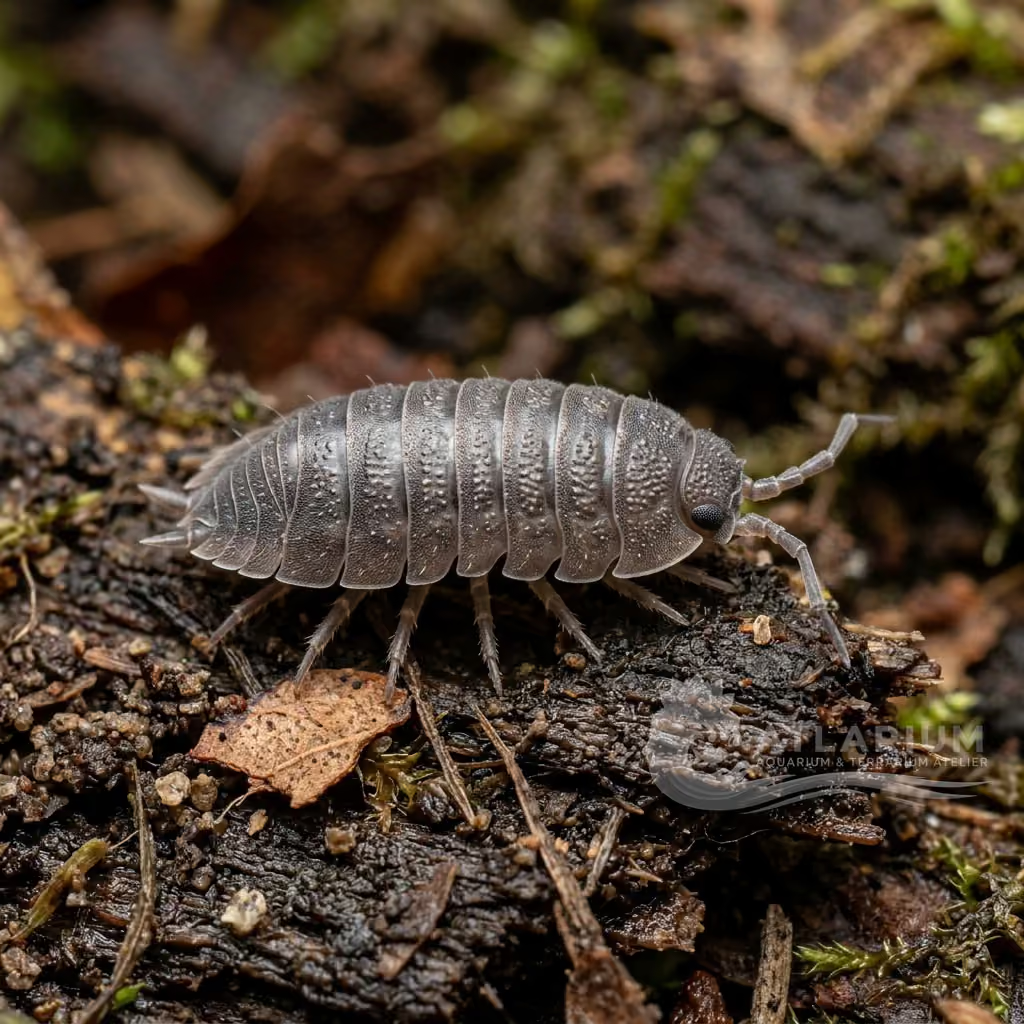
Caramel swift woodlouse
Porcellio laevis
A beautiful and warm caramel-colored morph of Porcellio laevis, highly active and prolific, popular among collectors.
Environment
Terrestrial
Humidity
50 - 70 %
Day temperature
20 - 26 °C
Night temperature
18 - 22 °C

Species description
Geographical Origin and Habitat: Porcellio laevis "Caramel" is a captive-bred color morph of the cosmopolitan terrestrial isopod Porcellio laevis. The wild ancestor is native to Europe and the Mediterranean region, but has been introduced worldwide. It occupies damp, organic-rich environments such as leaf litter, gardens, and decaying logs. The "Caramel" morph was selectively isolated by breeders to preserve its warm, tan-brown tones.
Taxonomy and Genetics: Belonging to the class Malacostraca, order Isopoda, family Porcellionidae, and genus Porcellio. The "Caramel" mutation is recessive, causing a partial reduction in dark melanin pigmentation, allowing warm beige and honey-brown tones to express. This trait breeds true when individuals are housed exclusively with other "Caramel" specimens.
Behavior and Habits: Just like the wild type, this morph is exceptionally fast-moving and active. It is primarily nocturnal but will forage during the day in shaded, established colonies. They are social decomposers, aggregating under bark hides to retain moisture. They play an important ecological role by accelerating the breakdown of organic waste in soil.
Morphology: Features a smooth, glossy, and flattened oval body reaching 2.0 to 2.5 cm in length at maturity. The dorsal carapace lacks the rough tubercles found in other Porcellio species. The "Caramel" morph exhibits a uniform, warm caramel-brown coloration across its body, antennae, and uropods. The eyes remain dark, providing a soft contrast to the light brown carapace.

Care, breeding and tankmates
Terrarium Setup: Can be easily kept in plastic or glass enclosures of at least 30x20x20 cm. The substrate should be 5-8 cm deep, consisting of coconut coir, peat moss, crushed rotten wood, and a large quantity of dry hardwood leaves (oak, beech). Place pieces of cork bark on top and provide a cuttlebone as a continuous calcium source.
Lighting and Heating: No specialized lighting is required; ambient, indirect room light is ideal. The preferred temperature range is 20°C to 26°C (68-79°F). Avoid direct sunlight, which can overheat the enclosure. No supplementary heating is needed if kept in a standard heated home environment.
Humidity and Hydration: A moisture gradient is crucial. Dampen one side of the enclosure containing sphagnum moss to maintain 70-80% humidity, while keeping the other side dry with dry leaf litter. This allows the isopods to access moisture for their pleopodal lungs without risk of desiccation or drowning.
Feeding and Supplementation: A varied detritivorous diet is essential. They feed continuously on the decaying leaves and wood in the substrate. Supplement 2-3 times weekly with fresh vegetables (carrots, squash), fish flakes, or dry pet food for protein. Keep cuttlebone or crushed eggshells available at all times for calcium.
Compatibility: Can cohabitate with other Porcellio laevis morphs, but they will cross-breed, resulting in wild-type grey offspring in subsequent generations. Excellent clean-up crew (CUC) for bioactive terrariums housing larger reptiles and amphibians. Do not house with tiny, delicate species that could be stressed by their activity.
Health and Common Diseases: Desiccation is the primary threat; a completely dry enclosure will kill the colony overnight. Lack of ventilation leads to toxic mold and stagnant conditions. Remove uneaten fresh food within 24 hours to prevent infestation by mites or fungus gnats.

Geographic origin and distribution
Porcellio laevis "Caramel" is a captive-bred color morph of the cosmopolitan terrestrial isopod Porcellio laevis. The wild ancestor is native to Europe and the Mediterranean region, but has been introduced worldwide. It occupies damp, organic-rich environments such as leaf litter, gardens, and decaying logs. The "Caramel" morph was selectively isolated by breeders to preserve its warm, tan-brown tones.
Origin
Selective breeding and cultivarsNorth AmericaEurope, Mediterranean, and West AsiaCosmopolitan or introduced

Terrestrial invertebrate profile
- Diet
- Detritivore
- They are fiercely voracious detritivores with an infamously high appetite for protein. A staple diet of rotting wood and hardwood leaves must be heavily supplemented with bulk calcium and frequent protein-rich foods, such as freeze-dried minnows or fish flakes, to prevent cannibalism within the colony.
- Adult size
- 2 cm
- Lifestyle/Microhabitat
- Terrestrial
- They maintain a fully terrestrial, highly surface-active lifestyle. They show very little inclination to burrow, preferring to spend their time navigating the top layer of leaf litter or sheltering under pieces of cork bark. They require good ventilation and a distinct moisture gradient to thrive.
- Activity cycle
- Crepuscular
- They display a remarkably bold and active pattern, spending a significant amount of time wandering the enclosure surface during the day, in addition to heavy nocturnal foraging. Their striking, uniform caramel coloration makes them incredibly easy to observe as they actively search for food.
- Sociality
- Gregarious
- They are intensely gregarious and social, flourishing when kept in large, crowded colonies. They exhibit zero aggression toward adult conspecifics, and a high population density typically leads to highly entertaining, chaotic feeding responses whenever high-value protein or vegetable scraps are offered.
- Reproduction
- Marsupial
- They are widely considered one of the fastest breeding isopods in the hobby. Females carry massive broods in their ventral pouch, and a colony kept in optimal conditions with abundant food and warmth will experience explosive population growth, quickly filling their enclosure.
- Venomous
- No
- Handling tolerance
- Display only
- While their bodies are hardy enough to withstand gentle handling, their incredible speed makes it a risky endeavor. They are highly reactive and will quickly sprint to the edge of a hand or surface. If handling is necessary, it must be done very close to the ground to prevent lethal falls.
- Brumation
- Not required
- This highly robust morph does not need a brumation period and will readily breed and remain active year-round under stable, warm indoor conditions. Subjecting them to a prolonged cooling period is unnecessary and will only serve to severely slow down their metabolism and halt colony expansion.
- Molting
- Periodic
- Like all woodlice, they shed their exoskeleton in a bipartite process, shedding the posterior half first to reduce vulnerability. Ensuring they have access to a damp microclimate is critical to prevent the old skin from sticking during the molt. They will consume the shed skin to recover vital calcium.

Related species
Recommendations grouped by close relatives, companion choices, and similar care.