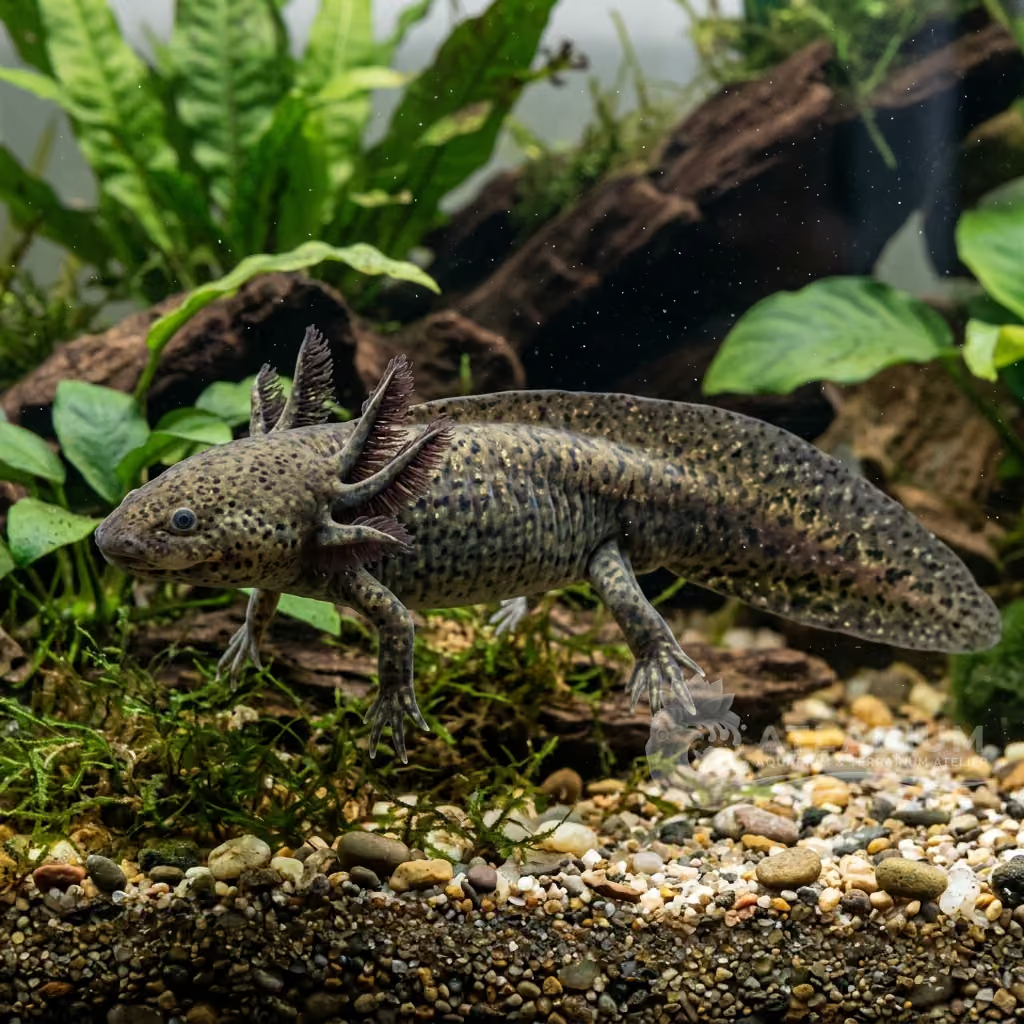
Spotted Salamander
Ambystoma maculatum
The spotted salamander is a large, terrestrial North American amphibian identified by striking yellow spots on its black body. It requires a 75L woodland terrarium, moist substrate, and a varied insectivorous diet.
Environment
Terrestrial
Humidity
70 - 80 %
Day temperature
18 - 22 °C
Night temperature
12 - 16 °C
Ambient temperature
18 - 22 °C
Minimum enclosure
>= 40 L

Species description
Geographical Origin and Habitat: Widely distributed throughout eastern North America, from eastern Canada down to the southeastern United States. It is a strictly fossorial species, spending most of the year deep underground in leaf litter, rodent burrows, or under rotting logs in deciduous forests. They emerge only at night during early spring rains to migrate to breeding pools.
Taxonomy and Genetics: A member of the Ambystomatidae family, commonly known as mole salamanders. It features a robust, cylindrical body and a broad snout. A unique biological aspect is its symbiotic relationship with green algae (Oophila amblystomatis), which grows inside the egg envelopes and even within embryonic tissue, providing oxygen to the developing embryos.
Behavior and Habits: Highly secretive and fossorial, remaining hidden underground for most of the year. During the spring, they migrate in large numbers to vernal pools to breed. In captivity, they remain buried under substrate or moss, emerging at night to hunt. They feed by seizing prey with their wide jaws.
Morphology: A large salamander, reaching 15 to 25 cm in length, and capable of living for over 20 years. Females are generally larger, wider, and heavier than males, particularly when gravid. During the breeding season, males exhibit a swollen cloaca.

Care, breeding and tankmates
Terrarium Setup: Requires a spacious terrestrial enclosure (minimum 60x40 cm). The substrate is the most important element and should consist of a thick layer (15-20 cm) of damp organic soil, peat moss, and sphagnum moss covered with leaf litter to allow digging. Include cork bark tunnels and half-buried shelters.
Lighting and Heating: Adapted to cool climates. Temperatures must be kept low, ideally between 15 and 20°C. They are highly sensitive to heat; temperatures exceeding 24°C can cause severe thermal stress and death. No special lighting is required, as they are nocturnal and subterranean.
Humidity and Hydration: Keep the substrate consistently damp (around 70-80% humidity) but not muddy. Provide a shallow water dish with clean, declorinated water, which should be changed daily. Good ventilation is necessary to prevent mold growth and bacterial skin issues.
Feeding and Supplementation: Feeds on a variety of invertebrates, with earthworms being the staple diet. They also consume crickets, roaches, and waxworms. Food should be dusted with calcium and vitamins containing D3 once a week for adults.
Compatibility: Solitary and docile. They can be housed individually or in small groups if ample hiding spots are provided. Avoid housing them with different species, and ensure tankmates are of similar size to prevent cannibalism of smaller individuals.
Health and Common Diseases: Highly sensitive to skin absorption of chemicals and toxins. Never handle them with bare hands, as skin oils, soaps, or lotions can be lethal. They are prone to fungal infections and bacterial dermatosis if the enclosure is kept too dirty or warm.

Geographic origin and distribution
Widely distributed throughout eastern North America, from eastern Canada down to the southeastern United States. It is a strictly fossorial species, spending most of the year deep underground in leaf litter, rodent burrows, or under rotting logs in deciduous forests. They emerge only at night during early spring rains to migrate to breeding pools.
Origin
North America

Amphibian profile
- Diet
- Carnivore
- The spotted salamander primarily feeds on forest floor invertebrates such as earthworms, slugs, spiders, and various insects. They are ambush predators that wait in their burrows for unsuspecting prey to pass by during the night. In captivity, a healthy diet revolves around large earthworms and nightcrawlers, supplemented with crickets and other readily available feeder insects.
- Life expectancy
- 20-30 years
- Adult size
- 20 cm
- Lifestyle/Microhabitat
- Fossorial
- They are obligate burrowers (fossorial), using pre-existing small mammal tunnels or digging their own deep networks in deciduous forest soils.
- Activity cycle
- Nocturnal
- Spotted Salamanders are intensely nocturnal and rarely seen. They spend almost their entire lives underground, only emerging en masse during the first warm spring rains to migrate to vernal pools.
- Sociality
- Solitary
- These salamanders are deeply fossorial and spend the vast majority of the year hidden in underground burrows created by small mammals. They are rarely seen on the surface except during their brief spring breeding migration. When threatened, they will posture defensively, lowering their head and brandishing their tail to display their toxic glands.
- Reproduction
- Oviparous
- Breeding occurs during the first heavy, warm rains of early spring, an event known as 'Big Night'. Hundreds of adults migrate simultaneously to vernal pools to mate and lay firm, jelly-like egg masses attached to submerged twigs. A unique symbiotic green algae often grows inside these egg masses, providing oxygen to the developing embryos while feeding on their waste.
- Toxicity
- Harmless
- Spotted salamanders possess poison glands concentrated along their back and tail that secrete a sticky, milky-white substance when the animal is provoked. This secretion is noxious and mildly toxic to small predators, effectively deterring attacks from birds and small mammals. It is harmless to human skin, but handlers should wash their hands to prevent accidental ingestion or eye irritation.
- Life stage
- Metamorphosis
- Aquatic larvae hatch in the spring and possess feathery external gills for respiration. They are aggressive predators of aquatic insects and even other amphibian larvae, growing rapidly in the temporary vernal pools. By late summer, they undergo metamorphosis, absorbing their gills and moving onto land to adopt a secretive, burrowing lifestyle for the rest of their lives.
- Handling tolerance
- Display only
- They are display animals that are rarely displayed due to their hidden nature. Handling destroys the slime coat and stresses the animal severely.
- Brumation
- They undergo a deep winter brumation below the frost line. Replicating a seasonal temperature cycle is required to maintain their biological rhythms in captivity.
- Molting
- Periodic
- They shed frequently underground. Deep, consistently moist, uncompacted soil is essential to ensure they stay adequately hydrated to slide out of their old skin.

Related species
Recommendations grouped by close relatives, companion choices, and similar care.