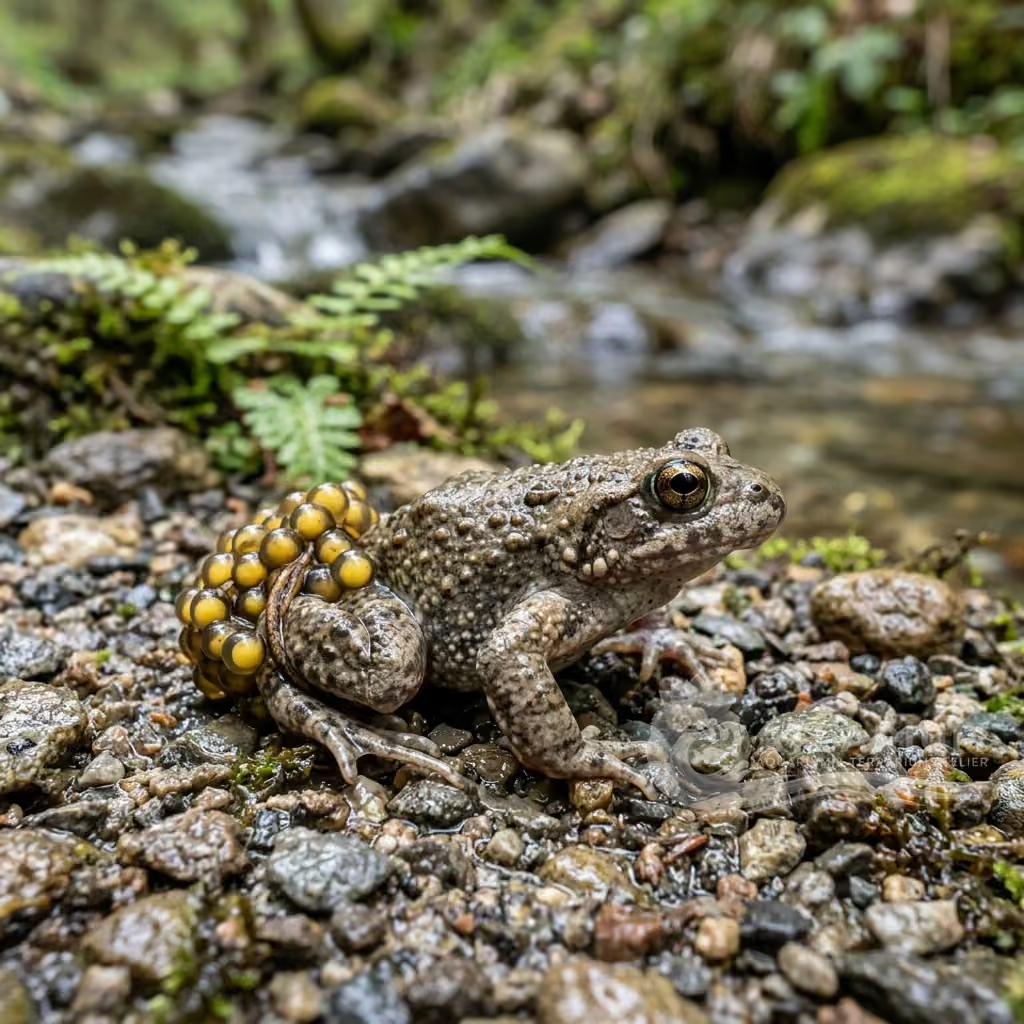
Colorado River Toad
Incilius alvarius
The largest toad in North America, endemic to the Sonoran Desert. Famous for the potent defensive secretions (5-MeO-DMT) produced by its parotoid glands.
Environment
Terrestrial
Humidity
30 - 50 %
Day temperature
25 - 32 °C
Night temperature
20 - 25 °C

Species description
Geographical Origin and Habitat: A massive amphibian species endemic to the Sonoran Desert in North America, spanning southern Arizona, southwestern New Mexico, and northwestern Mexico. It inhabits arid scrublands, dry grasslands, and ephemeral washes or canyons, spending the hot, dry seasons buried deep underground to escape extreme heat and predators.
Taxonomy and Genetics: Known historically as *Bufo alvarius*, the Colorado River Toad is the largest toad native to North America, reaching lengths of 12–19 cm. Its skin is exceptionally smooth and leathery compared to other toads, with coloration ranging from dark green or olive to greyish-brown. It features prominent, large parotoid glands on the sides of the neck and large white glandular tubercles on its hind legs. These glands secrete a thick, milky substance rich in 5-MeO-DMT and bufotenin.
Behavior and Habits: A highly fossorial, nocturnal species that spends the hot day buried in sand, clay, or abandoned rodent burrows. They emerge at night, particularly during summer monsoon rains, to feed and breed. They are opportunistic and voracious predators, consuming a wide range of invertebrates and small vertebrates.
Morphology: Mature females are significantly larger, heavier, and rounder than males, often weighing over a kilogram. Males are smaller, possess darker throats, and develop rough nuptial pads on their thumbs during the breeding season to assist in amplexus.

Care, breeding and tankmates
Terrarium Setup: Due to their size and power, they require a large and robust horizontal enclosure (minimum 100x50x50 cm). The substrate must be deep (at least 15–20 cm) and diggable, consisting of a mix of organic soil, sand, and clay that remains damp in the lower layers but dry on the surface. Provide heavy cork bark caves or half-buried logs as hides. A large, shallow, and heavy water bowl is mandatory for bathing, and it must be cleaned frequently as they tend to defecate in water.
Lighting and Heating: Require a dry, desert-like thermal gradient, with a daytime basking spot at 30–32°C and a cool zone of 24–26°C. Never use under-tank heating mats, as burrowed toads can suffer fatal thermal burns; use overhead ceramic heaters or basking spots instead. At night, drop the temperature to 20–22°C. A 5–10% UVB light is essential to prevent metabolic bone disease in these massive animals.
Humidity and Hydration: Maintain moderate overall humidity (50–60%). Excellent ventilation is vital to prevent stagnant conditions that can cause skin infections (such as "red leg" syndrome) due to their large amount of waste. Mist the terrarium occasionally in the evening using dechlorinated water. The lower layers of the substrate must remain slightly damp so they can hydrate while buried.
Feeding and Supplementation: Voracious, opportunistic carnivores. They eat large insects (crickets, dubia roaches, and locusts), earthworms, and occasionally appropriately sized rodents (fuzzies or pinkies). They will attempt to eat anything that moves; feed them using long tongs to avoid painful bites to fingers. Supplying a high-quality calcium, D3, and multivitamin powder twice a week is vital for skeletal health.
Compatibility: Best housed individually. While individuals of the exact same size may tolerate each other, they are highly food-driven, and there is a high risk of cannibalism if there is any size discrepancy. Never house them with other species.
Health and Common Diseases: The milky secretion from their parotoid glands contains highly potent cardiotoxins (bufotenins) and hallucinogens that are lethal if ingested by pets (dogs or cats). Extracting or consuming these toxins is illegal and highly dangerous for humans. Always handle them with gloves; their secretions cause severe irritation to eyes and mucous membranes. Maintain strict hygiene to prevent ammonia toxicity from their massive feces.

Geographic origin and distribution
A massive amphibian species endemic to the Sonoran Desert in North America, spanning southern Arizona, southwestern New Mexico, and northwestern Mexico. It inhabits arid scrublands, dry grasslands, and ephemeral washes or canyons, spending the hot, dry seasons buried deep underground to escape extreme heat and predators.
Origin
Central America and CaribbeanNorth America

Amphibian profile
- Diet
- Carnivore
- The Colorado River Toad is a voracious predator with a diet that includes insects, spiders, and occasionally small vertebrates. They forage actively during the wet season, consuming beetles, grasshoppers, and even small lizards or mice. In a terrarium, their diet should consist of large crickets, superworms, and roaches, supplemented with calcium.
- Life expectancy
- 10-20 years
- Adult size
- 19 cm
- Lifestyle/Microhabitat
- Terrestrial
- As a semi-fossorial desert species, they spend a significant portion of their lives underground to avoid desiccation. They inhabit arid and semi-arid regions, usually remaining near temporary water sources or permanent streams. A captive environment must provide a deep substrate for burrowing and a large, shallow water dish for soaking.
- Activity cycle
- Nocturnal
- This toad is primarily nocturnal, seeking refuge from the extreme desert heat during the daytime. They become highly active at night, especially during the summer monsoon season when humidity spikes. Their periods of surface activity are relatively brief, corresponding strictly to the most favorable environmental conditions.
- Sociality
- Solitary
- They are generally slow-moving and docile, relying on their massive size and potent toxins rather than speed for defense. During the dry season, they retreat deep underground into rodent burrows to wait for the rains. If confronted by a predator, they may inflate their lungs to appear even larger and exude their milky poison.
- Reproduction
- Oviparous
- Breeding is explosive and entirely dependent on the heavy summer rains brought by the monsoon season. Adults congregate in huge numbers in temporary rain pools, where males emit low-pitched calls to attract females. Following amplexus, the female deposits thousands of eggs in long, tangled strings that attach to underwater debris.
- Toxicity
- Highly toxic
- This species is famous for possessing highly toxic skin secretions that contain powerful psychoactive compounds like 5-MeO-DMT. These toxins are released from large parotoid glands and can be fatal to predators such as dogs and raccoons. Absolute care must be taken to wash hands completely after any contact to prevent severe poisoning.
- Life stage
- Metamorphosis
- Their life cycle involves aquatic eggs, rapid tadpole development, and eventual metamorphosis into robust terrestrial adults. The tadpole stage is remarkably fast, allowing them to transform before their temporary breeding pools dry up. As adults, they grow into one of the largest toad species native to North America, developing smooth, leathery skin.
- Handling tolerance
- Display only
- Handling should be extremely limited due to the high toxicity of their skin secretions and the stress it causes. When handling is unavoidable, wearing thick, moistened nitrile gloves is absolutely mandatory for the handler's safety. Always ensure they are moved gently and securely, and wash all equipment and hands immediately afterward.
- Brumation
- Required
- In their natural desert habitat, they undergo a long period of dormancy underground during the dry, cool winter months. This extended brumation is vital for their long-term health and stimulates their reproductive cycle upon emergence. In captivity, a carefully monitored cooling period with reduced moisture is often provided to replicate this natural cycle.
- Molting
- Regular
- Like other toads, they shed their skin regularly to accommodate their massive growth and keep their skin healthy. The shedding process is characterized by gaping, puffing, and rubbing their body to free the shedding layer. The toad will invariably ingest the shed skin to reclaim the energy and nutrients invested in it.

Related species
Recommendations grouped by close relatives, companion choices, and similar care.