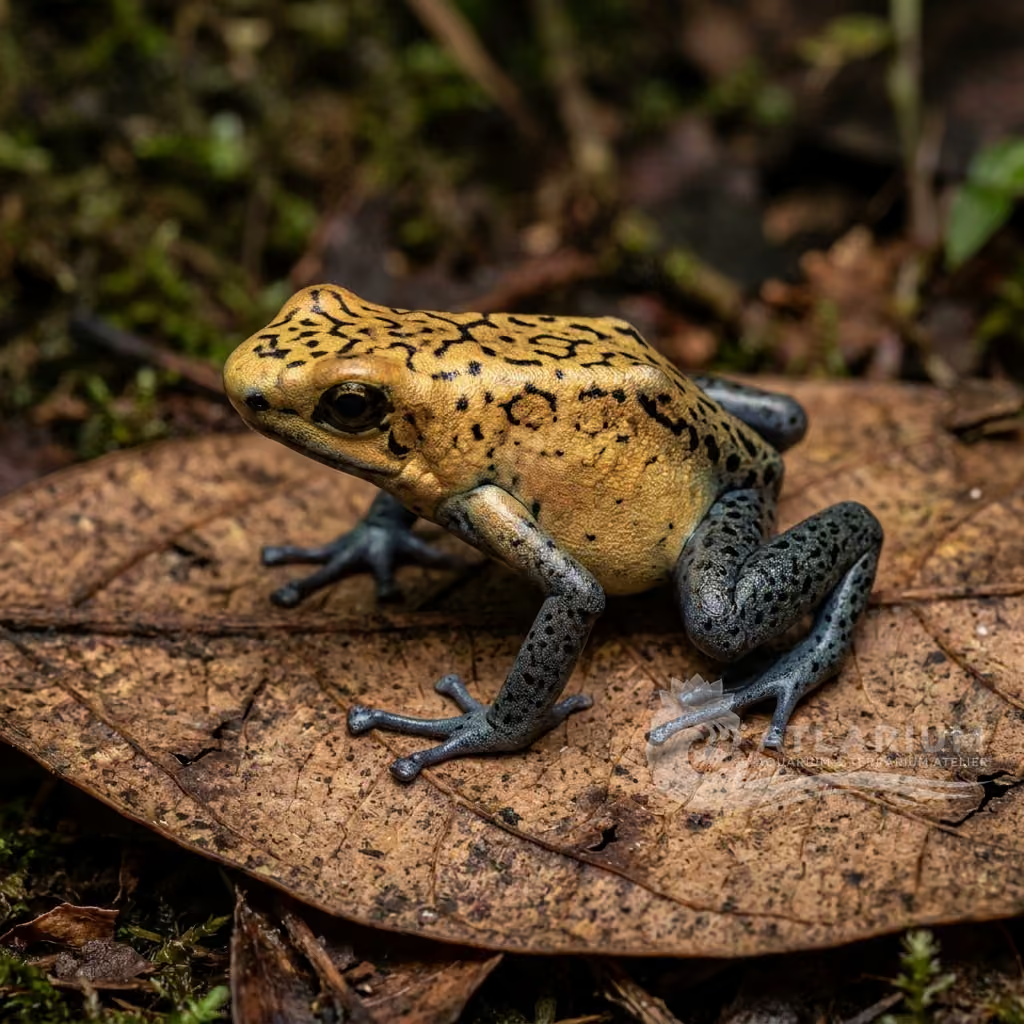
Bumblebee Toad
Melanophryniscus stelzneri
The Bumblebee Toad is a tiny, strictly diurnal South American amphibian known for its walking gait. When threatened, it arches its back to display vivid warning colors of red, black, and yellow.
Environment
Terrestrial
Humidity
60 - 80 %
Day temperature
20 - 25 °C
Night temperature
15 - 20 °C

Species description
Geographical Origin and Habitat: Native to the damp grasslands, rocky steppes, temporary flooded pastures, and high-altitude shrublands of central and northern Argentina, extending into Uruguay and parts of Paraguay. They dwell primarily among dense grass and flat stones, emerging in large numbers during warm summer rains to forage and breed.
Taxonomy and Genetics: A member of the Bufonidae family under the genus Melanophryniscus. Commonly referred to as the Bumblebee Toad or Stelzner's Toad. It is a miniature toad species, reaching an adult size of only 2 to 3.5 centimeters, with females being significantly larger and rounder than the calling males. Their skin is dry and bumpy.
Behavior and Habits: Unlike most amphibians, this species is strictly diurnal and terrestrial. Instead of hopping, they walk around the substrate, actively searching for small prey. When confronted by a threat, they perform a defense posture called the 'Unkenreflex', arching their back to display the bright orange-red warning colors on their palms.
Morphology: Features a plump, rounded body structure. The base color is a deep velvety jet-black, covered dorsally with bright yellow or orange spots. The undersides of the feet, palms, and parts of the lower belly are a brilliant fire-red or bright orange, contrasting sharply with the black body to signal toxicity.

Care, breeding and tankmates
Terrarium Setup: Requires a horizontally oriented terrarium, with minimum dimensions of 60x45x30 cm (24x18x12 inches) for a small group. The substrate should consist of damp organic soil, coconut fiber, and a layer of dried leaf litter. Provide flat pieces of cork bark and smooth stones as hiding spots. A very shallow water dish is mandatory, as they are poor swimmers.
Lighting and Heating: Because they are strictly diurnal, they require bright daytime lighting including a 5% UVB source, which is critical for vitamin D3 synthesis and bone development. Maintain daytime temperatures between 22 and 25°C (71-77°F). A significant nighttime temperature drop to 16-18°C (60-64°F) is highly beneficial. Avoid temperatures exceeding 28°C (82°F).
Humidity and Hydration: Maintain moderate humidity levels, between 50% and 70%, replicating temperate grasslands. Mist the terrarium lightly once a day with dechlorinated water, preferably in the morning to simulate dew. Good ventilation is crucial; stagnant, wet conditions will quickly lead to fatal bacterial skin infections.
Feeding and Supplementation: Strictly insectivorous, feeding on tiny insects due to their small mouth size. Offer small crickets, Drosophila fruit flies, springtails, and pea aphids. Food should be dusted with calcium and vitamin D3 supplements at least twice a week to prevent metabolic bone disease and support their active metabolism.
Compatibility: Highly peaceful and gregarious. They can be safely kept in small groups or colonies of their own species in a well-sized terrarium. They show no territorial aggression. Do not mix them with other amphibian or reptile species, as this can cause immense stress and increase the risk of disease transmission.
Health and Common Diseases: Wild-caught specimens possess skin toxins accumulated from their natural diet, while captive-bred individuals lose this high toxicity. However, they should still not be handled with bare hands due to skin sensitivity. Overheating above 28°C (82°F) is a major risk, leading to rapid dehydration and respiratory failure.

Geographic origin and distribution
Native to the damp grasslands, rocky steppes, temporary flooded pastures, and high-altitude shrublands of central and northern Argentina, extending into Uruguay and parts of Paraguay. They dwell primarily among dense grass and flat stones, emerging in large numbers during warm summer rains to forage and breed.
Origin
Extra-Amazon South America

Amphibian profile
- Diet
- Insectivore
- The Bumblebee Toad primarily feeds on tiny insects like ants, aphids, and fruit flies in its natural habitat. Their small size dictates a specialized diet consisting exclusively of micro-invertebrates found among grasses and rocks. In captivity, they thrive on a constant supply of pinhead crickets, springtails, and selectively bred fruit flies.
- Life expectancy
- 10-15 years
- Adult size
- 3.5 cm
- Lifestyle/Microhabitat
- Terrestrial
- They are entirely terrestrial toads that inhabit rocky outcroppings, grasslands, and forest edges in South America. They do not burrow deeply but seek shelter under stones, logs, or dense vegetation when not foraging. A suitable captive environment must offer plenty of hiding spots and a substrate that allows for shallow digging.
- Activity cycle
- Diurnal
- Unlike many amphibians, the Bumblebee Toad is strictly diurnal, actively hunting for food during daylight hours. They prefer the cooler, more humid times of the morning and late afternoon, avoiding the intense midday sun. In a terrarium, they require a regular day-night lighting cycle to maintain their natural rhythms.
- Sociality
- Gregarious
- These toads are active foragers that boldly explore their environment, relying on their toxicity for protection. If confronted, they perform the 'unken reflex,' arching their backs to display their brightly colored underbellies. This defensive posture effectively startles predators and advertises their unpalatable nature.
- Reproduction
- Oviparous
- Reproduction is triggered by heavy rains, prompting males to congregate at shallow, temporary pools and call for mates. Their breeding cycle is brief and intense, with pairs engaging in amplexus to fertilize the eggs. Females deposit small clutches of eggs attached to submerged vegetation or rocks within the ephemeral water bodies.
- Toxicity
- Harmless
- These colorful toads sequester potent toxic alkaloids from their natural diet of specific ants and mites. Their striking yellow and black aposematic coloration serves as a clear warning to predators about their toxicity. While captive-bred individuals gradually lose this toxicity, they should still be handled carefully, and hand washing remains essential.
- Life stage
- Metamorphosis
- They transition from small aquatic eggs to free-swimming tadpoles before metamorphosing into tiny terrestrial toads. The metamorphs are extremely small and require abundant micro-foods to survive their initial growth phase. Once mature, they maintain their vibrant warning colors and small, robust body structure throughout adulthood.
- Handling tolerance
- Display only
- Handling should be generally avoided to protect their delicate skin and to minimize stress to the animal. If they must be moved, it is best to coax them into a small container rather than grabbing them directly. Always use moistened, clean gloves if physical contact is unavoidable, ensuring gentle support.
- Brumation
- Required
- In their native range, they experience cooler winter temperatures and may undergo a mild brumation period. During this time, they retreat under rocks or deep into the soil and their activity levels drop significantly. For captive breeding, providing a controlled cooling period with reduced feedings can help simulate these seasonal changes.
- Molting
- Regular
- Shedding is a regular process for these small toads, essential for maintaining skin health and accommodating growth. They will display typical shedding behaviors such as arching, rubbing, and pulling the skin forward with their limbs. The shed skin is promptly consumed, a common amphibian trait that conserves vital nutrients.

Related species
Recommendations grouped by close relatives, companion choices, and similar care.