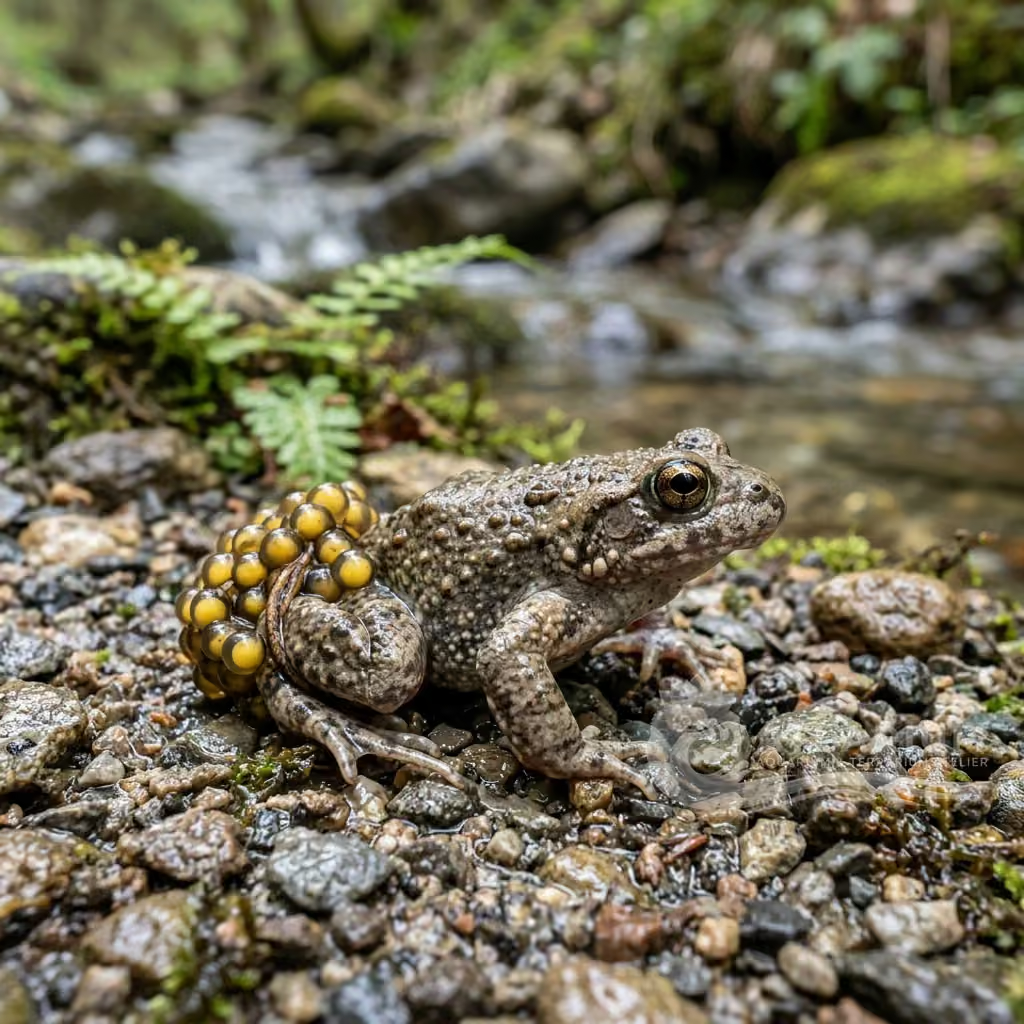
Variable Harlequin Toad
Atelopus varius
The Harlequin Toad exhibits a breathtaking psychedelic pattern of neon colors on a dark background. This diurnal gem lives near rocky streams but is critically endangered due to the chytrid fungus.
Water Temperature
20 - 24 °C
pH Value
6.5 - 7.5
Environment
Freshwater / Semi-aquatic
Humidity
80 - 90 %
Day temperature
20 - 23 °C
Night temperature
16 - 18 °C
Ambient temperature
20 - 23 °C
Minimum enclosure
>= 45 L

Species description
Geographical Origin and Habitat: Endemic to the cool, misty premontane and montane rainforests and rocky streams of Costa Rica and western Panama. Critically endangered in the wild. They live on mossy rocks and root systems near fast-flowing mountain streams.
Taxonomy and Genetics: Family Bufonidae. Commonly known as the Harlequin Toad or Costa Rican Variable Harlequin Toad. Not a true frog, but a small, diurnal, terrestrial toad. It is a key symbol of global amphibian conservation.
Behavior and Habits: Active during the day. Since they live near loud waterfalls, they do not communicate vocally; instead, they use visual signaling called "semaphoring" (waving their hands to declare territories and attract mates).
Morphology: Slender, spigolose body reaching 3.5-5 cm in length. Coloration is a striking aposematic pattern: a deep black or dark brown background covered in brilliant yellow, lime green, orange, or red markings. Females are larger and rounder than males.

Care, breeding and tankmates
Terrarium Setup: Requires a vertical or cubic riparian terrarium (minimum 45x45x45 cm). Furnish with large, smooth river stones, a water filter, branches, and live sphagnum moss. A large, clean running water section (simulating a stream) is essential.
Lighting and Heating: Prefers cool temperatures between 20-23°C during the day, dropping to 16-18°C at night. Avoid temperatures above 25°C, which are lethal. Provide 5% UVB lighting.
Humidity and Hydration: Requires high humidity (80-90%) with excellent ventilation. Stagnant, warm air is highly dangerous. Mist daily with reverse osmosis water, but provide dry rocks for basking and thermoregulation.
Feeding and Supplementation: Insectivorous. Feeds on small prey like micro-crickets, fruit flies, and springtails. Dust prey with calcium and vitamin D3 supplements three times a week.
Compatibility: Males are territorial over basking sites. Best kept in harems (1 male, multiple females) in spacious setups. Never mix with other species.
Health and Common Diseases: Highly susceptible to the chytrid fungus (Batrachochytrium dendrobatidis) and heat stroke. Avoid handling as human skin residues are toxic. Maintain pristine water and substrate conditions.

Geographic origin and distribution
Endemic to the cool, misty premontane and montane rainforests and rocky streams of Costa Rica and western Panama. Critically endangered in the wild. They live on mossy rocks and root systems near fast-flowing mountain streams.
Origin
Extra-Amazon South AmericaCentral America and CaribbeanEast Asia

Amphibian profile
- Diet
- Insectivore
- The Variable Harlequin Toad primarily consumes small terrestrial insects, including ants, beetles, and various arthropods. In the wild, they actively forage during the day along the forest floor and near streams. Providing a varied diet of fruit flies, pinhead crickets, and springtails is crucial in captivity to mimic their natural intake.
- Life expectancy
- 10-12 years
- Adult size
- 6 cm
- Lifestyle/Microhabitat
- Terrestrial
- They inhabit terrestrial riparian zones, frequently climbing on low-hanging vegetation and rocks bordering fast-moving water.
- Activity cycle
- Diurnal
- Variable Harlequin Toads are active during the day, patrolling their territories along rainforest streams and using vivid colors to warn predators.
- Sociality
- Solitary
- This species is diurnal and highly active during the day, often seen moving cautiously along the leaf litter and rocky stream banks. Males are territorial and will visually signal other males through slow arm-waving before engaging in physical wrestling. They display a deliberate and slow walking motion, rarely leaping like other typical frog species.
- Reproduction
- Oviparous
- Breeding typically occurs in fast-flowing mountain streams where the males call to attract females during the wet season. The female deposits long strings of eggs in shallow water, securely attaching them to submerged rocks. The tadpoles are specially adapted with sucker-like mouths to cling to stones and avoid being swept away by strong currents.
- Toxicity
- Highly toxic
- Like many brilliantly colored amphibians, the Variable Harlequin Toad secretes powerful neurotoxins from its skin as a defense mechanism against predators. The most notable toxin they produce is tetrodotoxin, which can be lethal if ingested by most natural enemies. Their striking warning coloration acts as a clear visual deterrent, signaling their high toxicity to potential threats.
- Life stage
- Metamorphosis
- The life cycle begins with aquatic eggs that rapidly hatch into specialized, rheophilous tadpoles suited for fast-flowing streams. These tadpoles undergo metamorphosis over several weeks, developing into miniature, fully terrestrial toadlets that venture into the forest. They then grow steadily into brightly colored, toxic adults capable of surviving and breeding in their mountainous habitat.
- Handling tolerance
- Display only
- Display only. Like other Atelopus species, their skin contains powerful tetrodotoxin-like poisons, making any handling potentially dangerous and stressful for the toad.
- Brumation
- They do not brumate. They require a constantly humid, relatively cool tropical environment without distinct winter seasons.
- Molting
- Periodic
- They require highly humid microclimates and constant access to clean water spray to safely shed and ingest their skin without complications.

Related species
Recommendations grouped by close relatives, companion choices, and similar care.