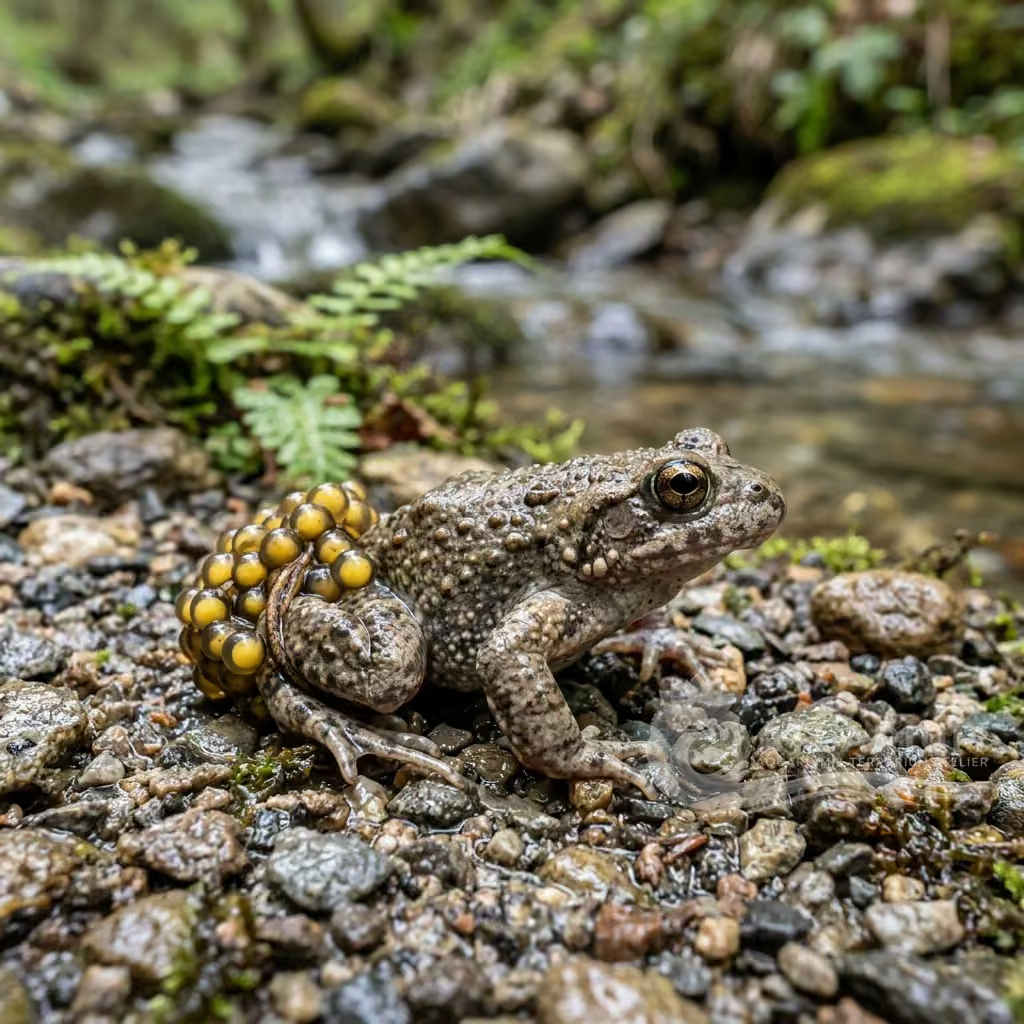
African Dwarf Frog
Hymenochirus boettgeri
The African Dwarf Frog is a tiny, fully aquatic, and highly active species. Long-lived and peaceful, it thrives in stable, warm water aquariums and relies on a strictly carnivorous, high-protein diet.
Water Temperature
22 - 28 °C
pH Value
6.5 - 7.8
Environment
Freshwater
Humidity
100 %
Day temperature
25 °C
Night temperature
21 °C
Ambient temperature
25 °C
Minimum enclosure
>= 45 L

Species description
Geographical Origin and Habitat: A fully aquatic, tiny, and gregarious frog species endemic to stagnant ponds, flooded forests, oxbow lakes, and slow-moving rivers of Central Africa and the Congo River basin (including the Democratic Republic of the Congo, Cameroon, and Nigeria). Known commonly as the African Dwarf Frog, it inhabits muddy substrates and submerged roots, sheltering from predatory fish and wading birds.
Taxonomy and Genetics: Belonging to the family Pipidae, *Hymenochirus boettgeri* is a miniature aquatic frog reaching an adult size of 3–4 cm. It is crucial not to confuse it with the African clawed frog (*Xenopus laevis*), which grows much larger and is highly predatory. The African Dwarf Frog features a flattened body, granular skin, and webbing on all four feet. The dorsal coloration varies from grey and brown to olive green, speckled with small black spots that provide excellent camouflage against sandy or muddy substrates. Small black claws are present on the hind toes.
Behavior and Habits: A peaceful, sluggish, and almost entirely aquatic species that spends its time on the bottom or swimming in the mid-water column. As they breathe atmospheric air, they must periodically dart to the surface for oxygen. They are nocturnal hunters with relatively poor eyesight, locating small aquatic prey by smell and tactile sensations.
Morphology: Sexual dimorphism becomes apparent in mature individuals. Females are generally larger, heavier, and rounder than males. Males are more slender and possess small, visible post-axillary subdermal glands (breeding glands) behind their front legs. During the breeding season, males may produce a quiet, buzzing click call underwater.

Care, breeding and tankmates
Terrarium Setup: Although categorized in the terrarium section, these are strictly aquatic frogs and require an aquarium (minimum 40–50 liters). The tank height should be moderate (under 30 cm) so they can easily reach the surface for air. The substrate must consist of very fine sand, as coarse gravel can be accidentally swallowed, causing fatal intestinal impaction. Provide dense live plants (such as Anubias and Java Fern) and driftwood to offer secure hiding spots. A slow, gentle filter (like a sponge filter or a low-flow hang-on-back filter) is essential, as strong currents will exhaust them.
Lighting and Heating: Maintain a stable water temperature between 24–26°C using a high-quality submersible heater equipped with a protective guard to prevent direct contact burns. They are highly sensitive to extreme temperatures: temperatures below 20°C cause severe lethargy and appetite loss, while temperatures exceeding 28°C can trigger bacterial infections. Moderate aquarium LED lighting is sufficient for both the frogs and plants.
Humidity and Hydration: As strictly aquatic organisms, their skin must remain submerged. Water quality is of paramount importance. Use dechlorinated tap water or a mix of reverse osmosis and tap water. The presence of chlorine, chloramines, or heavy metals is lethal. Regular weekly water changes of 20% and a mature biological filtration system are required to prevent ammonia and nitrite spikes.
Feeding and Supplementation: Strictly carnivorous with very small mouths. They must be fed live or frozen foods such as bloodworms, tubifex, brine shrimp, and daphnia, or specialized sinking micro-pellets. They will not eat standard fish flakes. Because they locate food via smell and touch, feed them in a designated spot or use long feeding tongs.
Compatibility: Exceptionally peaceful and highly social. They should be housed in small groups of 3 to 5 individuals. They can be kept in a community tank with small, peaceful, and non-aggressive fish (such as Neon Tetras, Corydoras, and Harlequin Rasboras). Avoid large or aggressive fish that could nip at their limbs or view them as prey.
Health and Common Diseases: Highly sensitive to water pollution; exposure to ammonia or nitrites frequently causes bloat (dropsy), a condition where the frog swells with fluid, which is often fatal. They are also vulnerable to fungal infections and chytridiomycosis. Avoid handling them; if necessary, wash hands thoroughly before and after, as residues on human skin can burn their semi-permeable membranes.

Geographic origin and distribution
A fully aquatic, tiny, and gregarious frog species endemic to stagnant ponds, flooded forests, oxbow lakes, and slow-moving rivers of Central Africa and the Congo River basin (including the Democratic Republic of the Congo, Cameroon, and Nigeria). Known commonly as the African Dwarf Frog, it inhabits muddy substrates and submerged roots, sheltering from predatory fish and wading birds.
Origin
Africa and Madagascar

Amphibian profile
- Diet
- Carnivore
- The African Dwarf Frog is an entirely aquatic carnivore that actively hunts for small live prey in the water column and substrate. Its diet mainly consists of bloodworms, brine shrimp, daphnia, and mosquito larvae. Because they are visual hunters that rely on sudden strikes to engulf food, providing sinking pellets or live foods is essential in an aquarium setting.
- Life expectancy
- 5-10 years
- Adult size
- 6 cm
- Lifestyle/Microhabitat
- Aquatic
- They are fully aquatic amphibians that spend their entire lives underwater, occasionally darting to the surface to gulp air since they lack gills as adults.
- Activity cycle
- Diurnal
- Although they can be active at any time of the day, African Dwarf Frogs are primarily diurnal and crepuscular, spending much of their time foraging for food along the bottom of the aquarium.
- Sociality
- Solitary
- African Dwarf Frogs spend their entire lives underwater but lack gills, so they must regularly dart to the surface to breathe air. They are generally peaceful and social creatures that frequently rest together at the bottom of the tank or hide among aquatic plants. When startled, they use their powerful, webbed hind legs to swim rapidly to the nearest cover.
- Reproduction
- Oviparous
- Breeding behavior is often triggered by fluctuations in water level and temperature that simulate the onset of the rainy season. During mating, the male grasps the female in amplexus, and they swim together towards the surface in a 'spawning roll.' The female releases hundreds of tiny eggs that adhere to floating vegetation or the water surface, where they quickly hatch into larvae.
- Toxicity
- Harmless
- This small frog species is completely non-toxic and lacks any chemical defense mechanisms. Its primary means of survival is avoiding detection by blending into the muddy, plant-filled environments of its native African rivers. In captivity, they pose absolutely no danger to humans or other fish species sharing their tank.
- Life stage
- Metamorphosis
- The tiny, carnivorous tadpoles hatch after a few days and remain near the surface, feeding on microscopic infusoria. They develop rapidly, sprouting legs and absorbing their tails over the course of several weeks. The resulting juvenile frogs quickly adopt the benthic lifestyle of adults, spending most of their time scavenging at the bottom.
- Handling tolerance
- Display only
- As fully aquatic and delicate amphibians, they should never be handled unless absolutely necessary. Handling causes extreme stress and risks damaging their protective slime coat.
- Brumation
- Native to tropical regions of Africa, these frogs do not require a brumation period and should be kept at stable, warm water temperatures year-round.
- Molting
- Regular
- They regularly shed their skin in the water, appearing as a translucent, ghost-like film. The frog will often use its claws to help pull the shed off and will typically consume it for nutrients.

Related species
Recommendations grouped by close relatives, companion choices, and similar care.