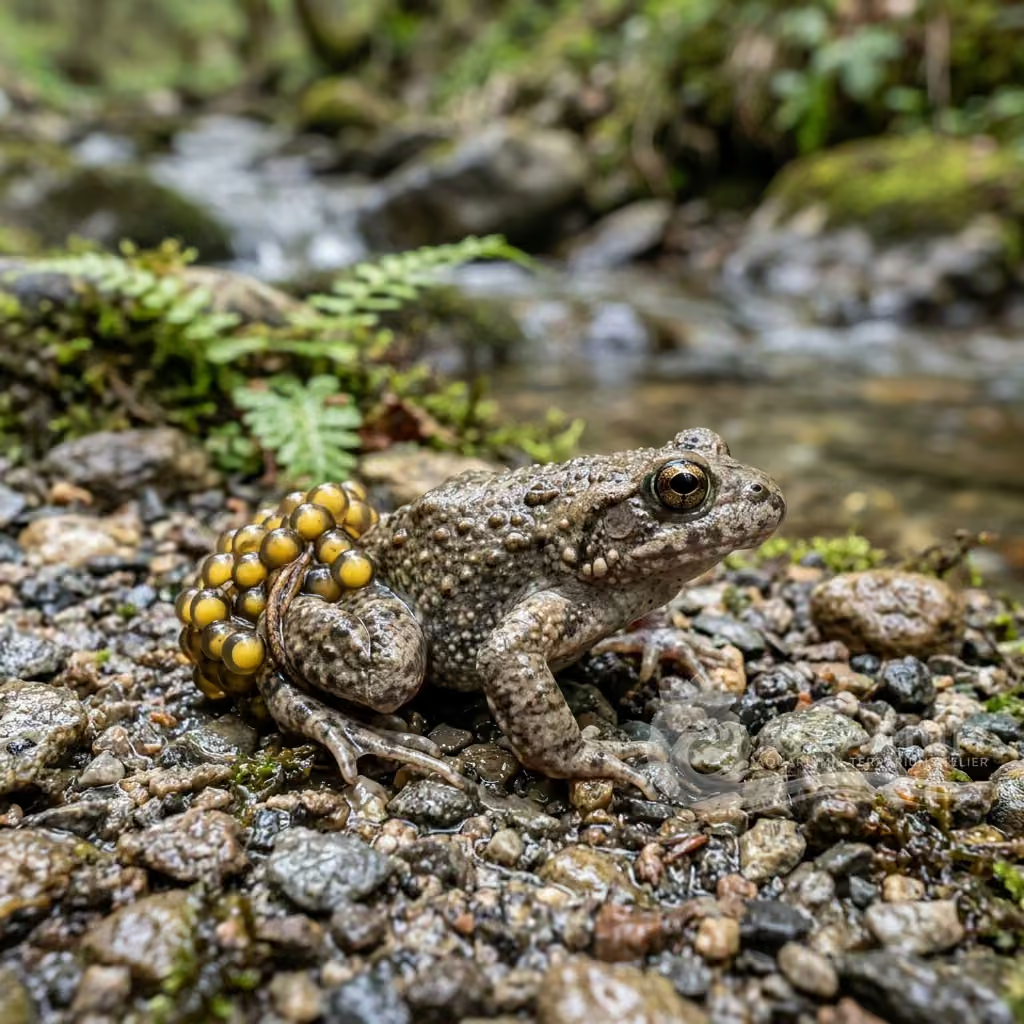
African Clawed Frog
Xenopus laevis
The African Clawed Frog is a large, incredibly hardy aquatic species famous for its black claws and voracious appetite. It navigates water using a sensitive lateral line system to detect water movement.
Water Temperature
18 - 24 °C
pH Value
6.5 - 8
Environment
Freshwater
Humidity
100 %
Day temperature
21 °C
Night temperature
17 °C
Ambient temperature
21 °C
Minimum enclosure
>= 45 L

Species description
Geographical Origin and Habitat: Native to the Congo basin and South Africa. Due to escapes and releases, it has become a highly invasive species in Europe, North America, and other regions, inhabiting slow-moving rivers, swamps, and muddy ponds.
Taxonomy and Genetics: A large, flat aquatic frog reaching 10–15 cm. The skin is smooth and slippery, featuring a visible sensory lateral line system. It has unwebbed front fingers used for shoving food into its mouth, and fully webbed hind feet with three black claws.
Behavior and Habits: Entirely aquatic and highly active. It cannot survive on land. Lacking a tongue, it uses its front hands to sweep prey into its large mouth. Males emit a clicking sound underwater to attract mates.
Morphology: Females are significantly larger and rounder than males, often looking like plump balloons. Males are much smaller and develop dark nuptial pads on their forelimbs during breeding.

Care, breeding and tankmates
Terrarium Setup: Requires a large aquarium (minimum 80–100 liters). The bottom must be bare or covered with fine sand, as gravel will be swallowed and cause fatal intestinal impactions. A secure, heavy lid is mandatory to prevent escapes.
Lighting and Heating: Keep water temperatures at a moderate 20–24°C; a water heater is recommended but they are highly temperature-tolerant. Provide low-to-moderate LED lighting and hideouts like PVC pipes or smooth caves.
Humidity and Hydration: Fully aquatic. They require a powerful canister filter to handle their high waste output. Perform weekly 50% water changes using dechlorinated water to maintain water health.
Feeding and Supplementation: Highly voracious carnivores. Feed them earthworms, frozen bloodworms, fish, and sinking carnivore pellets. They will eat constantly; food intake must be regulated to prevent obesity.
Compatibility: Highly cannibalistic and predatory. They will swallow any fish, smaller frogs, or tank mates that fit in their mouths. They should be housed alone or in groups of similar size.
Health and Common Diseases: Highly prone to bloat (dropsy) caused by poor water hygiene or kidney failure, which causes them to swell with fluid. Scratching with their sharp hind claws can cause scratches during maintenance.

Geographic origin and distribution
Native to the Congo basin and South Africa. Due to escapes and releases, it has become a highly invasive species in Europe, North America, and other regions, inhabiting slow-moving rivers, swamps, and muddy ponds.
Origin
Cosmopolitan or introducedNorth AmericaAfrica and MadagascarEurope, Mediterranean, and West Asia

Amphibian profile
- Diet
- Omnivore
- The African Clawed Frog is a ravenous and highly adaptable aquatic scavenger. They lack tongues, so they use their sensitive, unwebbed front fingers to shovel food—ranging from insects and small fish to carrion—directly into their mouths. In captivity, they eagerly consume earthworms, bloodworms, and specialized sinking pellets.
- Life expectancy
- 15-20 years
- Adult size
- 12 cm
- Lifestyle/Microhabitat
- Aquatic
- This species is entirely aquatic, living entirely in water bodies. They have powerful hind legs for swimming and come to the surface only to breathe air.
- Activity cycle
- Nocturnal
- African Clawed Frogs are primarily nocturnal, becoming most active at night when they forage for food, though they may opportunistically feed during the day if food is present.
- Sociality
- Solitary
- This fully aquatic frog has a flattened body perfectly suited for sliding through muddy waters and submerged vegetation. To detect prey in murky environments, they rely on a highly developed lateral line system across their body that senses water vibrations. If forced to migrate due to drought, they can occasionally move across land to find new bodies of water.
- Reproduction
- Oviparous
- Breeding occurs in stagnant waters, often stimulated by a drop in temperature followed by a rise, simulating heavy rainfall. Males lack vocal cords but produce clicking sounds underwater to attract females. During amplexus, the female lays hundreds of sticky eggs, individually attaching them to submerged plants and rocks.
- Toxicity
- Harmless
- African Clawed Frogs do not secrete powerful lethal toxins, but they do produce a slick, mildly irritating mucus layer to protect their skin from infections. This mucus also makes them incredibly slippery and difficult for predators to grasp. They are safe to handle, though care should be taken to keep their skin moist.
- Life stage
- Metamorphosis
- The eggs rapidly develop into transparent, filter-feeding tadpoles that look remarkably similar to tiny catfish, complete with barbels. These tadpoles hover in the water column, filtering microscopic algae until they undergo a massive transformation. Following metamorphosis, they lose their filter-feeding apparatus and become the voracious, clawed adult frogs.
- Handling tolerance
- Display only
- They should be considered display-only animals. Handling is extremely stressful, can dry out their sensitive skin, and removes their protective mucus layer.
- Brumation
- While they can survive cool temperatures and may undergo a period of reduced activity in the wild during dry or cool spells, true brumation is not required in captivity.
- Molting
- Regular
- Shedding occurs entirely underwater. The frog will contort its body and use its front limbs to push the old skin into its mouth, consuming it to recycle valuable proteins.

Related species
Recommendations grouped by close relatives, companion choices, and similar care.