Long-tailed Salamander
Eurycea longicauda
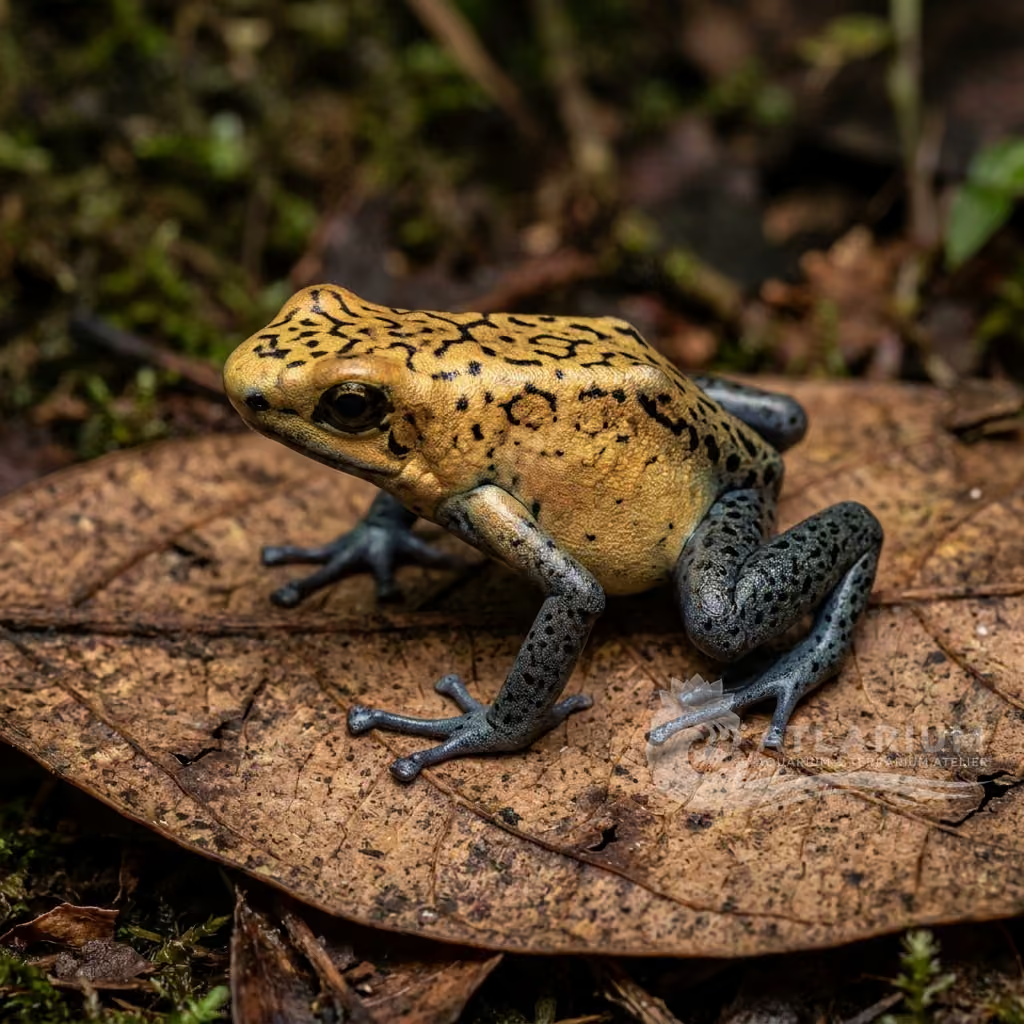
The long-tailed salamander is a slender, vividly yellow and black lungless amphibian. Found near streams, it requires a 75L semi-aquatic paludarium with clean water, high humidity, and plenty of damp rocky crevices.
Water Temperature
10 - 18 °C
pH Value
6.5 - 7.5
Environment
Freshwater / Semi-aquatic
Humidity
80 - 100 %
Day temperature
14 - 20 °C
Night temperature
10 - 14 °C
Ambient temperature
14 - 20 °C
Minimum enclosure
>= 45 L

Species description
Geographical Origin and Habitat: A shy, stream-dwelling, and rock-dwelling species endemic exclusively to cold mountain streams, dripping limestone caves, damp rock crevices, and gorges of the Appalachian Mountains and the east-central United States. The Long-tailed Salamander lives among water-sprayed rocks and moss, avoiding direct sunlight, drought, and high temperatures.
Taxonomy and Genetics: Belonging to the family Plethodontidae (lungless salamanders), this species reaches an adult length of 12-16 cm, of which the tail accounts for over 60%. The body is slender and filiform with a highly smooth, moist, and permeable skin. The coloration is a bright mustard-yellow, pale orange, or golden-yellow, heavily speckled with black spots. The tail is long and semi-prehensile, featuring a distinctive black vertical herringbone pattern along the sides.
Behavior and Habits: This is an agile, crepuscular, and nocturnal rock-dweller. During the day, it remains hidden under rocks, wet logs, or inside dark caves. At night, it becomes active, climbing vertical rock faces to hunt small invertebrates like spiders and springtails using its rapid, projectile tongue. During cold winters, it retreats deep into cave systems or underground crevices.
Morphology: Sexual dimorphism is subtle. Mature females tend to be slightly stockier and wider in the abdomen when carrying eggs, while males are generally more slender.

Care, breeding and tankmates
Terrarium Setup: Requires a tall paludarium or vertical terrarium (minimum 45x45x60 cm). The layout should feature a shallow pool (20-30% of the surface area) with cool, running water (such as a small waterfall filter) and a vertical land area (70% of the space) composed of cork bark, damp rocks, and live moss to simulate a stream-side cliff environment.
Lighting and Heating: These montane amphibians require very cool temperatures, ideally between 14-20°C. Temperatures above 23°C are rapidly lethal. In warm regions, an aquarium chiller or locating the enclosure in a cool basement is necessary. Night temperatures should drop to 10-14°C. Provide low-intensity LED lighting, as they are sensitive to bright light and prefer dark crevices.
Humidity and Hydration: As lungless salamanders, they require very high humidity (80-100%) combined with excellent ventilation (using small fans if necessary) to prevent stagnant air and fungal infections. Water quality must be immaculate; use dechlorinated water or reverse osmosis water remineralized. Perform weekly 30% water changes and maintain efficient filtration.
Feeding and Supplementation: Strictly carnivorous micro-predators. Feed a variety of small, live invertebrates such as fruit flies, springtails, small earthworms, and bloodworms. Feeder insects should be dusted with calcium and vitamin supplements once or twice a week to support bone health.
Compatibility: Exceptionally peaceful and communal with their own species. They can be housed in small groups or harems if provided with sufficient hiding spots. They should not be kept with predatory fish or other amphibian species; a species-specific setup is highly recommended.
Health and Common Diseases: Highly sensitive to heat stress and stagnant air, which can quickly cause respiratory distress and death. Lungless salamanders absorb oxygen through their skin, making them extremely vulnerable to skin infections (chytrid or other fungi) and toxic ammonia buildup. Never handle them with bare hands, as human skin oils and residues are toxic and can chemically burn them.

Geographic origin and distribution
A shy, stream-dwelling, and rock-dwelling species endemic exclusively to cold mountain streams, dripping limestone caves, damp rock crevices, and gorges of the Appalachian Mountains and the east-central United States. The Long-tailed Salamander lives among water-sprayed rocks and moss, avoiding direct sunlight, drought, and high temperatures.
Origin
North America

Amphibian profile
- Diet
- Insectivore
- The diet of Eurycea longicauda consists primarily of appropriately sized prey items found in its natural habitat. In captivity, they should be offered a varied selection of live insects, worms, or small invertebrates to ensure nutritional balance. It is important to gut-load the feeder insects and occasionally dust them with high-quality calcium and vitamin supplements. Monitoring their food intake helps prevent obesity and maintains optimal health. Fresh water must always be available to aid in digestion.
- Life expectancy
- 5-10 years
- Adult size
- 20 cm
- Lifestyle/Microhabitat
- Semi-aquatic
- Eurycea longicauda leads a specialized lifestyle adapted to the specific niches of its ecosystem, whether that involves climbing, burrowing, or swimming. Its daily routine is a delicate balance of thermoregulation, seeking out hydration, and avoiding predators. In a captive environment, replicating these microhabitats—such as providing ample climbing branches or deep substrate—is crucial for their well-being. They generally thrive when left undisturbed to carry out their natural routines. A proper setup dramatically improves their lifespan and overall vitality.
- Activity cycle
- Nocturnal
- The activity pattern of Eurycea longicauda is heavily influenced by the specific light cycle and ambient temperatures of its native range. It may be primarily diurnal, nocturnal, or crepuscular, meaning its peak activity times align with the safest and most optimal conditions for survival. During these active periods, they can be seen exploring, hunting, or patrolling their territory. Careful regulation of the enclosure's lighting and heating schedules will help maintain these natural circadian rhythms. Disruptions to this pattern can cause significant stress or lethargy.
- Sociality
- Solitary
- Eurycea longicauda is known for its fascinating and unique behavioral traits that reflect its evolutionary adaptations. Observers may notice periods of active foraging interspersed with long spells of resting or hiding. They interact with their environment carefully, using their specialized senses to navigate and detect both prey and potential threats. While some individuals can be quite shy and reclusive, others may exhibit bold and curious behavior when comfortable in their enclosure. Providing a complex habitat with plenty of enrichment is essential for expressing natural behaviors.
- Reproduction
- Oviparous
- Reproduction for Eurycea longicauda typically follows a seasonal pattern, often triggered by specific environmental changes such as temperature or humidity fluctuations. Mating behaviors can include complex courtship displays or specific vocalizations to attract a partner. After successful mating, the female will carefully deposit eggs or give birth, depending on the reproductive strategy of the species. Incubation or gestation periods require stable, precise conditions to ensure the healthy development of the offspring. Breeders must pay close attention to providing the right nesting environment.
- Toxicity
- Harmless
- They do not possess severe defensive toxins but can secrete a mildly distasteful mucus when stressed or threatened. Their primary defense is their speed, agility, and ability to readily detach their long tail if grasped by a predator. Direct handling should be avoided, as their skin is delicate and prone to absorbing harmful chemicals.
- Life stage
- Adult only
- Larvae hatch equipped with external gills and are fully aquatic, dwelling in shallow streams or seepages. After a developmental period of several months, they complete metamorphosis, losing their gills and transitioning to a terrestrial state. As adults, they develop their characteristic bold patterns and incredibly long tails, living in moist woodland habitats.
- Handling tolerance
- Display only
- Should not be handled. Very agile and quick to drop their tail (autotomy) if grasped or frightened.
- Brumation
- Winter brumation is normal. They retreat into deep crevices, caves, or subterranean groundwater systems to avoid freezing.
- Molting
- Periodic
- Skin shedding requires very high humidity and a wet substrate. The delicate skin is consumed as it comes off.

Related species
Recommendations grouped by close relatives, companion choices, and similar care.