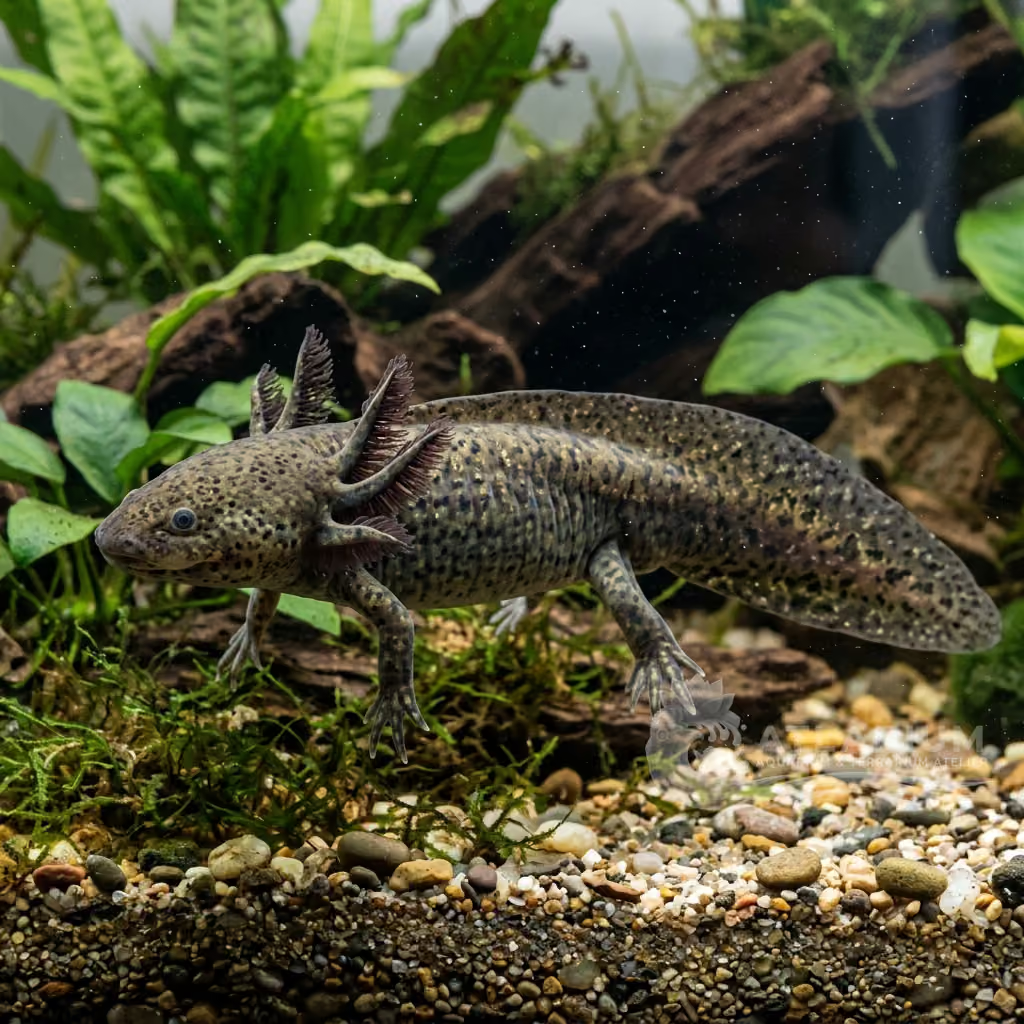
Four-toed Salamander
Hemidactylium scutatum
A small, unique North American lungless salamander. Easily identified by having only four toes on its hind feet and a stark white belly peppered with black spots.
Water Temperature
10 - 18 °C
pH Value
6.5 - 7.5
Environment
Freshwater / Semi-aquatic
Humidity
85 - 95 %
Day temperature
12 - 20 °C
Night temperature
11 °C
Ambient temperature
12 - 20 °C
Minimum enclosure
>= 45 L

Species description
Geographical Origin and Habitat: Distributed across eastern North America, ranging from southern Canada (Ontario, Quebec) down to northern Florida, and west to Minnesota and Alabama. It inhabits damp deciduous forests closely associated with sphagnum bogs, peatlands, vernal pools, and slow streams. They spend their lives hidden beneath deep layers of damp sphagnum moss, rotting logs, and wet leaf litter.
Taxonomy and Genetics: It is the sole member of the monotypic genus Hemidactylium, within the family Plethodontidae (lungless salamanders). Described by Temminck in 1838. Genetically, the species is evolutionarily stable, though isolated disjunct populations exist, particularly in the southern margins, making them vulnerable to habitat fragmentation.
Behavior and Habits: Primarily nocturnal, secretive, and terrestrial. As a lungless salamander, it respires entirely through its skin and mouth lining, requiring constant moisture. They exhibit communal nesting behaviors in sphagnum. When threatened, they can easily drop their tail (caudal autotomy) at a specialized constriction point to escape predators, later regenerating it.
Morphology: A small species, ranging from 5 to 10 cm (2 to 4 inches) in total length. The defining morphological feature is the presence of only four toes on the hind feet (unlike most salamanders which have five). The dorsum is reddish-brown to rust-colored, contrasting sharply with a brilliant white belly dotted with distinct black spots.

Care, breeding and tankmates
Terrarium Setup: A small enclosure measuring approximately 50x30x30 cm (20x12x12 inches) is suitable for a small group. The substrate is critical and must consist of a thick layer of living sphagnum moss over a base of coconut fiber and decayed leaf litter. Provide flat pieces of cork bark and small rotting wood pieces to offer moist, dark terrestrial hides.
Lighting and Heating: This species requires cold conditions. The ideal temperature range is 12-20°C (53-68°F); temperatures consistently exceeding 24°C (75°F) are highly dangerous and often fatal. No heating elements should be used. Lighting must be minimal, utilizing low-wattage LEDs just to sustain the moss and maintain a natural day/night cycle.
Humidity and Hydration: Because they lack lungs, humidity must be kept exceptionally high and stable, between 85% and 95%. Mist the enclosure daily with dechlorinated or reverse osmosis water. The substrate should be wet to the touch but not flooded. There should be no standing water pools, as these terrestrial salamanders can drown.
Feeding and Supplementation: Feeds on small, live terrestrial invertebrates. The diet in captivity consists of springtails, small earthworms, fruit flies, isopods, and micro-roaches. Dust prey with a calcium and multivitamin supplement once a week. They forage actively at night, stalking prey slowly across the damp moss.
Compatibility: Can be safely kept in small groups of 3-5 individuals, as they are non-aggressive and social nesting is common in nature. Never house them with larger amphibians, reptiles, or aggressive tankmates that could easily prey on them or introduce pathogens (such as chytrid or Bsal fungi).
Health and Common Diseases: Dehydration and overheating are the fastest killers. Fungal skin infections can occur if the enclosure lacks proper ventilation or substrate hygiene is poor. Handling should be avoided entirely; if necessary, use powder-free vinyl gloves wetted with dechlorinated water to protect their sensitive skin.

Geographic origin and distribution
Distributed across eastern North America, ranging from southern Canada (Ontario, Quebec) down to northern Florida, and west to Minnesota and Alabama. It inhabits damp deciduous forests closely associated with sphagnum bogs, peatlands, vernal pools, and slow streams. They spend their lives hidden beneath deep layers of damp sphagnum moss, rotting logs, and wet leaf litter.
Origin
North America

Amphibian profile
- Diet
- Insectivore
- The diet of Hemidactylium scutatum consists primarily of appropriately sized prey items found in its natural habitat. In captivity, they should be offered a varied selection of live insects, worms, or small invertebrates to ensure nutritional balance. It is important to gut-load the feeder insects and occasionally dust them with high-quality calcium and vitamin supplements. Monitoring their food intake helps prevent obesity and maintains optimal health. Fresh water must always be available to aid in digestion.
- Life expectancy
- 4-9 years
- Adult size
- 8.5 cm
- Lifestyle/Microhabitat
- Terrestrial
- Hemidactylium scutatum leads a specialized lifestyle adapted to the specific niches of its ecosystem, whether that involves climbing, burrowing, or swimming. Its daily routine is a delicate balance of thermoregulation, seeking out hydration, and avoiding predators. In a captive environment, replicating these microhabitats—such as providing ample climbing branches or deep substrate—is crucial for their well-being. They generally thrive when left undisturbed to carry out their natural routines. A proper setup dramatically improves their lifespan and overall vitality.
- Activity cycle
- Nocturnal
- The activity pattern of Hemidactylium scutatum is heavily influenced by the specific light cycle and ambient temperatures of its native range. It may be primarily diurnal, nocturnal, or crepuscular, meaning its peak activity times align with the safest and most optimal conditions for survival. During these active periods, they can be seen exploring, hunting, or patrolling their territory. Careful regulation of the enclosure's lighting and heating schedules will help maintain these natural circadian rhythms. Disruptions to this pattern can cause significant stress or lethargy.
- Sociality
- Solitary
- Hemidactylium scutatum is known for its fascinating and unique behavioral traits that reflect its evolutionary adaptations. Observers may notice periods of active foraging interspersed with long spells of resting or hiding. They interact with their environment carefully, using their specialized senses to navigate and detect both prey and potential threats. While some individuals can be quite shy and reclusive, others may exhibit bold and curious behavior when comfortable in their enclosure. Providing a complex habitat with plenty of enrichment is essential for expressing natural behaviors.
- Reproduction
- Oviparous
- Reproduction for Hemidactylium scutatum typically follows a seasonal pattern, often triggered by specific environmental changes such as temperature or humidity fluctuations. Mating behaviors can include complex courtship displays or specific vocalizations to attract a partner. After successful mating, the female will carefully deposit eggs or give birth, depending on the reproductive strategy of the species. Incubation or gestation periods require stable, precise conditions to ensure the healthy development of the offspring. Breeders must pay close attention to providing the right nesting environment.
- Toxicity
- Harmless
- Like most salamanders, they secrete mild defensive chemicals from their skin to deter predators. While not highly toxic, these glandular secretions make them distasteful to many birds and small mammals. Washing hands thoroughly after contact is advised to prevent any potential mild irritation.
- Life stage
- Metamorphosis
- They begin life as aquatic larvae that develop in small, fishless vernal pools or slow streams. These larvae possess external gills and a distinct fin on their tail for swimming. After a relatively short larval period of roughly six weeks, they metamorphose into terrestrial adults, characterized by having four toes on both their front and hind feet.
- Handling tolerance
- Display only
- Visual display only. A highly delicate species prone to rapid dehydration and tail autotomy (dropping) when disturbed.
- Brumation
- They undergo brumation, overwintering in groups inside rotting logs or deep crevices situated just above the water table.
- Molting
- Periodic
- Shedding requires very high micro-habitat humidity. The shed is quick, and the discarded skin is typically eaten to reclaim nutrients.

Related species
Recommendations grouped by close relatives, companion choices, and similar care.