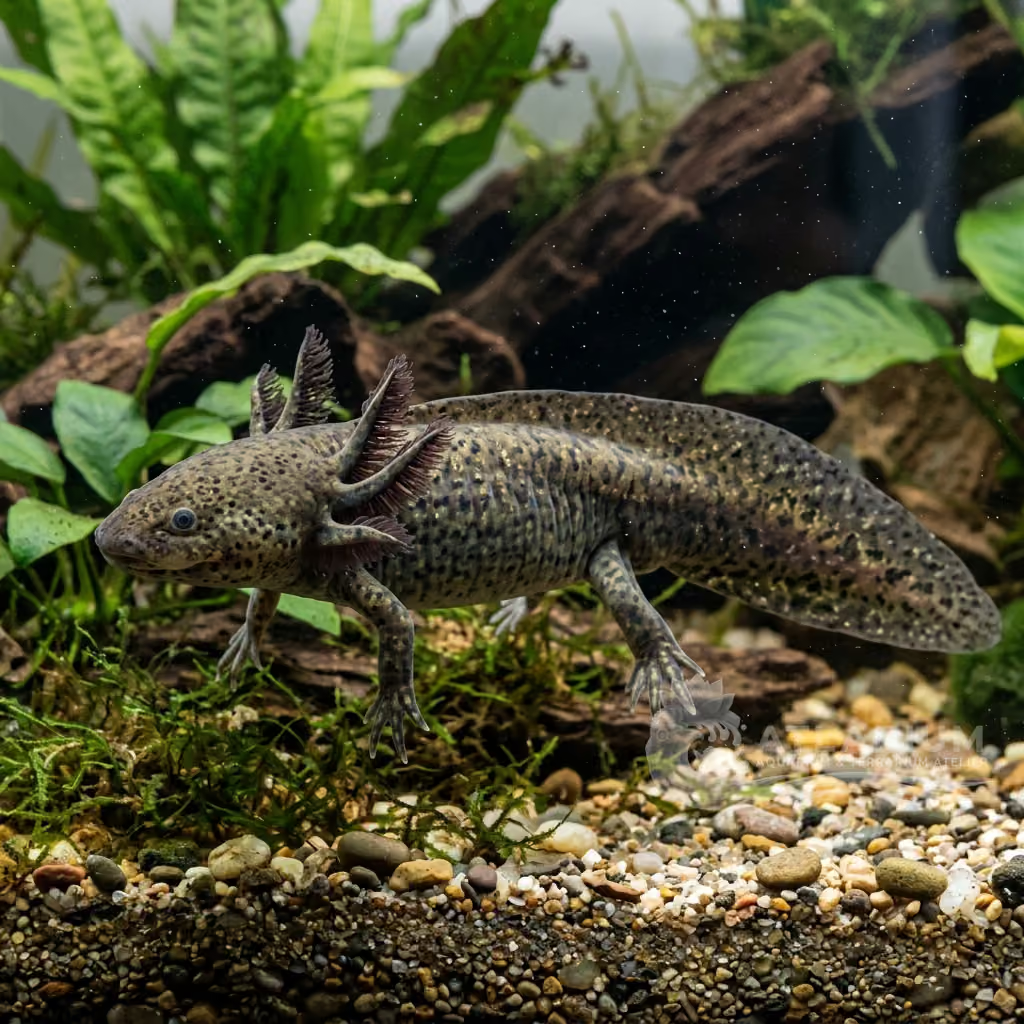
Axolotl — GFP (Green Fluorescent Protein)
Ambystoma mexicanum
A famous neotenic freshwater salamander from Mexico, known for retaining larval features such as gills throughout its life.
Environment
Terrestrial
Humidity
100 %
Day temperature
14 - 20 °C
Night temperature
14 - 20 °C

Species description
Geographical Origin and Habitat: The axolotl is native to the ancient lake complex of Xochimilco near Mexico City. The GFP (Green Fluorescent Protein) variant, however, was developed in laboratory research settings by introducing genes from the jellyfish Aequorea victoria, and is now captive-bred for the pet trade.
Taxonomy and Genetics: A member of the Ambystomatidae family, scientific name Ambystoma mexicanum. The GFP trait is inherited genetically as a stable transgene. This protein causes the animal's tissues to fluoresce without altering its basic physiology, neotenic characteristics, or natural behaviors.
Behavior and Habits: The species is neotenic, meaning it remains in its aquatic larval form throughout its life cycle without undergoing metamorphosis. It is entirely aquatic, slow-moving, and generally docile. It spends most of its time resting on the substrate, occasionally swimming to the surface for air.
Morphology: Features a robust body, a wide head with lidless eyes, and three pairs of external feathery gills. The GFP strain typically has a leucistic or albino base coloration under normal light, but under blue or UV light, the skin, bones, and internal organs glow with a vivid neon-green fluorescence.

Care, breeding and tankmates
Terrarium Setup: Housed in an aquarium rather than a dry terrarium, requiring a minimum of 80 liters for one adult. The substrate must consist of fine sand (under 1mm) or a bare bottom, as gravel will cause fatal intestinal impaction if swallowed. Provide large, smooth caves and hiding spots.
Lighting and Heating: Keep lighting very low to prevent stress to their lidless eyes. Water temperature is the most critical factor and must be kept between 15°C and 18°C (59-64°F). Temperatures above 20°C (68°F) trigger severe stress and disease. An aquarium chiller is often necessary.
Humidity and Hydration: Fully aquatic. Requires clean water with low nitrate levels. Filtration should be highly efficient but must have a gentle output flow, as strong currents cause stress and gill damage. Perform weekly 20-30% water changes using water treated with a dechlorinator.
Feeding and Supplementation: Strictly carnivorous. The primary diet should consist of live earthworms, nightcrawlers, blackworms, or specialized high-protein sinking pellets. Occasional treats of frozen bloodworms can be offered. Supplementation is rarely needed if fed high-quality, varied whole prey.
Compatibility: Best kept in a species-only tank. Fish are not compatible as they will relentlessly nip at the axolotl's delicate external gills. Multiple axolotls can be kept together only if they are of the exact same size, as smaller individuals may be bitten or cannibalized.
Health and Common Diseases: Highly prone to fungal infections of the gills when kept in warm water. Intestinal impaction from improper substrates is a leading cause of death. Ensure the UV or blue light used to showcase the GFP effect is not left on constantly, as it can cause stress.

Geographic origin and distribution
The axolotl is native to the ancient lake complex of Xochimilco near Mexico City. The GFP (Green Fluorescent Protein) variant, however, was developed in laboratory research settings by introducing genes from the jellyfish Aequorea victoria, and is now captive-bred for the pet trade.
Origin
Central America and CaribbeanNorth America

Amphibian profile
- Diet
- Carnivore
- The diet of Ambystoma mexicanum must be carefully managed to ensure optimal health and longevity. In its natural habitat, Ambystoma mexicanum typically consumes a variety of specific prey items or plant matter. Captive specimens require a similarly balanced intake, often supplemented with essential vitamins and calcium. It is important to offer food that is appropriately sized to avoid choking or digestive issues. Regular monitoring of their feeding response helps in identifying any potential health problems early.
- Life expectancy
- 10-15 years
- Adult size
- 30 cm
- Lifestyle/Microhabitat
- Aquatic
- The lifestyle of Ambystoma mexicanum varies greatly depending on whether they are terrestrial, arboreal, aquatic, or semi-aquatic. Designing an enclosure that accommodates their specific mode of living is essential for their physical and mental health. This includes providing the right substrate, climbing branches, or water features as needed. A proper setup allows Ambystoma mexicanum to exercise, hide, and thermoregulate effectively. Understanding their lifestyle choices helps in creating a thriving captive environment.
- Activity cycle
- Nocturnal
- The activity pattern of Ambystoma mexicanum typically dictates when they feed, explore, and rest. Depending on their biology, they may be predominantly active during the day, night, or twilight hours. Replicating appropriate lighting and temperature cycles is crucial for maintaining their natural rhythm. Disruptions to this schedule can lead to stress and a decline in the health of Ambystoma mexicanum. Keepers should try to interact with them during their most active periods to minimize disturbance.
- Sociality
- Gregarious
- The behavior of Ambystoma mexicanum is deeply influenced by its natural instincts and environment. These creatures exhibit unique social and territorial behaviors that must be respected in captivity. Providing a habitat that mimics their wild surroundings can greatly reduce stress and encourage natural activities. Ambystoma mexicanum may show specific defensive or communicative displays when interacting with its environment. Observing these behaviors is key to understanding their overall well-being and comfort.
- Reproduction
- Oviparous
- Reproduction in Ambystoma mexicanum requires specific environmental triggers such as temperature and humidity changes. Breeding these animals in captivity can be challenging and often demands a dedicated setup. Once successful mating occurs, careful attention must be given to the incubation of eggs or the care of live young. The offspring of Ambystoma mexicanum are usually fragile and require highly specific conditions to thrive. Keepers must thoroughly research their reproductive cycle to achieve positive breeding results.
- Toxicity
- Harmless
- The Standard Axolotl is entirely non-toxic and lacks any venomous capabilities. They are completely safe for humans to keep as pets. However, axolotls are extremely sensitive to chemicals, heavy metals, and toxins in their environment. Tap water must always be thoroughly conditioned to remove chlorine and chloramines before being introduced to their tank. Lotions, soaps, or oils on human skin can be highly detrimental to their permeable skin, underscoring the importance of washing hands thoroughly or using gloves if hands must enter the water.
- Life stage
- Neotenic
- Axolotls are famous for exhibiting neoteny, meaning the Standard Axolotl reaches sexual maturity without ever undergoing metamorphosis into a terrestrial adult. They retain their larval features, such as external gills and a finned tail, for their entire lives. With proper care and optimal water conditions, they can live for 10 to 15 years in captivity. While they technically remain in a larval physical state, they transition from fragile juveniles that require daily feeding to robust adults that need feeding only a few times a week. Very rarely, severe environmental stress or iodine treatments can trigger metamorphosis, but this drastically shortens their lifespan and should never be attempted.
- Handling tolerance
- Display only
- The Standard Axolotl should almost never be handled outside of the water, as their bodies have zero structural support for a terrestrial environment. Their skin and slime coat are incredibly fragile and can easily be damaged by human hands, leading to serious bacterial or fungal infections. If an axolotl must be moved, it is best done using a soft, fine-mesh net or by gently coaxing them into a submerged container. Any contact with the hands should be done only after thoroughly rinsing off all soaps and with completely wet hands. Respecting their aquatic nature and keeping hands out of the tank as much as possible is key to their health.
- Brumation
- Not required
- Axolotls do not brumate in the traditional sense, but they are cold-water animals that naturally experience seasonal temperature fluctuations. The Standard Axolotl can tolerate temperatures down to the low 50s Fahrenheit (10-12°C), during which their metabolism will significantly slow down. In captivity, maintaining a stable, cool temperature year-round is generally preferred to avoid the stress of temperature swings. 'Fridging'—temporarily placing an axolotl in a refrigerator—is a common and effective emergency treatment to slow down their metabolism and immune response during severe illness or impaction, but it is a medical intervention, not a natural brumation cycle.
- Molting
- Yes
- A scientific review documents routine outer-skin renewal (sloughing) in amphibians and notes that the shed skin is often eaten, but it does not establish a fixed species-specific interval for Ambystoma mexicanum. The scalar is therefore “Yes”, not “Regular”. Repeated conspicuous peeling, a damaged mucus layer or abnormal behaviour should not be dismissed as normal sloughing and warrants an immediate water-quality check and, when persistent, veterinary assessment.

Related species
Recommendations grouped by close relatives, companion choices, and similar care.