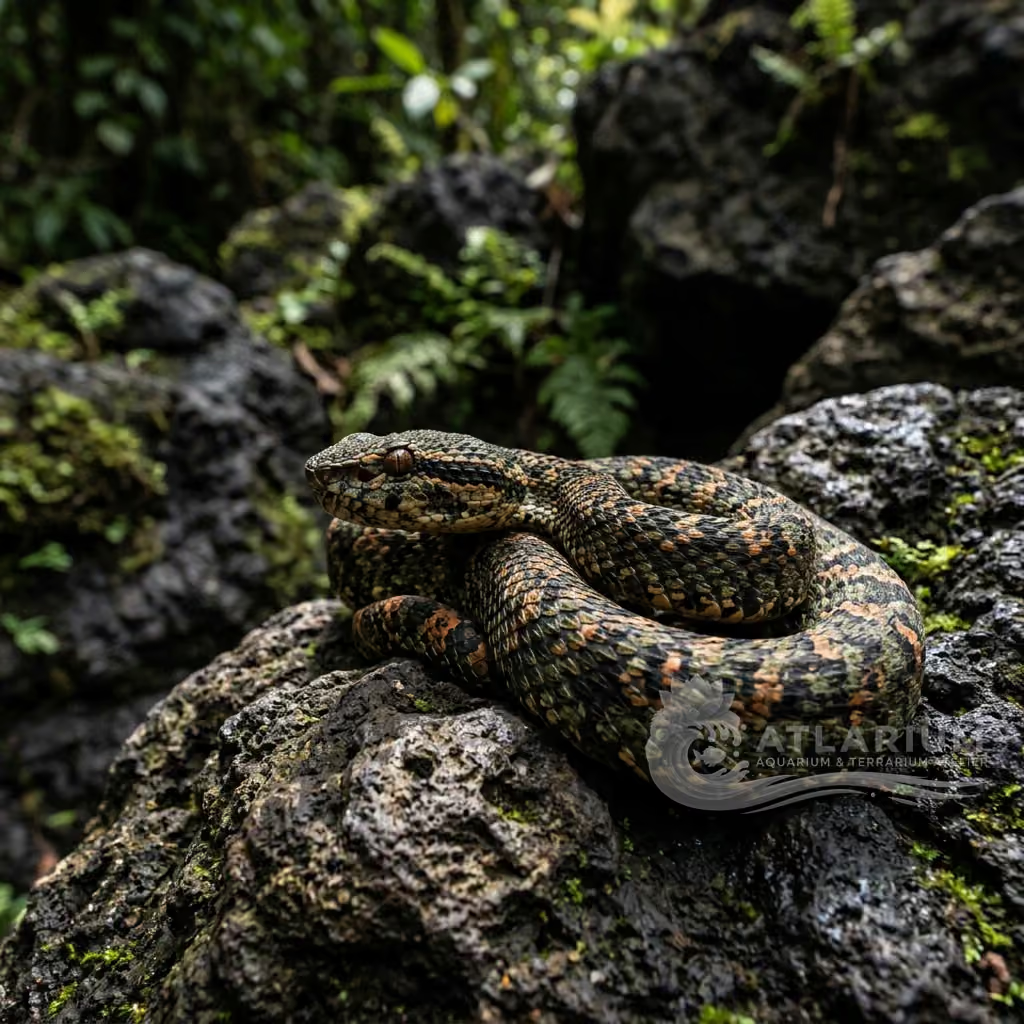
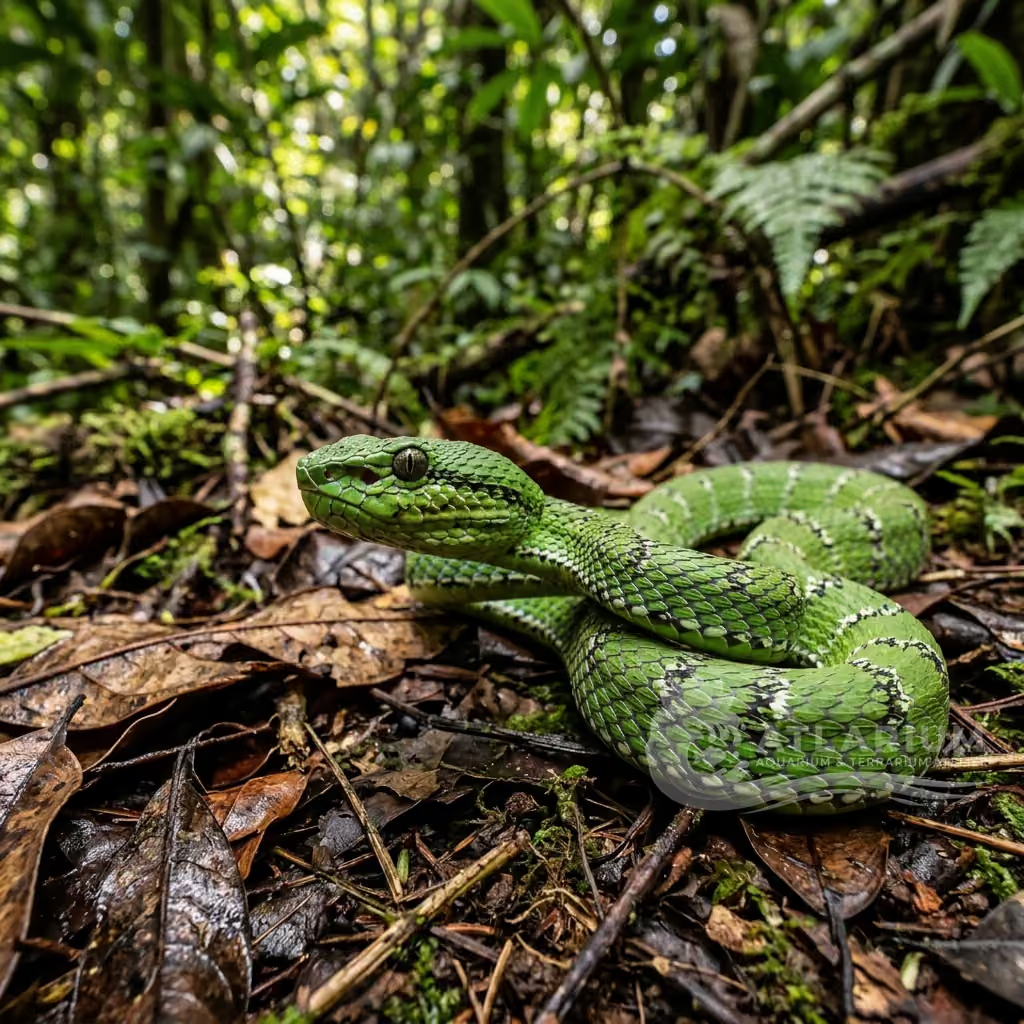
Taï hairy bush viper
Atheris hirsuta
A rare, highly venomous arboreal viper endemic to the Taï Forest, characterized by heavily keeled, bristly scales. Demands expert handling and humid, vertically-oriented setups.
Environment
Terrestrial
Humidity
65 - 80 %
Day temperature
22 - 26 °C
Ambient temperature
22 - 26 °C
Night temperature
18 - 20 °C
Basking spot
27 - 28 °C
Adult size
50 cm
Minimum enclosure
>= 100 L

Species description
Geographical Origin and Habitat: Atheris hirsuta is native to the primary tropical rainforests of West Africa, specifically documented within the Taï National Park in southwestern Ivory Coast, with possible extensions into Liberia. It inhabits the dense undergrowth and lower canopy layers of humid forests, typically clinging to low branches and shrubs where dense vine growth provides cover.
Taxonomy and Genetics: It belongs to the family Viperidae, subfamily Viperinae, and the genus Atheris. It is a highly distinct and rarely encountered member of this genus. Genetic studies align it with other African forest vipers, but its exact evolutionary relationships remain partially obscured due to the difficulty in securing wild specimens and its restricted geographical range.
Behavior and Habits: Primarily nocturnal and arboreal, this species spends its days coiled and stationary on small branches, where its coloration and texture provide excellent camouflage. It is an ambush predator, waiting patiently for prey to pass within striking distance. When threatened, it is defensive and will strike quickly; its bite is highly venomous and requires immediate clinical attention.
Morphology: The most prominent feature of this viper is its heavily keeled, erect scales, which give it a bristly or "hairy" appearance, especially around the head and neck. It has a triangular head distinct from the neck, large eyes with vertical slit pupils, and a prehensile tail that acts as a secure anchor when climbing. Adults are relatively small, reaching a length of 40 to 55 cm.

Care, breeding and tankmates
Terrarium Setup: Needs a vertically oriented terrarium (minimum 60x45x60 cm for a single adult) to accommodate its arboreal habits. Furnish the enclosure with multiple thin, sturdy branches, cork bark tubes, and dense live plants (like Pothos) to provide climbing opportunities and security hides. The substrate should be moisture-retaining, such as a mix of peat moss and coconut fiber covered with sterile leaf litter.
Lighting and Heating: Even though it is nocturnal, a low-intensity UVB light (2% or 5%) is beneficial for maintaining a natural photoperiod. Heating should be supplied from above using a guarded ceramic heat emitter to prevent contact burns. Maintain a vertical thermal gradient with a basking spot of 27-28°C (80-82°F) near the top, dropping to 22-24°C (71-75°F) at the bottom, and a night temperature around 20°C (68°F).
Humidity and Hydration: Requires constant high humidity levels between 75% and 85%. This is achieved by misting the terrarium with warm water twice daily. These vipers usually drink water droplets from leaves rather than from a water bowl, so daily spraying is crucial. Good ventilation must be provided through mesh screens to prevent stagnant, mold-prone air.
Feeding and Supplementation: In the wild, they feed on frogs, lizards, and small rodents. In captivity, they can be fed appropriately sized mice using long feeding tongs for safety. Adults should be fed once every 10-14 days. Feeder rodents can be dusted with a calcium and vitamin D3 supplement once a month to support skeletal health.
Compatibility: This is a strictly solitary and dangerously venomous snake. It must be housed individually in a highly secure, lockable enclosure. Cohabitation is dangerous and should only be attempted during brief breeding windows by highly experienced specialists.
Health and Common Diseases: The primary concern is the hazard of venomous bites during routine maintenance. Common health issues in captivity include retained shed (dysecdysis) due to low humidity, mouth rot (infectious stomatitis) from stress or minor injuries, and respiratory infections caused by low temperatures combined with inadequate ventilation.

Geographic origin and distribution
Atheris hirsuta is native to the primary tropical rainforests of West Africa, specifically documented within the Taï National Park in southwestern Ivory Coast, with possible extensions into Liberia. It inhabits the dense undergrowth and lower canopy layers of humid forests, typically clinging to low branches and shrubs where dense vine growth provides cover.
Origin
North AmericaAfrica and Madagascar

Reptile profile
- Diet
- Carnivore
- These vipers are ambush predators that feed mainly on small mammals, frogs, and lizards in the wild. In captivity, they can usually be transitioned to a diet of appropriately sized rodents, such as mice or small rats. Feeding should occur every one to two weeks depending on the age and size of the snake.
- Adult size
- 50 cm
- Lifestyle/Microhabitat
- Arboreal
- Arboreal species spend the majority of their lives in trees and shrubs, requiring vertically oriented enclosures with climbing branches. Terrestrial species need ample floor space with hiding spots among the leaf litter. Both require specific temperature and humidity gradients to thrive.
- Activity cycle
- Nocturnal
- These snakes are primarily nocturnal or crepuscular, becoming most active during the evening and night. During the day, they often rest coiled on branches or concealed in vegetation. Their activity levels can increase significantly after a period of rain or during the breeding season.
- Sociality
- Solitary
- They are typically ambush hunters, relying on their camouflage to remain undetected by both prey and predators. When threatened, they may adopt a defensive posture, hiss, or strike rapidly. They are generally not aggressive but will defend themselves fiercely if provoked.
- Reproduction
- Viviparous
- Most of these species are viviparous, giving birth to live young after a gestation period of several months. The neonates are fully independent and venomous from birth. Breeding often requires a cooling period or specific environmental cues to simulate natural seasonal changes.
- Handling tolerance
- Display only
- Handling must be strictly avoided except when absolutely necessary for husbandry or medical reasons. Always use appropriate tools such as snake hooks or tongs to move the animal safely. These are highly venomous species, and a bite can result in severe medical consequences.
- Brumation
- Not required
- Depending on their natural range, some may undergo a mild winter cooling period to stimulate breeding. This is not a deep brumation but rather a slight drop in temperature accompanied by reduced feeding. Tropical species may not require any significant seasonal changes in captivity.
- Molting
- Periodic
- Shedding occurs periodically as the snake grows, heralded by the eyes turning a milky blue color. During this time, they should be left undisturbed and humidity should be slightly increased to facilitate a clean shed. A healthy snake will shed its skin in one complete, unbroken piece.

Related species
Recommendations grouped by close relatives, companion choices, and similar care.