Okinawa Habu
Protobothrops flavoviridis
The Okinawa Habu is a large, highly venomous pit viper endemic to the Ryukyu Islands of Japan, notorious for its cytotoxic venom and aggressive nature.
Environment
Terrestrial
Humidity
65 - 85 %
Day temperature
20 - 30 °C
Ambient temperature
20 - 30 °C
Night temperature
21 - 23 °C
Basking spot
30 °C
Adult size
180 cm
Minimum enclosure
>= 500 L

Species description
Geographical Origin and Habitat: This species is endemic to the Ryukyu Islands of Japan, with populations concentrated primarily on the Okinawa and Amami island groups. It inhabits a variety of environments, including subtropical rainforests, palm groves, agricultural areas (especially sugarcane fields), volcanic caves, and rural human settlements, where it hunts rodents. It is a terrestrial and semi-arboreal snake, sheltering in rock crevices, stone walls, and hollow tree roots.
Taxonomy and Genetics: Protobothrops flavoviridis belongs to the family Viperidae, subfamily Crotalinae (pit vipers). Formerly placed in the genus Trimeresurus, it was reclassified into the genus Protobothrops based on molecular phylogenetic studies. Its genetics have been extensively researched in Japan to develop effective species-specific antivenom. It is not considered endangered due to its adaptability to disturbed habitats.
Behavior and Habits: Primarily nocturnal and opportunistic. During the day, it remains hidden in cool, dark retreats to avoid overheating, becoming active at dusk. It is highly excitable and aggressive; when cornered or threatened, it will not hesitate to strike repeatedly and with great speed. It is capable of striking from a distance of up to two-thirds of its body length. It utilizes heat-sensing pit organs located between the eyes and nostrils to detect warm-blooded prey in absolute darkness.
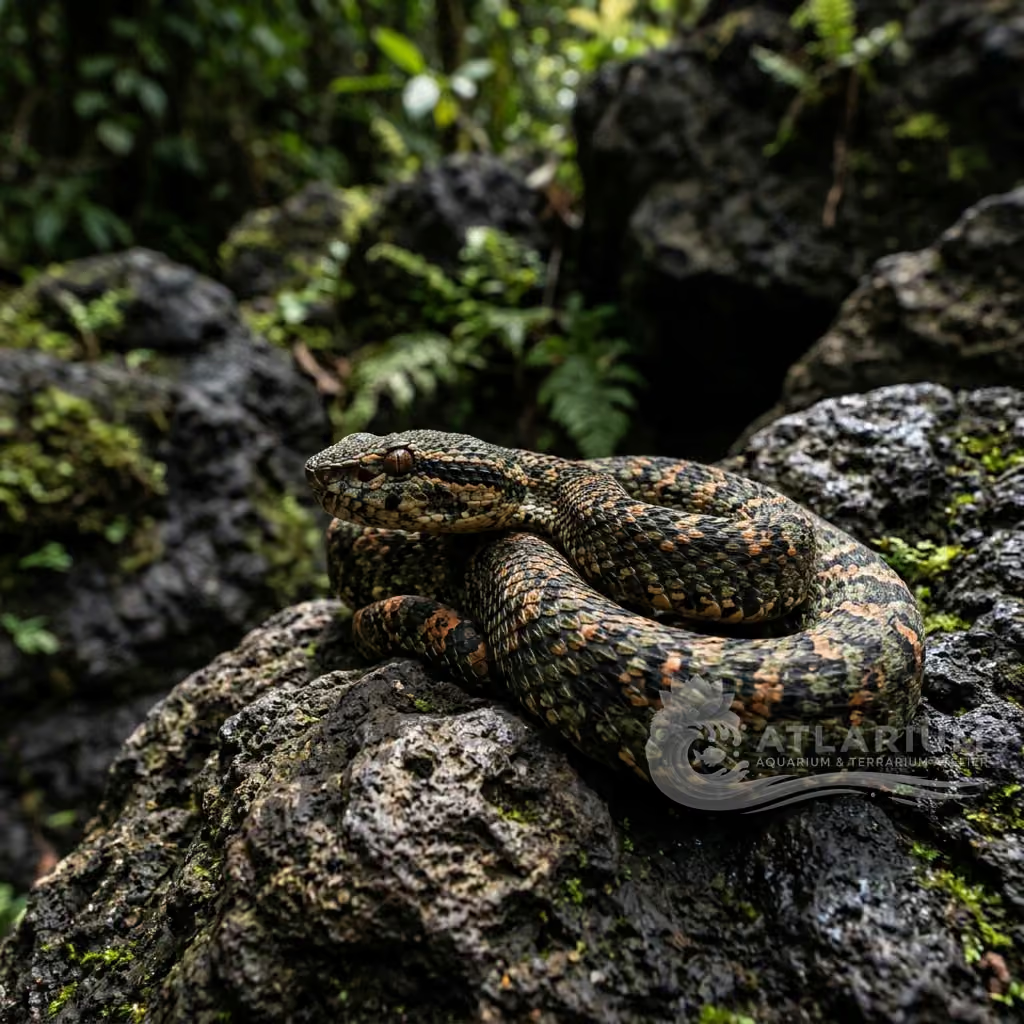
Morphology: A large snake with a slender but muscular body; adults typically reach 1.5 meters in length, with exceptional specimens exceeding 2 meters. The head is large, triangular, and distinct from the neck. The coloration consists of a pale green or yellowish-green background patterned with dark brown or olive-green geometric blotches with yellow margins that merge along the dorsal ridge. Sexual dimorphism is minimal, though males have slightly longer tails.

Care, breeding and tankmates
Terrarium Setup: As a highly venomous (DANGEROUS) species, housing requires maximum security protocols. The enclosure must be escape-proof, equipped with heavy-duty key locks and tempered glass, with minimum dimensions of 150x60x80 cm. Provide sturdy climbing branches and multiple hides in both the hot and cold zones. An integrated shift box is mandatory to secure the snake safely during cleaning and maintenance.
Lighting and Heating: Requires a precise thermal gradient. Use overhead heating elements protected by mesh guards to prevent contact burns. Maintain a hot zone temperature of 28-30°C (82-86°F) with a localized basking spot of 32°C (90°F), and a cool zone of 24-25°C (75-77°F). Nighttime temperatures should drop to 20-22°C (68-72°F). Low-output (2-5%) UVB lighting can be used to support circadian rhythms.
Humidity and Hydration: Requires moderate to high humidity, between 60% and 75%. Mist the enclosure regularly with warm water, especially during the shedding cycle to ensure complete ecdysis. Provide a heavy, stable water bowl in the cool zone. Keep water clean and fresh to prevent bacterial growth.
Feeding and Supplementation: Strictly carnivorous. Feed appropriate-sized rats or mice, which must be offered pre-killed or thawed to prevent injury to the snake and minimize dangerous handling. Feed juveniles every 7-10 days, and adults every 14-20 days. Mineral supplementation is generally unnecessary if feeding healthy rodents, but calcium can be dusted occasionally.
Compatibility: Strictly solitary. Do not house multiple specimens together due to the high risk of cannibalism, territorial fighting, or accidental envenomation. Any contact must be limited to experienced breeders during controlled mating attempts.
Health and Common Diseases: The venom of this species is highly cytotoxic and hemotoxic, causing severe tissue necrosis, pain, and systemic bleeding; keepers must establish strict emergency protocols and identify medical facilities stocking appropriate antivenom. Health issues in captivity include respiratory infections from low temperatures and infectious stomatitis (mouth rot) due to poor hygiene.

Geographic origin and distribution
This species is endemic to the Ryukyu Islands of Japan, with populations concentrated primarily on the Okinawa and Amami island groups. It inhabits a variety of environments, including subtropical rainforests, palm groves, agricultural areas (especially sugarcane fields), volcanic caves, and rural human settlements, where it hunts rodents. It is a terrestrial and semi-arboreal snake, sheltering in rock crevices, stone walls, and hollow tree roots.
Origin
East Asia

Reptile profile
- Diet
- Carnivore
- The Okinawa habu is a large, apex predator within its island ecosystem, primarily hunting rats, mice, and other small mammals. It also opportunistically feeds on frogs, small birds, and lizards, demonstrating significant dietary flexibility. The snake's large heat-sensing pits allow it to precisely locate endothermic prey in complete darkness, often waiting in ambush along established rodent trails. It uses its massive size and large fangs to deliver a copious amount of potent, tissue-destroying venom.
- Adult size
- 180 cm
- Lifestyle/Microhabitat
- Terrestrial
- A terrestrial to semi-terrestrial snake, it typically dwells on the forest floor, utilizing leaf litter, root systems, and low-lying vegetation for camouflage and ambush hunting. While they may occasionally ascend low shrubs, their enclosure should prioritize maximum floor space with abundant terrestrial hideouts to foster a sense of security.
- Activity cycle
- Nocturnal
- This species is primarily nocturnal, remaining hidden during the daylight hours to avoid extreme heat and predators. As dusk approaches, the Protobothrops flavoviridis becomes active, emerging from its diurnal retreat to forage and hunt. Enclosure lighting should reflect a natural day-night cycle, but the snake will exhibit its most natural active behaviors after the lights go out.
- Sociality
- Solitary
- This pit viper is infamous for its aggressive and highly irritable nature, responsible for numerous snakebites in the Ryukyu Islands. It is strongly nocturnal, actively roaming through forests, agricultural fields, and even entering human dwellings in search of rodent prey. While predominantly terrestrial, it is an excellent climber and can often be found ascending trees and rafters. When confronted, it adopts a formidable defensive posture, rearing up into an S-loop and striking with extraordinary reach and speed.
- Reproduction
- Oviparous
- Females of this species are oviparous, generally laying a clutch of 3 to 18 eggs during the early summer months. They seek out damp, secure environments such as natural caves, rock walls, or hollow logs to ensure optimal conditions for the developing embryos. Incubation lasts about five to six weeks, culminating in the emergence of robust, fully equipped hatchlings. The baby snakes are independent from birth and must immediately learn to hunt small prey to survive.
- Handling tolerance
- Display only
- Due to its highly potent and medically significant venom, the Protobothrops flavoviridis is strictly a display-only species. Under no circumstances should this snake be free-handled. All interactions, enclosure maintenance, and feeding must be performed using professional snake hooks, secure lockable terrariums, and strict safety protocols to prevent life-threatening envenomation.
- Brumation
- Not required
- To replicate its natural seasonal cycles, a winter brumation period is highly recommended, especially if breeding is desired. Temperatures should be gradually reduced to roughly 12-15°C (53-59°F) over several weeks, during which feeding is completely halted to prevent rotting of undigested food in the gut. This cooling period typically lasts 2 to 3 months.
- Molting
- Regular
- Shedding cycles occur periodically as the snake grows. During the shedding phase, bumping the ambient humidity by lightly misting the enclosure and ensuring access to a large water bowl helps hydrate the skin. A healthy molt should peel off entirely in one piece; retained spectacles or skin patches indicate insufficient hydration.

Related species
Recommendations grouped by close relatives, companion choices, and similar care.