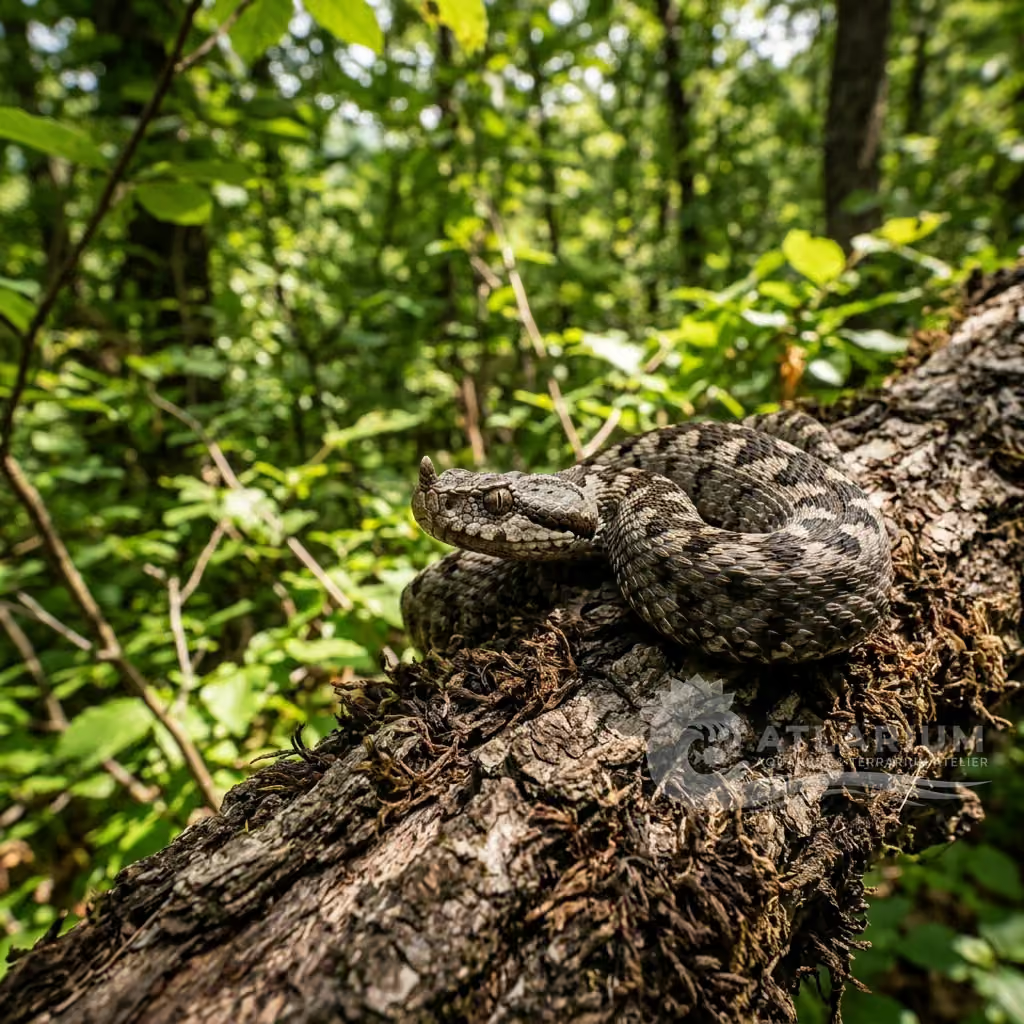
White-bellied carpet viper
Echis leucogaster
A highly venomous viper species native to the African Sahel. It is prominently recognized by its immaculate white belly and signature, hostile saw-scaled threat display.
Environment
Terrestrial
Humidity
40 - 60 %
Day temperature
26 - 32 °C
Ambient temperature
26 - 32 °C
Night temperature
20 - 22 °C
Basking spot
36 - 38 °C
Adult size
70 cm
Minimum enclosure
>= 150 L

Species description
Geographical Origin and Habitat: Echis leucogaster is native to West and Northwest Africa, with a distribution extending across the Sahelian zone, including Mauritania, Senegal, Mali, Burkina Faso, Niger, and parts of southern Algeria. It inhabits semi-arid grasslands, dry savannas, shrubby steppes, clay plains, and dry sandy riverbeds. This species prefers areas with some low vegetation and shrub cover over barren sand dunes, seeking shelter under stones, fallen branches, and thorny bushes.
Taxonomy and Genetics: Belonging to the family Viperidae, subfamily Viperinae, and the genus Echis. First described by Roman in 1972 as a subspecies, it was later elevated to full species status due to consistent genetic and morphological differences. The name 'leucogaster' refers to its immaculate white belly, which serves as a key diagnostic character distinguishing it from Echis carinatus and Echis ocellatus in molecular studies.
Behavior and Habits: Primarily nocturnal, emerging at dusk to hunt for prey. When threatened, it performs the characteristic warning behavior of stridulation by rubbing its oblique, serrated lateral scales together, producing a dry, sizzling warning hiss. It is a fast and irritable snake, highly prone to defensive biting if disturbed. It is mainly terrestrial but may climb low shrubs for thermoregulation.
Morphology: This is a medium-sized viper, reaching an adult total length of 30 to 70 centimeters. The body is relatively robust, with a distinctly triangular head covered in small scales and separated from the neck by a narrow collar. The eyes are moderately large with vertically elliptical pupils. Coloration consists of a greyish, brownish, or reddish background with dark transverse bands, while the belly is immaculate white or cream.

Care, breeding and tankmates
Terrarium Setup: Must be housed individually in a locked, secure desert terrarium measuring at least 80x50x50 cm. The substrate should be a dry mixture of fine sand and clay soil (5 cm deep) to allow natural movement. Heavy, stable hides such as plastic caves, hollow cork logs, and flat stones must be provided in both the warm and cool zones to facilitate proper thermoregulation.
Lighting and Heating: Provide a daytime temperature of 25-27°C (77-81°F) at the cool end and 32-34°C (90-93°F) at the warm end, with a focused basking spot of 36-38°C (97-100°F) under a guarded heat bulb. Turn off all heating at night to allow temperatures to drop to 20-22°C (68-72°F). A 5.0 UVB bulb is recommended to regulate photoperiod and support calcium absorption.
Humidity and Hydration: Keep relative humidity low, between 30% and 40%. Elevated humidity levels will lead to scale rot and fatal respiratory infections. Provide a heavy, non-tip water dish in the cool zone and clean it daily. A plastic hide containing damp sphagnum moss should be placed in the enclosure during shedding cycles to prevent incomplete shedding.
Feeding and Supplementation: In captivity, they feed on fully thawed mice of appropriate size, offered only using long metal feeding tongs. Adults should be fed once every 10 to 12 days. Preys must be dusted with calcium and vitamin D3 powder once a month to prevent metabolic bone disease. Avoid overfeeding, as their sedentary nature in captivity can lead to fatty liver disease.
Compatibility: Strictly solitary. Do not house multiple specimens together, as this causes severe stress and carries a risk of cannibalism. Since this species possesses a highly toxic hemotoxic and necrotizing venom that is dangerous to humans, it must never be handled directly. Always use professional snake hooks, feeding tongs, and secure shift boxes.
Health and Common Diseases: Vulnerable to respiratory infections from high humidity, scale rot from damp substrate, and mite infestations. Bite incidents are critical medical emergencies requiring immediate antivenom administration. All tank cleaning and maintenance must be performed with the snake safely secured in a separate transport box beforehand.

Geographic origin and distribution
Echis leucogaster is native to West and Northwest Africa, with a distribution extending across the Sahelian zone, including Mauritania, Senegal, Mali, Burkina Faso, Niger, and parts of southern Algeria. It inhabits semi-arid grasslands, dry savannas, shrubby steppes, clay plains, and dry sandy riverbeds. This species prefers areas with some low vegetation and shrub cover over barren sand dunes, seeking shelter under stones, fallen branches, and thorny bushes.
Origin
Africa and Madagascar

Reptile profile
- Diet
- Carnivore
- Echis leucogaster primarily feeds on a diet of small mammals, amphibians, and occasionally birds in its natural habitat. In a captive environment, they can typically be transitioned to pre-killed rodents of appropriate size. It is important to offer varied prey items to ensure a complete nutritional profile. Feeding frequency should be adjusted based on the individual's age, size, and metabolic rate, generally ranging from every one to two weeks.
- Adult size
- 70 cm
- Lifestyle/Microhabitat
- Terrestrial
- In its natural habitat, Echis leucogaster generally adopts a terrestrial lifestyle, although some climbing behavior may occasionally be observed. They rely heavily on ground cover, such as dense vegetation, rocks, and fallen logs, to navigate their environment safely. The enclosure design must incorporate ample horizontal space with a deep, naturalistic substrate to allow for burrowing and hiding. Providing multiple terrestrial hides across a temperature gradient is crucial for their well-being. Ensuring a secure and complex ground-level environment will encourage natural exploration and security.
- Activity cycle
- Nocturnal
- The activity pattern of Echis leucogaster is largely dictated by environmental temperatures and prey availability. They are predominantly crepuscular or nocturnal, becoming most active during the cooler evening and nighttime hours. During the heat of the day, they prefer to remain hidden in burrows, under leaf litter, or within crevices to thermoregulate. Keepers should align feeding and maintenance schedules with these natural active periods to reduce stress. A properly controlled photoperiod with distinct day and night cycles will help maintain their natural rhythms.
- Sociality
- Solitary
- Echis leucogaster exhibits a range of fascinating behaviors that are characteristic of its genus. They are generally solitary creatures, relying on camouflage and stealth to avoid predators and ambush prey. When threatened, they may display defensive postures, such as coiling tightly or producing warning sounds, before striking. In captivity, observing these natural behaviors requires providing a spacious and enriched environment that mimics their natural habitat. Regular monitoring is essential to ensure they remain unstressed and behave naturally.
- Reproduction
- Oviparous
- The reproductive strategy of Echis leucogaster is well-adapted to its natural environment, ensuring the survival of the next generation. Depending on the specific lineage, this species may exhibit viviparous or oviparous reproductive behaviors, requiring specific conditions for successful breeding. Careful temperature cycling and environmental conditioning are often necessary to stimulate reproductive activity. Providing adequate nesting sites or safe birthing enclosures is critical to prevent stress and ensure the health of both the mother and offspring.
- Handling tolerance
- Display only
- Handling Echis leucogaster should only be attempted by experienced professionals due to their highly venomous nature and potential for rapid strikes. Direct physical contact must be strictly avoided to prevent life-threatening envenomation incidents. Specialized tools, such as snake hooks and secure transport tubes, are absolutely necessary for any necessary movement or husbandry tasks. Always maintain a clear understanding of the animal's behavior and strike range during maintenance. A comprehensive safety protocol and access to appropriate antivenom should be established before acquiring this species.
- Brumation
- Not required
- To mimic seasonal changes, Echis leucogaster may require a period of brumation, especially if breeding is intended. This involves a gradual reduction in temperature and light hours over several weeks, leading into a sustained cooler period. During brumation, feeding should cease completely, but fresh water must always remain available. The animals should be closely monitored for any signs of weight loss or respiratory distress during this vulnerable time. After the cooling period, temperatures and feeding are slowly brought back to normal active levels to simulate the onset of spring.
- Molting
- Regular
- The molting process, or ecdysis, is a critical period for Echis leucogaster that requires optimal environmental conditions. Proper humidity levels must be maintained to ensure the skin is shed entirely in one piece, preventing retained sheds that can cause infections. As a shed approaches, the snake's eyes will turn a cloudy blue, and they may refuse food and become more reclusive. Providing a humid hide box can significantly aid the shedding process and ease any associated stress. Keepers should inspect the shed skin to confirm that the eye caps and tail tip have been successfully removed.

Related species
Recommendations grouped by close relatives, companion choices, and similar care.