Slender Hognose Viper
Porthidium ophryomegas
A slender hognose viper from Central America, adapted to dry forests. This terrestrial ambush predator relies on camouflage and requires a strictly solitary, secure habitat.
Environment
Terrestrial
Humidity
40 - 60 %
Day temperature
22 - 32 °C
Ambient temperature
22 - 32 °C
Night temperature
23 - 25 °C
Basking spot
32 °C
Adult size
55 cm
Minimum enclosure
>= 120 L

Species description
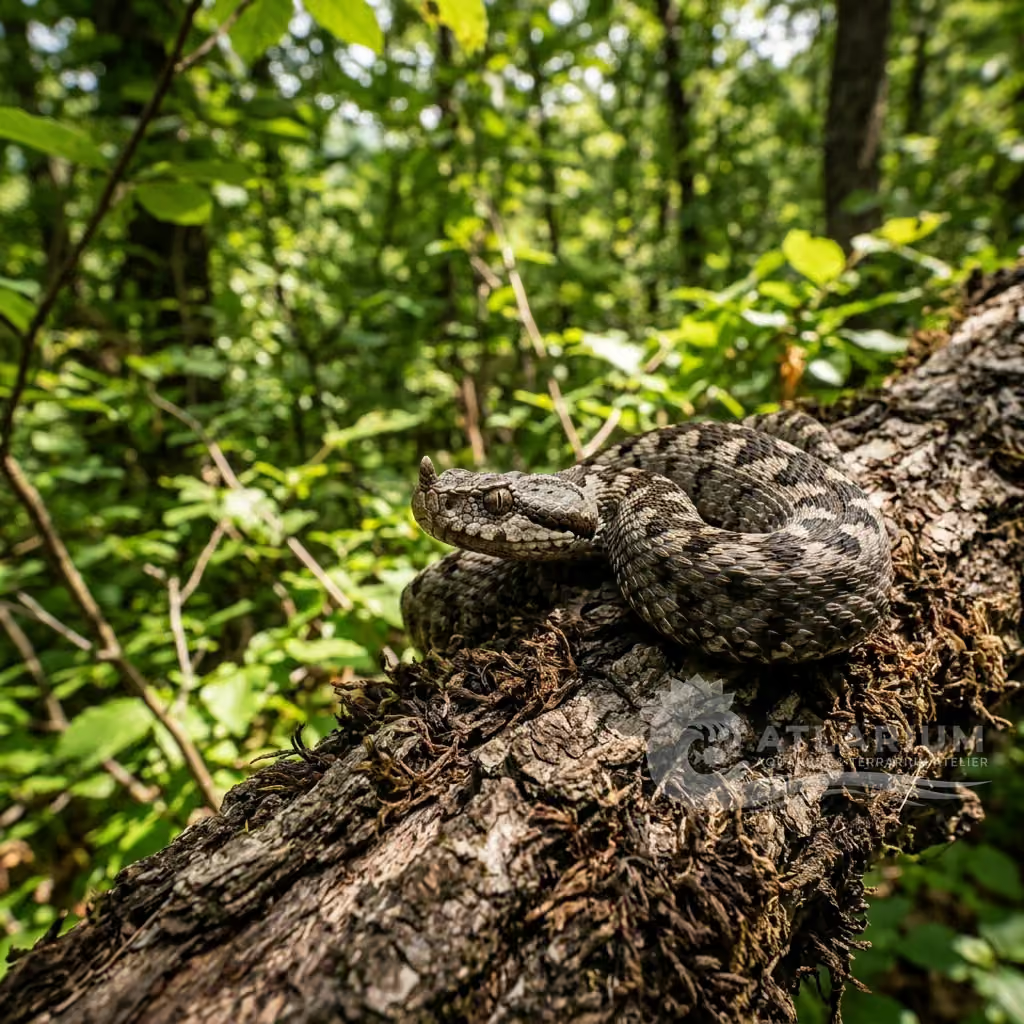
Geographical Origin and Habitat: Porthidium ophryomegas is a venomous pit viper endemic to Central America, distributed along the Pacific lowlands and dry inland valleys from Guatemala, El Salvador, Honduras, and Nicaragua, down to northwestern Costa Rica. It primarily inhabits tropical dry forests, thorn scrublands, and arid grasslands. It is strictly terrestrial, dwelling in microhabitats with dry leaf litter, fallen branches, and sparse ground cover where its cryptic pattern provides near-perfect camouflage.
Taxonomy and Genetics: Classified in the family Viperidae, subfamily Crotalinae, and genus Porthidium. Commonly known as the slender hognose viper due to its raised rostral profile. Genetically, it possesses specialized genes responsible for producing a primarily hemotoxic and necrotizing venom used to immobilize small vertebrate prey. Phylogenetic studies place it close to other dry-adapted terrestrial vipers of Mesoamerica.
Behavior and Habits: This species is solitary and primarily terrestrial, displaying crepuscular or nocturnal activity patterns. It spends most of the day coiled tightly in leaf litter to avoid detection. As an ambush predator, it waits for lizards, small rodents, and amphibians. When threatened, it assumes a coiled defensive posture and may strike if provoked, although it generally relies on its camouflage to escape notice.
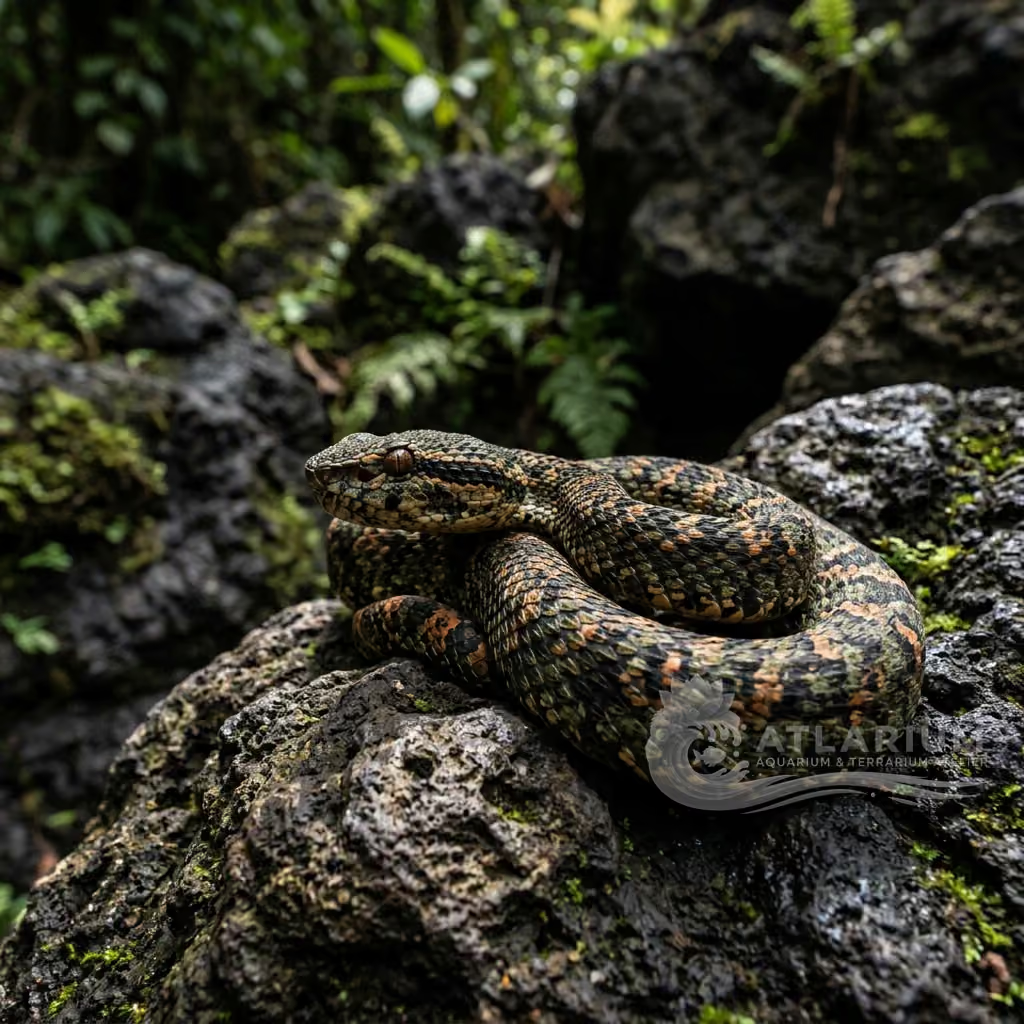
Morphology: It features a stout yet relatively slender body for a pit viper. Adults typically reach an average length of 40 to 60 centimeters. The snout is characteristically turned upward, a feature caused by a modified rostral scale. The background color ranges from grey to light brown or beige, decorated with a series of dark rectangular or triangular patches along a light vertebral line.

Care, breeding and tankmates
Terrarium Setup: Requires a specialized, escape-proof terrarium with dual safety locks, housed in a locked venomous room. Minimum dimensions for an adult are 80x40x40 cm. The substrate should mimic a dry forest floor, using a mixture of dry soil, sand, and pine bark topped with dry oak leaves. Provide hollow cork bark tubes and low, stable branches for climbing.
Lighting and Heating: A thermal gradient is required. Daytime temperatures on the warm side should be 28-30 °C, with a localized basking spot of 32 °C, and the cool side around 24 °C. Nighttime temperatures can drop to 22-24 °C. Provide a 12-hour light cycle using a low-output UVB bulb (2.0 or 5.0) to stimulate natural behaviors and support calcium metabolism.
Humidity and Hydration: Maintain moderate humidity levels between 45% and 60%. Because it originates from seasonal dry forests, constant high humidity will lead to respiratory and skin infections. Lightly mist the enclosure once a week. A stable, heavy water bowl with fresh water must be placed on the cool side of the terrarium.
Feeding and Supplementation: Feed size-appropriate frozen-thawed mice or small lizards. Use long feeding tongs to offer food, avoiding any direct contact. Adults should be fed every 10 to 12 days. Supplementation is generally not required for adults on a quality diet, but a light dusting of calcium with D3 can be used once a month.
Compatibility: This species must be housed individually due to its venomous nature and solitary behavior. Keeping multiple specimens together is highly dangerous and is only done under strict supervision during breeding periods by experienced keepers.
Health and Common Diseases: Susceptible to infectious stomatitis (mouth rot), respiratory infections from cold drafts, and intestinal parasites. Medical evaluations must be conducted by a qualified exotic veterinarian experienced in handling venomous snakes, utilizing safety hooks and clear plastic restraint tubes.

Geographic origin and distribution
Porthidium ophryomegas is a venomous pit viper endemic to Central America, distributed along the Pacific lowlands and dry inland valleys from Guatemala, El Salvador, Honduras, and Nicaragua, down to northwestern Costa Rica. It primarily inhabits tropical dry forests, thorn scrublands, and arid grasslands. It is strictly terrestrial, dwelling in microhabitats with dry leaf litter, fallen branches, and sparse ground cover where its cryptic pattern provides near-perfect camouflage.
Origin
Central America and Caribbean

Reptile profile
- Diet
- Carnivore
- The Slender Hognose Viper primarily feeds on small vertebrates, adapting its diet to the availability of prey in its arid and semi-arid habitats. Small lizards and rodents constitute the bulk of its nutritional intake, which it hunts using ambush techniques. Younger snakes often target smaller lizards and large insects before graduating to bulkier mammalian prey. The snake's venom is specifically adapted to quickly immobilize these fast-moving animals.
- Adult size
- 55 cm
- Lifestyle/Microhabitat
- Terrestrial
- It is a ground-dwelling snake often found in tropical dry forests and arid scrublands, relying heavily on leaf litter and rocky outcrops to avoid predators and extreme weather.
- Activity cycle
- Nocturnal
- Highly nocturnal, this pitviper actively patrols the forest floor or waits in ambush for rodents and lizards exclusively after sundown, seeking shelter during the intense heat of the day.
- Sociality
- Solitary
- Characterized by a stout body despite its common name, the Slender Hognose Viper is a terrestrial and nocturnal hunter. It spends the daylight hours sheltering in burrows, under rocks, or within dense vegetation to escape the intense heat. When approached, it assumes a tightly coiled defensive posture and may strike rapidly if its personal space is invaded. However, its first instinct is almost always to remain motionless and rely on its earth-toned camouflage.
- Reproduction
- Viviparous
- This species gives birth to live young, a common trait among pitvipers in its genus that helps protect offspring from harsh environmental conditions. Mating typically aligns with the onset of the wet season, ensuring young are born when prey populations peak. Females produce modestly sized litters, and the young are completely self-sufficient at birth. The neonates are miniatures of the adults and immediately begin hunting on their own.
- Handling tolerance
- Expert only
- This species possesses potent venom and a quick temper, meaning it must be treated as a display-only animal. Any necessary interaction requires professional-grade hooks, tongs, and secure containment.
- Brumation
- Not required
- True winter brumation is unnecessary; however, they may go through periods of aestivation or reduced feeding during the peak of the dry season in their natural habitat.
- Molting
- Regular
- They require stable, moderate humidity for shedding. Providing a moist hidebox lined with damp sphagnum moss during their shed cycle will prevent stuck skin and retained eye caps.

Related species
Recommendations grouped by close relatives, companion choices, and similar care.