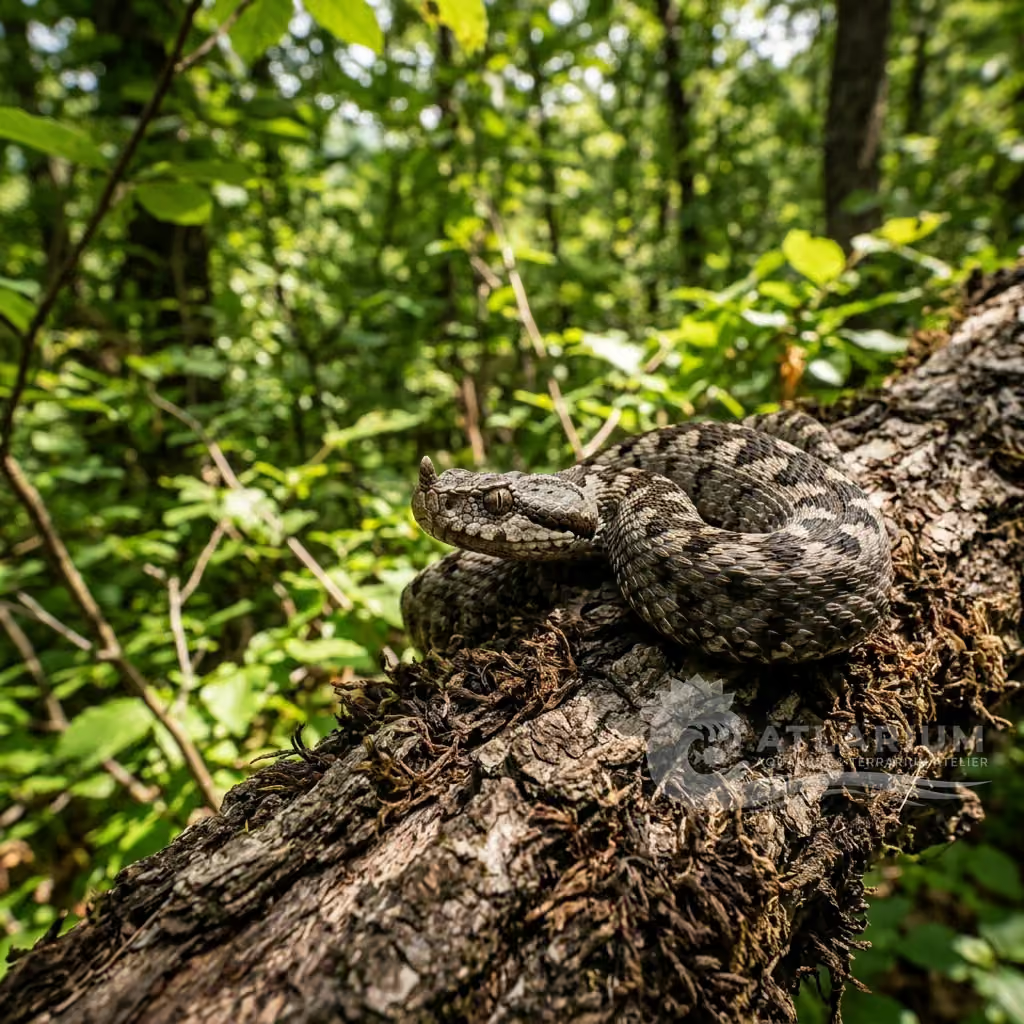
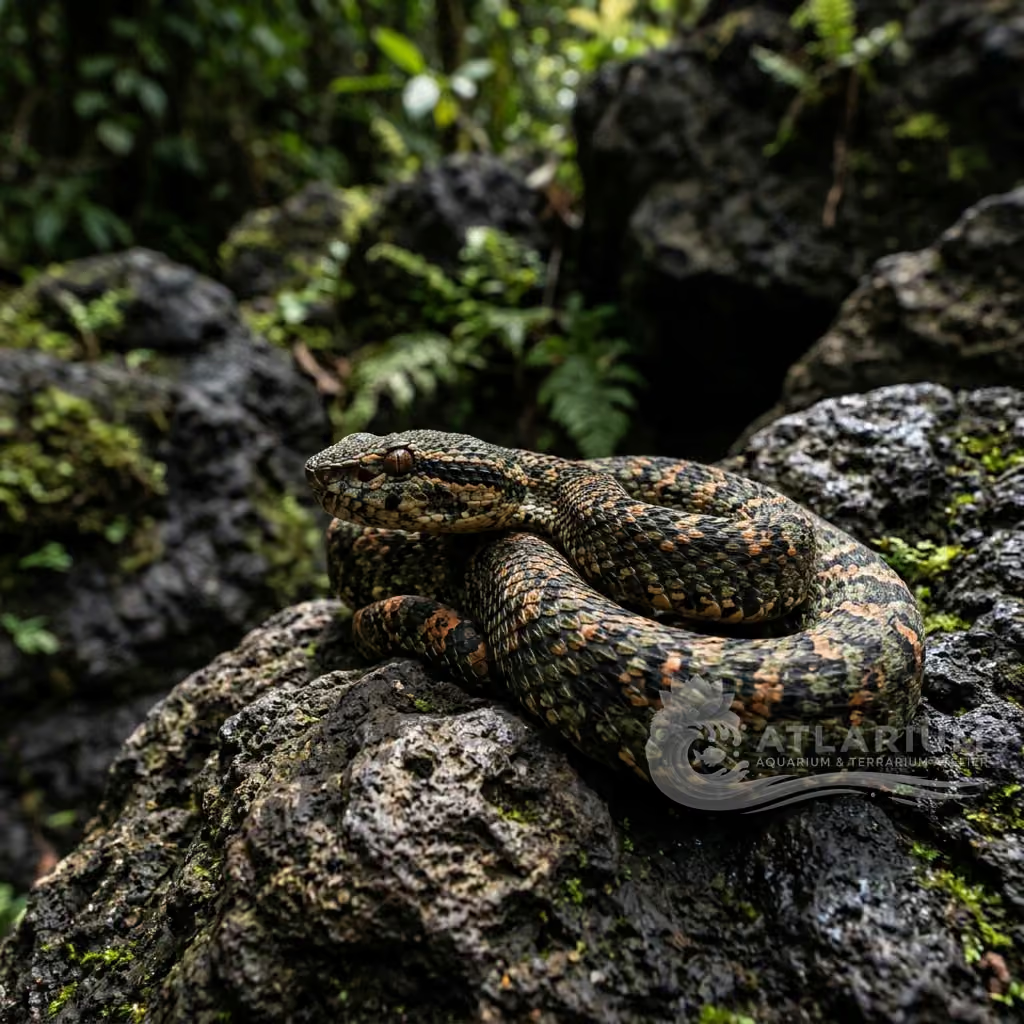
Western Hognose Viper
Porthidium hespere
A rare and highly secretive venomous pit viper endemic to western Mexico. Adapted to tropical deciduous forests, it needs a highly secure terrarium with seasonal humidity.
Environment
Terrestrial
Humidity
45 - 65 %
Day temperature
22 - 32 °C
Ambient temperature
22 - 32 °C
Night temperature
22.5 - 24.5 °C
Basking spot
30 - 31 °C
Adult size
45 cm
Minimum enclosure
>= 80 L

Species description
Geographical Origin and Habitat: This rare species is endemic to the Pacific coast of western Mexico, primarily recorded in the states of Colima, Michoacán, and western Guerrero. It inhabits tropical deciduous forests, medium-stature forests, and dry hilly regions, ranging from near sea level up to approximately 1,000 meters in elevation.
Taxonomy and Genetics: Belonging to the family Viperidae and subfamily Crotalinae (pit vipers). The genus Porthidium comprises small terrestrial pit vipers commonly referred to as hognosed vipers. Phylogenetic studies place *Porthidium hespere* within an arid-adapted clade, with *P. dunni* identified as its closest sister species.
Behavior and Habits: A terrestrial and highly secretive snake that is difficult to locate in the wild. It exhibits nocturnal and crepuscular activity patterns, with increased activity reported during the summer rainy season (June to October) when its primary prey is active. It relies heavily on camouflage to avoid detection.
Morphology: Features a stout body and a distinct triangular head well-differentiated from the neck. The snout is moderately upturned, which is characteristic of the genus. Coloration consists of grey, brown, and beige ground tones, overlaid with a series of dark rectangular blotches aligned along the dorsal spine to aid in camouflage.

Care, breeding and tankmates
Terrarium Setup: Because this is a dangerously venomous species, keeping it is restricted to professionals and authorized institutions. Requires a highly secure, escape-proof terrarium (minimum 32x16x16 inches for an adult) equipped with locking glass doors. The substrate should be a dry mix of coconut husk and leaf litter, with flat stones and low branches for enrichment.
Lighting and Heating: Provide a precise thermal gradient with a cool end of 26°C and a warm basking spot of 30-31°C. Nighttime temperatures can drop to 21-23°C. High-intensity UVB is not required due to their secretive nature, but a regular 12-hour photoperiod should be maintained using low-wattage LED lights.
Humidity and Hydration: Humidity should be adjusted seasonally: 50-60% during dry periods, increasing to 75-85% during the summer rainy season via light misting. A heavy ceramic water bowl must be provided for drinking, along with a humid hide box filled with damp sphagnum moss to assist with shedding.
Feeding and Supplementation: In the wild, they prey on small rodents, lizards, and frogs. In captivity, they feed on appropriately sized thawed mice. Juveniles should be fed every 7-10 days, while adults require feeding only every 14-21 days. Dietary supplements are generally unnecessary if quality prey is used.
Compatibility: Strictly solitary. They must be housed individually to prevent stress and potential cannibalism. The only exception is brief introduction of compatible pairs for breeding purposes, which should only be attempted by highly experienced venomous keepers under close observation.
Health and Common Diseases: Prone to respiratory infections if the enclosure lacks proper ventilation or is kept too wet. Blister disease and scale rot can occur if the substrate is allowed to remain damp for extended periods. Always use professional handling tools such as snake hooks and shift boxes.

Geographic origin and distribution
This rare species is endemic to the Pacific coast of western Mexico, primarily recorded in the states of Colima, Michoacán, and western Guerrero. It inhabits tropical deciduous forests, medium-stature forests, and dry hilly regions, ranging from near sea level up to approximately 1,000 meters in elevation.
Origin
Central America and Caribbean

Reptile profile
- Diet
- Carnivore
- The Western Hognose Viper is a carnivorous reptile whose diet consists primarily of small mammals, anurans, and small reptiles. It relies on its highly developed heat-sensing pits to locate warm-blooded prey in low-light conditions. Operating as a sit-and-wait predator, it strikes passing animals with incredible speed and injects a potent venom to secure its meal. This diet shifts slightly depending on local availability and seasonal changes in its habitat.
- Adult size
- 45 cm
- Lifestyle/Microhabitat
- Terrestrial
- It is entirely terrestrial, living on the rugged, dry forest floors of western Mexico. Its physical structure and coloration are perfectly adapted to blending in with dusty soils and dead foliage.
- Activity cycle
- Nocturnal
- A primarily nocturnal predator, it uses the cooler night hours to search for food, largely relying on its thermal vision to detect warm-blooded prey in the dark.
- Sociality
- Solitary
- Western Hognose Vipers are ground-dwelling snakes that exhibit strong nocturnal tendencies. They are well-camouflaged against the leaf litter and soils of their native environments, making them elusive and rarely encountered. When disturbed, they may flatten their bodies and vibrate their tails as a warning display. Although typically unaggressive, they will not hesitate to bite if directly handled or severely provoked.
- Reproduction
- Viviparous
- Reproduction in this species involves the live birth of fully developed young, a trait known as viviparity. Females gestate their embryos internally, providing thermoregulation and protection until they are ready to be born. A typical litter yields only a small number of neonates, which arrive completely independent. The juvenile vipers immediately disperse to avoid predation and begin foraging for appropriate-sized prey.
- Handling tolerance
- Expert only
- As a venomous reptile, it demands complete respect and strict hands-off husbandry. Keepers must use appropriate shielding and long-handled tools whenever moving the animal or cleaning its enclosure.
- Brumation
- Not required
- It does not undergo typical cold-weather brumation, though it may become naturally sluggish and eat less during cooler, drier seasonal shifts in its native range.
- Molting
- Regular
- Shedding is generally unproblematic if a localized area of higher humidity is provided. A simple damp hide is usually sufficient to facilitate a clean, full-body slough.

Related species
Recommendations grouped by close relatives, companion choices, and similar care.