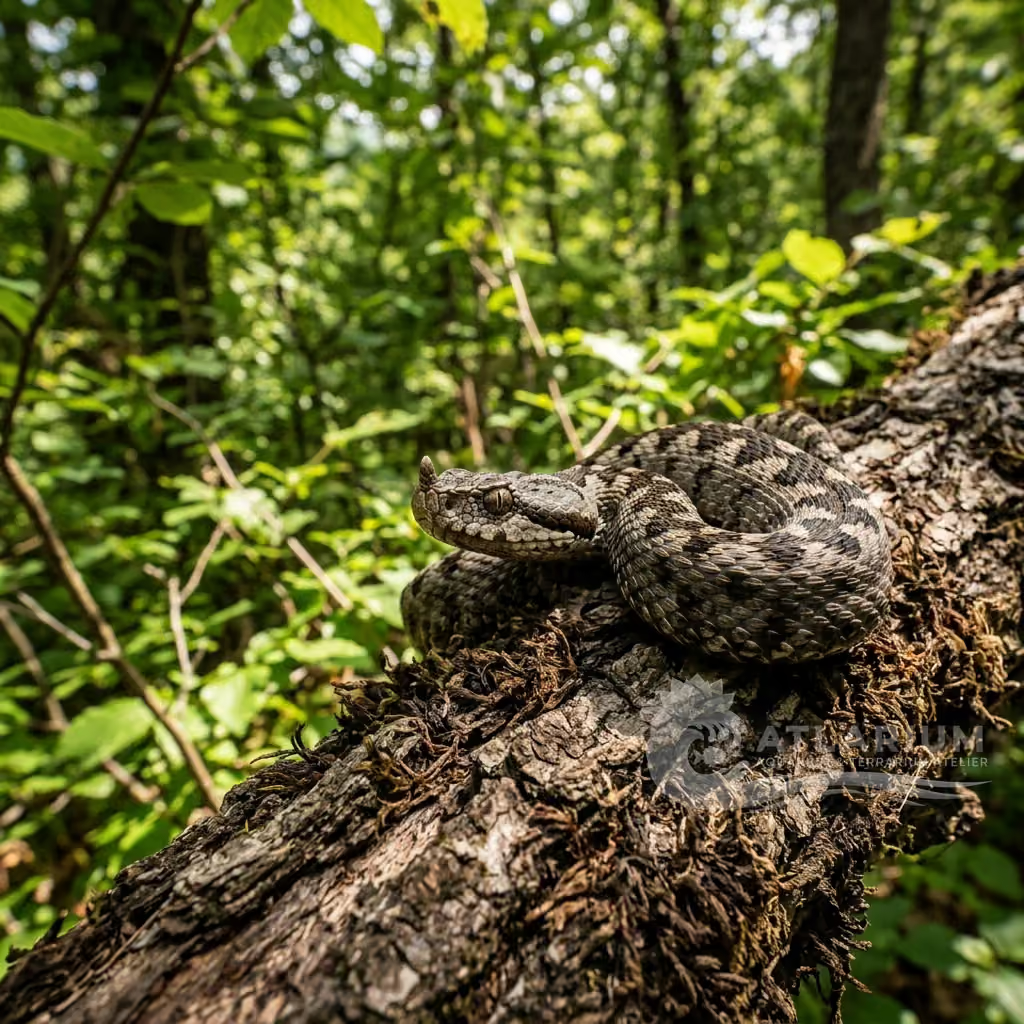
Oman saw-scaled viper
Echis omanensis
A fiercely specialized venomous viper endemic to the rocky expanses of the Hajar Mountains in Oman and the UAE, physically and behaviorally adapted to harsh montane habitats.
Environment
Terrestrial
Humidity
40 - 60 %
Day temperature
25 - 31 °C
Ambient temperature
25 - 31 °C
Night temperature
18 - 22 °C
Basking spot
36 - 38 °C
Adult size
65 cm
Minimum enclosure
>= 150 L

Species description
Geographical Origin and Habitat: Echis omanensis is endemic to the eastern Arabian Peninsula, restricted to the Hajar Mountain range of northern Oman and the eastern United Arab Emirates. Unlike other members of its genus that favor sandy deserts, this viper inhabits rocky mountain slopes, deep gravel canyons, stony wadis, and moist mountain gorges. It occurs at various altitudes from near sea level up to over 1000 meters, sheltering inside rocky cracks and under loose scree.
Taxonomy and Genetics: Belonging to the family Viperidae, subfamily Viperinae, and the genus Echis. Formally described as a distinct species in 2004 by Babocsay, it was previously classified as a subspecies of either Echis coloratus or Echis carinatus. Phylogenetic studies utilizing mitochondrial DNA analysis confirmed its evolutionary divergence and specific ecological adaptation to the Oman mountain ranges.
Behavior and Habits: Primarily nocturnal to avoid the extreme daytime heat of the Arabian summer, though it may bask during the day during cooler winter months. It displays a vigorous defensive temperament; when disturbed, it coils into a horseshoe shape and rubs its serrated lateral scales together to produce a loud sizzling sound. It is an excellent rock climber, moving easily on vertical surfaces.
Morphology: This is a medium-sized viper, with adult specimens typically measuring between 40 and 65 centimeters in total length. The body is relatively robust and slightly compressed laterally, with a broad, wedge-shaped head that is distinct from the neck. The eyes are large with vertically elliptical pupils. Coloration consists of a rocky grey or brown background with irregular light bands, providing camouflage on limestone rockwork.

Care, breeding and tankmates
Terrarium Setup: Requires a rocky montane terrarium measuring at least 80x50x50 cm, fitted with secure locks. The substrate should be a dry mix of coarse sand, gravel, and stable stones. It is critical to build rocky ledges and crevices, which must be secured using silicone adhesive to prevent collapses that could crush the snake. Sturdy climbing branches should be provided to utilize vertical space.
Lighting and Heating: Provide a daytime temperature of 24-26°C (75-79°F) at the cool end and 32-34°C (90-93°F) at the warm end, with a focused basking spot of 36-38°C (97-100°F) under a guarded heat lamp. Nighttime temperatures should drop to 18-20°C (64-68°F) to simulate Oman mountain nights. High-quality 5.0 or 10.0 UVB lighting is required to facilitate calcium synthesis.
Humidity and Hydration: Maintain relative humidity between 30% and 40%. Unlike pure sand-dwelling vipers, it benefits from a light spray of water once a week to simulate morning dew. A fresh water dish must always be present in the cool zone. A humid hide filled with damp sphagnum moss must be provided during shedding periods to prevent incomplete sheds.
Feeding and Supplementation: In captivity, they feed on thawed mice of appropriate size, offered only using long steel feeding tongs. Feed adults once every 10 to 14 days. Preys should be dusted with calcium and vitamin D3 powder once a month. Carefully monitor the snake's weight, as obesity is common in captive vipers with low activity levels.
Compatibility: Strictly solitary. Housing multiple specimens together will cause severe stress and territorial fighting. Possesses a highly potent hemotoxic and cytotoxic venom that causes severe systemic bleeding and localized tissue necrosis. It must only be kept by professional keepers using appropriate snake hooks, tongs, and secure shift boxes.
Health and Common Diseases: Prone to respiratory infections if humidity is too high, and incomplete shedding if a localized moist hide is not provided. External parasites like mites must be treated in a quarantine enclosure. All maintenance must be conducted with the snake safely secured in a separate lockbox before working in the tank.

Geographic origin and distribution
Echis omanensis is endemic to the eastern Arabian Peninsula, restricted to the Hajar Mountain range of northern Oman and the eastern United Arab Emirates. Unlike other members of its genus that favor sandy deserts, this viper inhabits rocky mountain slopes, deep gravel canyons, stony wadis, and moist mountain gorges. It occurs at various altitudes from near sea level up to over 1000 meters, sheltering inside rocky cracks and under loose scree.
Origin
Europe, Mediterranean, and West Asia

Reptile profile
- Diet
- Carnivore
- Echis omanensis primarily feeds on a diet of small mammals, amphibians, and occasionally birds in its natural habitat. In a captive environment, they can typically be transitioned to pre-killed rodents of appropriate size. It is important to offer varied prey items to ensure a complete nutritional profile. Feeding frequency should be adjusted based on the individual's age, size, and metabolic rate, generally ranging from every one to two weeks.
- Adult size
- 65 cm
- Lifestyle/Microhabitat
- Terrestrial
- In its natural habitat, Echis omanensis generally adopts a terrestrial lifestyle, although some climbing behavior may occasionally be observed. They rely heavily on ground cover, such as dense vegetation, rocks, and fallen logs, to navigate their environment safely. The enclosure design must incorporate ample horizontal space with a deep, naturalistic substrate to allow for burrowing and hiding. Providing multiple terrestrial hides across a temperature gradient is crucial for their well-being. Ensuring a secure and complex ground-level environment will encourage natural exploration and security.
- Activity cycle
- Nocturnal
- The activity pattern of Echis omanensis is largely dictated by environmental temperatures and prey availability. They are predominantly crepuscular or nocturnal, becoming most active during the cooler evening and nighttime hours. During the heat of the day, they prefer to remain hidden in burrows, under leaf litter, or within crevices to thermoregulate. Keepers should align feeding and maintenance schedules with these natural active periods to reduce stress. A properly controlled photoperiod with distinct day and night cycles will help maintain their natural rhythms.
- Sociality
- Solitary
- Echis omanensis exhibits a range of fascinating behaviors that are characteristic of its genus. They are generally solitary creatures, relying on camouflage and stealth to avoid predators and ambush prey. When threatened, they may display defensive postures, such as coiling tightly or producing warning sounds, before striking. In captivity, observing these natural behaviors requires providing a spacious and enriched environment that mimics their natural habitat. Regular monitoring is essential to ensure they remain unstressed and behave naturally.
- Reproduction
- Oviparous
- The reproductive strategy of Echis omanensis is well-adapted to its natural environment, ensuring the survival of the next generation. Depending on the specific lineage, this species may exhibit viviparous or oviparous reproductive behaviors, requiring specific conditions for successful breeding. Careful temperature cycling and environmental conditioning are often necessary to stimulate reproductive activity. Providing adequate nesting sites or safe birthing enclosures is critical to prevent stress and ensure the health of both the mother and offspring.
- Handling tolerance
- Display only
- Handling Echis omanensis should only be attempted by experienced professionals due to their highly venomous nature and potential for rapid strikes. Direct physical contact must be strictly avoided to prevent life-threatening envenomation incidents. Specialized tools, such as snake hooks and secure transport tubes, are absolutely necessary for any necessary movement or husbandry tasks. Always maintain a clear understanding of the animal's behavior and strike range during maintenance. A comprehensive safety protocol and access to appropriate antivenom should be established before acquiring this species.
- Brumation
- Not required
- To mimic seasonal changes, Echis omanensis may require a period of brumation, especially if breeding is intended. This involves a gradual reduction in temperature and light hours over several weeks, leading into a sustained cooler period. During brumation, feeding should cease completely, but fresh water must always remain available. The animals should be closely monitored for any signs of weight loss or respiratory distress during this vulnerable time. After the cooling period, temperatures and feeding are slowly brought back to normal active levels to simulate the onset of spring.
- Molting
- Regular
- The molting process, or ecdysis, is a critical period for Echis omanensis that requires optimal environmental conditions. Proper humidity levels must be maintained to ensure the skin is shed entirely in one piece, preventing retained sheds that can cause infections. As a shed approaches, the snake's eyes will turn a cloudy blue, and they may refuse food and become more reclusive. Providing a humid hide box can significantly aid the shedding process and ease any associated stress. Keepers should inspect the shed skin to confirm that the eye caps and tail tip have been successfully removed.

Related species
Recommendations grouped by close relatives, companion choices, and similar care.