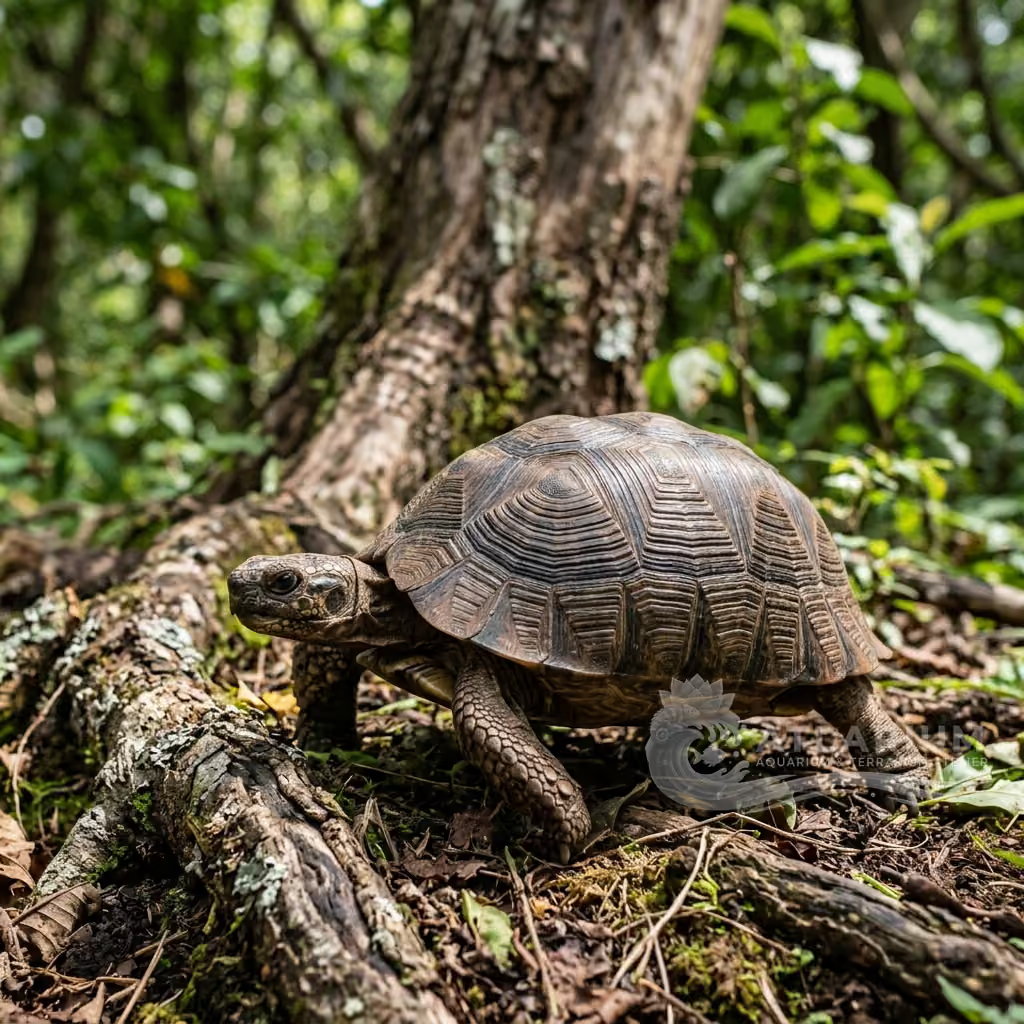
Egyptian Tortoise
Testudo kleinmanni
A critically endangered, tiny tortoise from North African coastal deserts. Requires a dry, sandy enclosure with high temperatures and hiding spots to escape intense heat.
Environment
Terrestrial
Humidity
30 - 50 %
Day temperature
15 - 32 °C
Ambient temperature
15 - 32 °C
Night temperature
21 - 23 °C
Basking spot
38 - 40 °C
Adult size
12 cm
Minimum enclosure
>= 150 L
UVB
Ferguson 3
UVI
1 - 2.6 UVI

Species description
Geographical Origin and Habitat: This species is native to a narrow coastal strip of North Africa, stretching from northern Libya through northern Egypt to southern Israel, although it is now virtually extinct across most of its historic range. It inhabits arid desert and semi-arid scrublands characterized by stable sand dunes, gravel plains, and dry, sandy soil with sparse, stunted vegetation. It survives extreme temperatures by sheltering in burrows dug by rodents or small lizards, escaping the deadly heat of the midday sun to prevent dehydration.
Taxonomy and Genetics: Testudo kleinmanni belongs to the family Testudinidae and is the smallest representative of the genus Testudo. Phylogenetically closely related to Testudo marginata, it represents a highly specialized adaptation to hyper-arid coastal desert biomes. Due to heavy poaching for the pet trade and habitat destruction from livestock grazing, it is listed as 'Critically Endangered' on the IUCN Red List and is strictly protected under CITES Appendix I.
Behavior and Habits: Primarily diurnal and heliothermic, this tortoise regulates its body temperature through precise basking behavior. During the hot summer months, it enters a state of estivation (summer dormancy) inside cool burrows to conserve moisture, while it exhibits maximum activity during the milder winter and spring seasons. It is a shy, cryptic animal, retreating into its shell or fleeing at the slightest vibration or sudden movement.
Morphology: The carapace is highly domed and displays a pale gold, ivory, or straw-yellow coloration with dark brown to black borders on the scutes. This light coloration helps reflect solar radiation, preventing overheating. The plastron typically features two dark, wedge-shaped markings. Size is remarkably small: adult females rarely exceed 12-13 cm in shell length, while adult males are even smaller, measuring between 9 and 10 cm. Males are easily distinguished by their longer, thicker tails and slightly concave plastrons.

Care, breeding and tankmates
Terrarium Setup: Requires a spacious indoor enclosure measuring at least 120x60x50 cm for a single specimen or a pair. The substrate must replicate the coastal desert environment, using a dry mix of 70% play sand and 30% organic topsoil or dry peat moss, with a depth of at least 10-15 cm to allow natural burrowing. Provide multiple dry hiding spots using cork bark curls, hollow logs, and piles of dry hay. Avoid wet or dusty substrates, which can cause severe skin infections or respiratory issues.
Lighting and Heating: High-intensity UVB lighting is mandatory. Use a high-quality 10% or 12% linear UVB fluorescent bulb or, ideally, metal halide (HQI/HID) lamps that provide both heat and full-spectrum light. Keep a photoperiod of 12 hours in summer and 10 hours in winter. Establish a temperature gradient with a localized basking spot at 38-40°C (100-104°F) and a cool zone around 24-26°C (75-79°F). Nighttime temperatures must drop to 18-20°C (64-68°F) to simulate desert cooling.
Humidity and Hydration: Daytime relative humidity must be kept very low, between 30% and 40%. However, it is crucial to lightly mist one corner of the enclosure or the inside of the main hide in the early morning to simulate coastal dew, raising night/morning humidity to 60-70%. Always provide a very shallow, heavy water dish (water depth should not exceed 1 cm) to allow the tortoise to drink and soak safely without risk of drowning.
Feeding and Supplementation: Strictly herbivorous, high-fiber, low-protein, and low-sugar diet. Offer a variety of leafy weeds such as dandelions, plantain, mallow, chicory, sowthistle, and dried grass hay. Never feed fruit, vegetables, or animal proteins, as sugars and proteins cause fatal gut dysbiosis and renal failure. Dust food with pure calcium carbonate 3 times a week, and use calcium with D3 once a week for juveniles and egg-laying females.
Compatibility: Males are highly territorial and can be aggressive towards each other and excessively persistent when pursuing females. House them individually or in small harems consisting of one male and two or three females, provided the enclosure is very large and contains visual barriers to allow females to escape the male's constant advances.
Health and Common Diseases: This species is extremely delicate and unforgiving of husbandry errors. It is highly susceptible to upper respiratory tract infections (URTIs) caused by damp substrate, drafts, or low temperatures. Metabolic Bone Disease (MBD) is common if UVB and calcium are lacking. Regular fecal checks are required, as they easily succumb to high loads of oxyurid roundworms and protozoans under stress.

Geographic origin and distribution
This species is native to a narrow coastal strip of North Africa, stretching from northern Libya through northern Egypt to southern Israel, although it is now virtually extinct across most of its historic range. It inhabits arid desert and semi-arid scrublands characterized by stable sand dunes, gravel plains, and dry, sandy soil with sparse, stunted vegetation. It survives extreme temperatures by sheltering in burrows dug by rodents or small lizards, escaping the deadly heat of the midday sun to prevent dehydration.
Origin
Europe, Mediterranean, and West Asia

Reptile profile
- Diet
- Herbivore
- The Egyptian Tortoise relies exclusively on an herbivorous diet adapted to its harsh, arid native environment. It feeds on desert grasses, saltbushes, succulents, and seasonal wildflowers that sprout after sparse rains. Given its small size, it only requires small quantities of high-fiber, nutrient-dense forage to sustain itself. In a captive setting, maintaining a diet strictly free of animal protein and rich in diverse weeds and calcium is vital for preventing shell deformities.
- Adult size
- 12 cm
- Lifestyle/Microhabitat
- Terrestrial
- Exclusively terrestrial, it inhabits sandy deserts and dry coastal brush. Due to its tiny size, it relies heavily on seeking cover under small bushes and burying into sand.
- Activity cycle
- Diurnal
- It is diurnal, but its activity is heavily dictated by season. It is active during the milder winter and spring, but strictly aestivates (sleeps) during the scorching heat of the summer.
- Sociality
- Solitary
- As one of the smallest tortoise species in the Northern Hemisphere, it exhibits behaviors heavily tailored to surviving extreme heat. It is most active during the cooler mornings, quickly retreating to burrows or the shade of small bushes to escape the intense midday sun. In the hottest summer months, they often enter a state of dormancy known as aestivation to conserve water and energy. Their pale, sandy coloration acts as excellent thermoregulation and camouflage against the desert backdrop.
- Reproduction
- Oviparous
- Mating behaviors are commonly observed during the spring when temperatures are optimal for activity. The female excavates a shallow nest in sandy, loose soil and typically lays very small clutches, often consisting of just 1 to 3 eggs. Despite the small clutch size, a female may lay several times over the course of the breeding season. The incubation period is relatively long, and the tiny hatchlings face significant natural pressures upon emerging.
- Handling tolerance
- Display only
- This species is extremely fragile, shy, and prone to severe stress if handled. They should be considered a display-only tortoise, and should only be handled for essential veterinary reasons.
- Brumation
- Not required
- It does not brumate in winter. Instead, it is most active during the cooler months and aestivates during the hot, dry summer, shutting down its metabolism to survive.
- Molting
- Regular
- Being a strict desert species, it requires very low ambient humidity. Shedding occurs in small dry flakes, though a slightly damp micro-climate in a hide can prevent extreme desiccation.

Related species
Recommendations grouped by close relatives, companion choices, and similar care.