Encyclopaedia
ReptileTerrestrialAdvanced
©AI Generated·Proprietary
African Spurred Tortoise
Geochelone sulcata
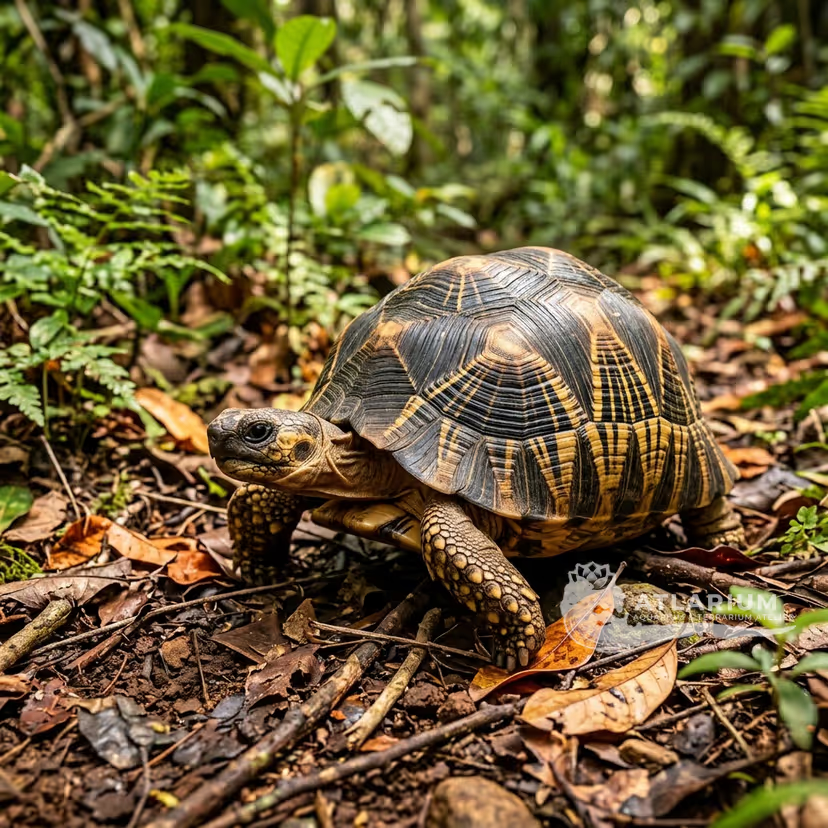
The African Spurred Tortoise (Centrochelys sulcata) is the third-largest tortoise species in the world. While hatchlings are very small, adults can exceed 80 kg. It requires large, secure outdoor enclosures with a heated shelter for the winter months.
Class:Testudines
Order:Testudines
Family:Testudinidae
Genus:Centrochelys
Species:Geochelone sulcata*
* Centrochelys sulcata
Share
Check out African Spurred Tortoise on Atlarium
Environment
Terrestrial
Humidity
30 - 70 %
Day temperature
20 - 42 °C
Ambient temperature
28 °C
Night temperature
18 - 22 °C
Basking spot
38 - 40 °C
Minimum enclosure
>= 5,000 L
UVB
High
Species description
Geographical Origin and Habitat: This species is native to the semi-arid Sahel region of Africa, stretching from Senegal to Eritrea. It inhabits dry savannas, thorn shrublands, and areas with extreme temperature fluctuations. To escape daytime heat and drought, they excavate extensive burrow systems that can be several meters deep, providing a cooler, humid microclimate.
Taxonomy and Genetics: Belonging to the family Testudinidae, it is currently classified under the genus Centrochelys. It is a highly popular species in herpetoculture, widely bred in captivity. Wild populations are listed as vulnerable due to habitat loss, agricultural development, and illegal trade.
Behavior and Habits: They are active, curious, and powerful animals. Due to their size, adult tortoises can easily push through weak fences and obstacles. They spend much of their active hours foraging, basking, and digging burrows or shallow wallows.
Morphology: Characterized by a robust, sandy-yellow to brown carapace with flat scutes and prominent spurs on the thighs. Sexual dimorphism is highly pronounced: adult males are larger and heavier (up to 80-100 kg), featuring a concave plastron and long, upturned gular scutes under the neck used for ramming rivals. Females are smaller (40-60 kg) with flat plastrons and smaller gular scutes.
Care, breeding and tankmates
Terrarium Setup: Hatchlings can be housed indoors in large enclosures for the first few years, but outdoor housing is mandatory for subadults and adults. A large yard with secure, reinforced fencing and buried barriers (at least 40-50 cm deep) is required to prevent escapes. In cooler climates, a well-insulated, heated outdoor greenhouse or shed is necessary as this species does not hibernate.
Lighting and Heating: Requires high ambient temperatures and intense UVB radiation. The ambient temperature in the winter shelter must be kept between 26 and 28 °C, with a localized basking spot of 38-40 °C. High-output UVB lighting (10-12% or higher) is critical for vitamin D3 synthesis and calcium metabolism.
Humidity and Hydration: Although native to arid regions, hatchlings and juveniles require moderate humidity (70-80%) inside their hiding areas to prevent shell pyramiding. Regular warm-water soaking is recommended for hydration. Adults benefit from access to mud wallows or shallow water pools during hot summer days.
Feeding and Supplementation: Strictly herbivorous, high-fiber, low-protein, and low-sugar diet. The staple diet should consist of mixed grasses, dandelions, weeds, and high-quality grass hay (such as Timothy hay or orchard grass). Fruit and watery vegetables should be avoided as they disrupt their hindgut fermentation process. Calcium supplementation is essential.
Compatibility: Primarily a solitary species. Adult males are highly territorial and will fight aggressively, using their gular scutes to flip rivals. Multiple males should never be housed together. Females may cohabitate in very large enclosures, but individual housing is generally preferred to reduce stress.
Health and Common Diseases: Common health issues include shell pyramiding (due to dry conditions in youth), respiratory infections (from low temperatures), and bladder stones (caused by chronic dehydration or high-protein diets). Owners must secure grazing areas from lawnmowers and predators to prevent physical trauma to the shell.
Geographic Origin and Distribution
This species is native to the semi-arid Sahel region of Africa, stretching from Senegal to Eritrea. It inhabits dry savannas, thorn shrublands, and areas with extreme temperature fluctuations. To escape daytime heat and drought, they excavate extensive burrow systems that can be several meters deep, providing a cooler, humid microclimate.
Origin
Africa and Madagascar
Reptile profile
- Diet
- No verified data available
- Life expectancy
- No verified data available
- Adult size
- No verified data available
- Lifestyle/Microhabitat
- No verified data available
- Activity cycle
- No verified data available
- Sociality
- No verified data available
- Reproduction
- No verified data available
- Handling tolerance
- No verified data available
- Brumation
- No verified data available
- Molting
- No verified data available
Image gallery
Licensed images linked to the species or, when marked, to the closest representative taxon.
Related species
Recommendations grouped by close relatives, companion choices, and similar care.