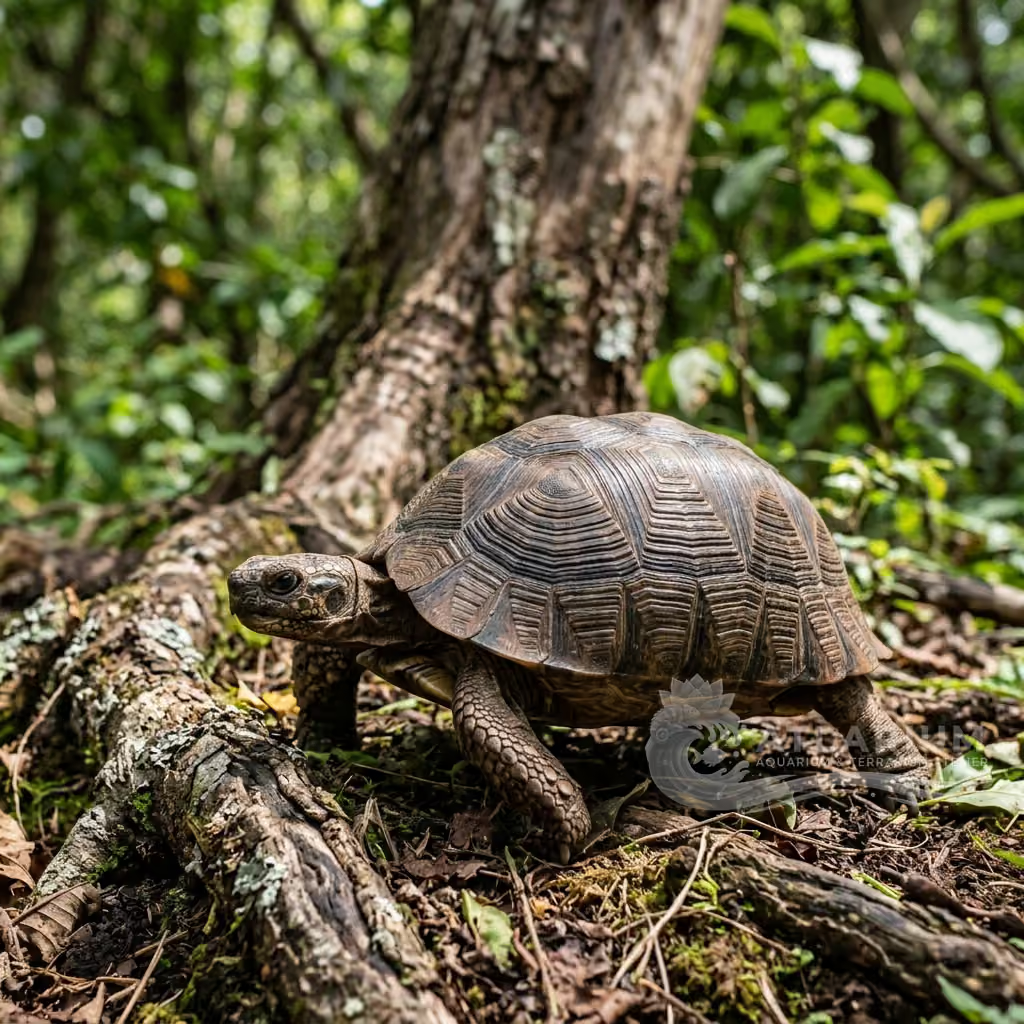
African spurred tortoise — Standard
Centrochelys sulcata
The third-largest tortoise species in the world, renowned for its golden-brown shell, powerful limbs, and active personality.
Environment
Terrestrial
Humidity
30 - 60 %
Day temperature
28 - 32 °C
Ambient temperature
30 °C
Night temperature
18 °C
Basking spot
35 - 38 °C
Adult size
85 cm
Minimum enclosure
>= 10,000 L

Species description
Geographical Origin and Habitat: This species is native to the semi-arid Sahel region of Africa, stretching from Senegal, Mauritania, and Mali eastward to Sudan and Ethiopia. They inhabit dry savannas, thorn shrublands, and desert edges, digging deep burrow networks to shelter from temperature extremes.
Taxonomy and Genetics: Belongs to the family Testudinidae. It is the sole living species in the genus Centrochelys. The standard form features the wild-type golden-brown or sandy coloration. They are genetically adapted for survival in harsh climates and exhibit very fast growth rates in their youth.
Behavior and Habits: Terrestrial, diurnal, and highly active. They are strong, persistent walkers. They exhibit distinct territorial behaviors, particularly males. They retreat to their deep burrows during the hottest parts of the day. They have a curious, bold temperament and will push objects in their path.
Morphology: Features a heavy, flattened carapace with deeply grooved scutes in shades of brown, tan, and yellow. Thick, overlapping scales protect the front legs, and prominent pointed spurs are present on the hind thighs. Adults typically reach 60-80 cm in length and weigh between 45 and 100 kg.

Care, breeding and tankmates
Terrarium Setup: Indoor enclosures are only suitable for hatchlings and young juveniles. Adults require a vast, secure outdoor yard (minimum 50-100 square meters) with sturdy walls sunk at least 50 cm into the ground to prevent tunneling escapes. A dry, heated shelter is mandatory for winter.
Lighting and Heating: High-output UVB lighting (10% bulb or metal halide) is required for 12 hours daily. The basking spot must reach 35-38 degrees Celsius (95-100°F) using heat lamps, with a cooler area at 26 degrees. Nighttime temperatures inside the shelter must be kept above 18 degrees Celsius.
Humidity and Hydration: Prefers low humidity (30-40%). However, young tortoises require a humid nesting box to prevent dehydration and support smooth shell development. Provide a shallow, heavy water dish. Soaking juveniles in warm water twice a week is highly beneficial for hydration.
Feeding and Supplementation: Strictly herbivorous, high-fiber diet. Feed fresh grasses, weeds, orchard hay, dandelion, clover, and spineless cactus pads. Never feed fruit, grains, or commercial moist food. Dust food with pure calcium carbonate three times a week and a calcium/D3 supplement once a week.
Compatibility: Males are highly territorial and will aggressively ram each other. Keep only one male with multiple females in large outdoor areas, or house them individually. Monitor the group dynamics to ensure females are not overly stressed by the male's constant breeding attempts.
Health and Common Diseases: Prone to Metabolic Bone Disease (MBD) and shell pyramiding if fed high-protein diets or denied proper UVB. Cold, damp conditions can trigger respiratory infections (pneumonia). Regular fecal examinations are recommended to monitor for internal parasites.

Geographic origin and distribution
This species is native to the semi-arid Sahel region of Africa, stretching from Senegal, Mauritania, and Mali eastward to Sudan and Ethiopia. They inhabit dry savannas, thorn shrublands, and desert edges, digging deep burrow networks to shelter from temperature extremes.
Origin
Africa and Madagascar

Reptile profile
- Diet
- Herbivore
- African spurred tortoises are strict herbivores that require a diet overwhelmingly composed of tough, high-fiber grasses and hays. Orchard grass, Bermuda grass, and timothy hay should make up the vast majority of their daily intake. Weeds and safe leafy greens like dandelion greens or hibiscus leaves can be offered occasionally as supplements. Fruit and high-protein foods must be completely avoided as they cause severe digestive and shell deformities.
- Adult size
- 85 cm
- Lifestyle/Microhabitat
- Terrestrial
- They are exclusively terrestrial and highly fossorial by nature. In the arid regions of sub-Saharan Africa, Sulcatas survive extreme heat by digging immense, deep burrows. In a captive environment, this instinct remains strong; owners must be prepared for extensive landscaping alterations and ensure that outdoor enclosures possess strong, deeply buried perimeter fences to prevent the tortoise from excavating their way out.
- Activity cycle
- Diurnal
- The Sulcata, or African Spurred Tortoise, is strictly diurnal. They spend their days actively foraging across large areas for grasses and weeds, interspersed with long periods of basking under the harsh sun. Due to their immense size and high energy demands, they require extremely powerful heat and UVB lighting setups when housed indoors, though natural, unfiltered sunlight is always the best option for this massive species.
- Sociality
- Solitary
- Sulcata tortoises are remarkably active and powerful diggers, capable of excavating long, deep burrows to escape extreme heat or cold. They are diurnal and spend hours grazing lazily in the sunshine to thermoregulate. As they grow to enormous sizes, their relentless walking and bulldozing habits necessitate a very large and highly secure outdoor enclosure.
- Reproduction
- Oviparous
- In the wild, breeding typically occurs during the rainy season when food is more abundant. Males will forcefully ram into each other and fight for dominance and mating rights with females. A female will dig an extensive nest in the dirt and lay a clutch of 15 to 30 large eggs. The eggs undergo a long incubation period of several months before the resilient hatchlings dig their way out.
- Handling tolerance
- Tolerant
- Sulcatas are famous for their bold, outgoing, and generally docile temperaments. They rarely bite and quickly learn to recognize their keepers, often approaching for food. However, as the third-largest species of tortoise in the world, their sheer size and incredible physical strength make them difficult to manage or physically move as adults. They act like bulldozers, completely unaware of their own destructive power.
- Brumation
- Sulcatas originate from the hot, arid Sahel region of Africa and absolutely do not undergo winter brumation or hibernation. They are entirely incapable of surviving freezing or even moderately cold temperatures for extended periods. Keepers living in cooler climates must provide massive, highly insulated, and deeply heated indoor enclosures or climate-controlled sheds to house them safely through the winter months.
- Molting
- Regular
- Like all tortoises, they do not shed their skin in a single piece. Instead, the tough, leathery skin on their limbs and neck continuously flakes off in small patches. Proper hydration is critical, especially for fast-growing hatchlings, to ensure smooth shell growth (preventing 'pyramiding') and healthy skin. Regular soaking and access to a clean, shallow mud wallow can greatly assist in their natural molting and hydration process.

Related species
Recommendations grouped by close relatives, companion choices, and similar care.