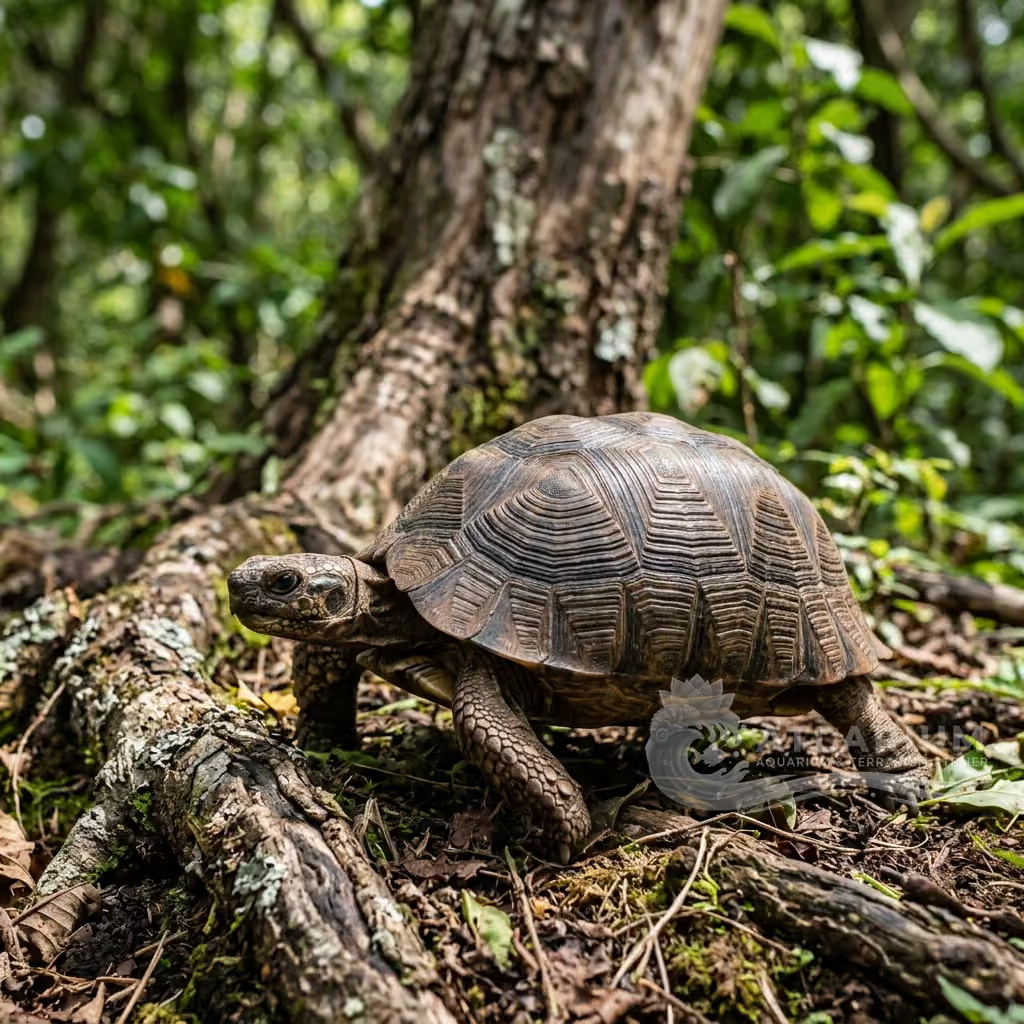
Radiated Tortoise
Astrochelys radiata
The Radiated Tortoise from Madagascar is one of the most spectacular and rarest reptiles in the world, famous for its geometrically perfect domed shell adorned with bright yellow rays.
Environment
Terrestrial
Humidity
50 - 70 %
Day temperature
18 - 32 °C
Ambient temperature
18 - 32 °C
Night temperature
21 - 23 °C
Basking spot
38 - 40 °C
Adult size
35 cm
Minimum enclosure
>= 800 L
UVB
Ferguson 3
UVI
1 - 2.6 UVI

Species description
Geographical Origin and Habitat: This species is endemic to the semi-arid and arid regions of southwestern and southern Madagascar. Its natural habitat consists of dry spiny forests, deciduous woodlands, and xerophytic scrublands dominated by Didiereaceae plants and euphorbias. It has also been introduced to Reunion and Mauritius. It prefers flat coastal lowlands with high temperatures and low, erratic rainfall, where the dense thorny vegetation provides both food and essential shelter from the tropical sun.
Taxonomy and Genetics: Astrochelys radiata belongs to the family Testudinidae and is classified in the genus Astrochelys along with the extremely rare Ploughshare Tortoise (Astrochelys yniphora). It exhibits low genetic diversity in wild populations, which poses challenges for long-term conservation. Due to intense poaching for local bushmeat and the international black market pet trade, along with severe habitat loss, it is listed as 'Critically Endangered' on the IUCN Red List and is protected under CITES Appendix I.
Behavior and Habits: This tortoise is primarily diurnal and heliothermic. It is most active during the cooler morning and late afternoon hours, spending the hot midday resting under thick, thorny shrubs. During the rainy season, it exhibits high activity levels, roaming extensively to feed and drink. It displays a unique behavior during heavy rain showers, raising its shell to catch and drink the running water flowing over its scutes.
Morphology: The carapace is highly domed, smooth, and jet black or dark brown, with each scute beautifully marked with a star-like pattern of bright yellow rays radiating from the center. This pattern provides excellent camouflage in the dappled light of its forest habitat. Adults can grow up to 40 cm in length and weigh over 15-20 kg. Sexual dimorphism is present: adult males have longer, thicker tails, a more open anal notch, and a distinctly concave plastron compared to the flat plastron of females.

Care, breeding and tankmates
Terrarium Setup: Due to their large adult size, juveniles can be kept in indoor enclosures of at least 150x80 cm, but adults require large heated outdoor pens or dedicated indoor greenhouses of at least 10-15 square meters. The substrate should be soft and dry, consisting of a 20 cm deep mix of coco coir, peat moss, and organic soil, topped with dry leaves. Provide large, heavy hides where the tortoise can retreat fully to feel secure.
Lighting and Heating: Requires high-intensity heat and UVB radiation. Install 70W or 150W metal halide (HID) lamps combined with 10% or 12% linear UVB fluorescent tubes. Keep a 12-hour photoperiod year-round. Maintain a daytime ambient temperature of 28-30°C (82-86°F) with a localized basking spot of 38-40°C (100-104°F). Nighttime temperatures must not drop below 20-22°C (68-72°F) as this species does not hibernate and cold exposure is fatal.
Humidity and Hydration: Maintain moderate relative humidity between 50% and 60% during the day, rising to 70-80% at night. Regular misting of the enclosure and weekly warm baths (20 minutes) are important to promote hydration, stimulate defecation, and prevent kidney stones. Always provide a large, shallow water dish that allows the tortoise to drink and soak without risk of drowning.
Feeding and Supplementation: Strictly herbivorous, with occasional fruit consumption. The diet must consist primarily of mixed grasses, dandelions, plantain, clover, and high-quality grass hay. Spineless Opuntia cactus pads are an excellent addition, providing calcium and hydration. Fruit can be offered as a rare treat (maximum 5% of the diet). Supplement food with pure calcium carbonate and dust with calcium plus D3 twice a week for growing juveniles.
Compatibility: Adult males are highly territorial and will engage in combat during the breeding season, attempting to flip each other over using their gular projections. It is best to house them individually or in small groups consisting of a single male and multiple females, provided the enclosure is exceptionally large with plenty of visual barriers to prevent persistent stress.
Health and Common Diseases: Common health problems include carapace pyramiding due to high-protein diets and low humidity during growth. Internal parasites (nematodes and protozoans) and respiratory infections (pneumonia and rhinitis) triggered by cold drafts or low temperatures are also common. Ensure strict hygiene to prevent plastron infections (shell rot) from damp or dirty substrates.

Geographic origin and distribution
This species is endemic to the semi-arid and arid regions of southwestern and southern Madagascar. Its natural habitat consists of dry spiny forests, deciduous woodlands, and xerophytic scrublands dominated by Didiereaceae plants and euphorbias. It has also been introduced to Reunion and Mauritius. It prefers flat coastal lowlands with high temperatures and low, erratic rainfall, where the dense thorny vegetation provides both food and essential shelter from the tropical sun.
Origin
Cosmopolitan or introducedNorth AmericaAfrica and Madagascar

Reptile profile
- Diet
- Herbivore
- Radiated tortoises graze extensively on a wide assortment of grasses, fruit, and succulent plants native to the dry spiny forests of Madagascar. They favor Opuntia cacti, which provide essential hydration and nutrients in their arid environment. Their highly herbivorous diet requires massive amounts of fiber for proper digestive health. They readily adapt to varied leafy greens and hay when kept in captivity.
- Adult size
- 35 cm
- Lifestyle/Microhabitat
- Terrestrial
- Exclusively terrestrial, it is native to the dry spiny forests and scrublands of southern Madagascar, roaming widely to forage on grasses, fruit, and succulent plants.
- Activity cycle
- Diurnal
- A fully diurnal species, it typically grazes actively in the early mornings and late afternoons, utilizing thick brush as shade during the peak heat of the day.
- Sociality
- Solitary
- Endemic to southern Madagascar, they are adapted to scrub and thorn forests, remaining active mostly in the mornings. Their domed, intricately marked shell acts as camouflage among the shadows of the brush. When threatened, they emit a loud hissing sound while pulling their head and limbs tightly into their secure shells. They are known for their remarkable longevity, frequently outliving their human caretakers when provided with optimal conditions.
- Reproduction
- Oviparous
- Mating is a noisy affair, with males aggressively ramming females and emitting loud grunts during copulation. The female excavates a deep, flask-shaped hole to deposit 3 to 12 roughly spherical eggs. Depending on the environmental temperature, the eggs can take up to five to eight months to successfully hatch. The heavily patterned hatchlings require intense humidity and warmth in their early life to encourage smooth shell development.
- Handling tolerance
- Tolerant
- They are exceptionally docile and are known for their gentle disposition. While heavy as adults, they tolerate necessary handling well, provided they are securely supported by their plastron.
- Brumation
- Not required
- This tropical species does not undergo brumation. It requires stable, warm temperatures year-round, with no cold winter drops.
- Molting
- Regular
- Shedding occurs naturally as the tortoise grows, presenting as flaky skin peeling from the limbs and neck. Normal to moderate humidity with access to a damp hide ensures healthy shell and skin development.

Related species
Recommendations grouped by close relatives, companion choices, and similar care.