Mexican Giant Tortoise
Gopherus flavomarginatus
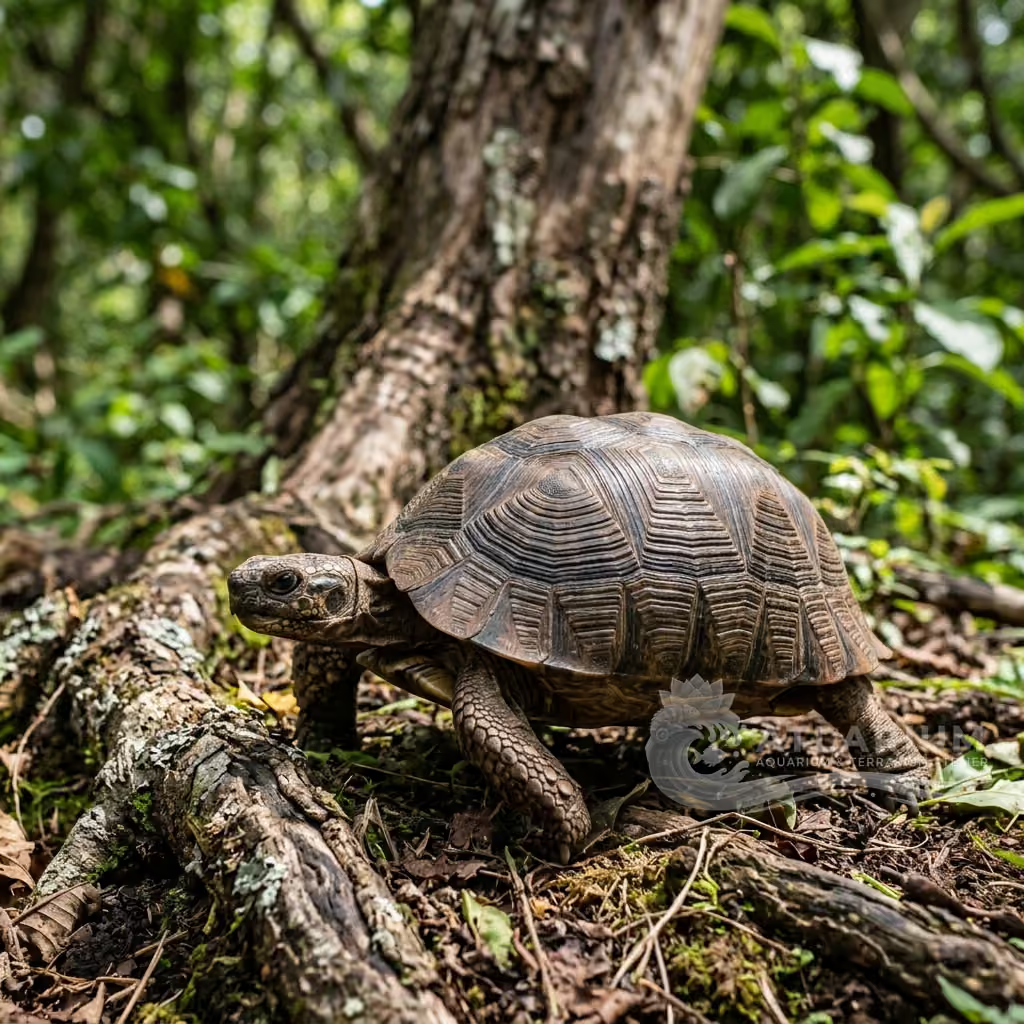
The largest land tortoise in North America, endemic to the Bolsón de Mapimí desert basin in Mexico, where it constructs deep burrow networks to survive extreme climates.
Environment
Terrestrial
Humidity
30 - 50 %
Day temperature
12 - 34 °C
Ambient temperature
12 - 34 °C
Night temperature
21 - 23 °C
Basking spot
34 °C
Adult size
40 cm
Minimum enclosure
>= 1,000 L
Brumation temperature
5 - 10 °C

Species description
Geographical Origin and Habitat: This critically endangered species is endemic to a small area of the Chihuahuan Desert known as the Bolsón de Mapimí, located in northern Mexico (at the junction of Durango, Chihuahua, and Coahuila). It inhabits clayey desert basins and sandy plains dominated by low desert scrub and native grasses at elevations between 1,000 and 1,400 meters.
Taxonomy and Genetics: Belonging to the family Testudinidae and the genus Gopherus, which comprises the burrowing tortoises of North America. It is the largest species within its genus and the largest land tortoise on the North American continent. Genetic analysis reveals a close relationship to *Gopherus polyphemus*, showing ancient evolutionary divergence.
Behavior and Habits: Strictly crepuscular and highly fossorial. It excavates massive burrow systems that can measure up to 8 meters (26 feet) long and 2.5 meters (8 feet) deep. These burrows are crucial for the tortoise's survival, providing a stable microclimate that protects it from sub-zero winter temperatures and scorching summer heat.
Morphology: Features a broad, somewhat flattened carapace that is dark brown, grey, or yellowish-brown in color, with lighter growth rings. The plastron is pale yellow. The forelimbs are heavily scaled and spade-like, specifically adapted for digging in hard-packed desert soils. Adults can reach a carapace length of 40 centimeters and weigh up to 10-15 kg.

Care, breeding and tankmates
Terrarium Setup: Due to their large size and burrowing habits, indoor keeping is highly impractical for adults. They require massive outdoor enclosures (minimum 30x30 feet for a pair) situated in arid climates. The soil must be compact yet diggable to allow burrow construction. Enclosure walls must extend at least 3 feet underground to prevent escape.
Lighting and Heating: Outdoor housing provides necessary direct sunlight for heat and UVB radiation. If kept indoors during winter (for juveniles), high-output UVB lighting (10.0 or metal halide) is mandatory. Target daytime ambient temperatures of 26-30°C with a basking zone of 35°C. Winter burrow temperatures can drop safely to 8-10°C.
Humidity and Hydration: Adapted to arid conditions with low relative humidity (30-50%). However, their deep underground burrows maintain a higher relative humidity of 60-70%, which is vital to prevent dehydration and respiratory issues. Provide a large, shallow water pan for occasional drinking and soaking.
Feeding and Supplementation: Strictly herbivorous diet, high in fiber and calcium, and low in protein and sugars. Feed native grasses (especially Tobosa grass), spineless Opuntia cactus pads, dandelion, weeds, and grass hay. Dust food items regularly with calcium powder and provide a multivitamin supplement once a month.
Compatibility: Can be kept in small colonies consisting of one male and two or three females, provided the enclosure is large enough. Adult males are territorial and will engage in combat, using their gular horns to overturn rivals. Do not house multiple adult males together in confined spaces.
Health and Common Diseases: Highly susceptible to Upper Respiratory Tract Disease (URTD) caused by Mycoplasma bacteria, which is contagious and can be fatal. Other risks include Metabolic Bone Disease (MBD) due to inadequate UVB/calcium, and external ticks. Regular veterinary health checks and quarantine of new stock are essential.

Geographic origin and distribution
This critically endangered species is endemic to a small area of the Chihuahuan Desert known as the Bolsón de Mapimí, located in northern Mexico (at the junction of Durango, Chihuahua, and Coahuila). It inhabits clayey desert basins and sandy plains dominated by low desert scrub and native grasses at elevations between 1,000 and 1,400 meters.
Origin
Central America and CaribbeanNorth America

Reptile profile
- Diet
- Herbivore
- The Bolson Tortoise relies on a diet composed mostly of tough desert grasses and local foliage. Hilaria mutica (tobosa grass) is a common staple in their native Mexican habitat. In a captive environment, providing a fiber-dense diet with minimal fruits is essential for proper gut function. A varied offering of edible weeds and commercial hay is highly recommended.
- Adult size
- 40 cm
- Lifestyle/Microhabitat
- Fossorial
- They are strictly terrestrial and adapted to the extreme conditions of the high desert. Their strong, scaled legs are perfectly evolved for walking across coarse sand and digging deep soil. They spend the vast majority of their existence localized around a few chosen burrow sites. Enclosures for this species must be extremely robust to contain their powerful digging tendencies.
- Activity cycle
- Diurnal
- Bolson Tortoises are most active during the cooler parts of the day, particularly early mornings. During the peak summer heat, they remain deep in their burrows to conserve moisture. Heavy rainfalls prompt them to emerge and actively forage or seek out drinking spots. Their annual cycle is closely tied to the rare moisture events in their harsh habitat.
- Sociality
- Solitary
- This is the largest of the North American terrestrial tortoises and exhibits powerful digging behaviors. They excavate complex burrows in the Chihuahuan Desert which they inhabit for many years. While generally placid, adults will fiercely protect the immediate vicinity of their burrow from other tortoises. Their large size makes them less vulnerable to predators once they reach adulthood.
- Reproduction
- Oviparous
- Reproductive activity usually begins following the onset of summer rains in their arid range. Females will construct nests and deposit 3 to 9 eggs depending on their size and health. The incubation period can be quite long, often spanning several months until conditions are right for emergence. Successful breeding in captivity requires mimicking these specific environmental triggers.
- Handling tolerance
- Display only
- Handling should only occur when absolutely necessary for health inspections or relocation. They are heavy, powerful animals and must be supported securely to prevent injury to both the handler and the tortoise. Keep them in their natural horizontal orientation to prevent undue stress on their internal organs. Prolonged handling can cause them to retreat into their shell and become highly stressed.
- Brumation
- Required
- They enter a significant brumation period during the cold desert winters. Their burrows provide a crucial thermal buffer against freezing surface temperatures. Preparing them for a captive brumation involves meticulous monitoring of their weight and a complete fasting period. Proper hydration prior to entering brumation is vital for their survival until spring.
- Molting
- Regular
- Skin shedding occurs gradually, with dry, flaky skin peeling from the soft tissues of the legs and neck. The keratin scutes of the shell will also wear and slowly renew, though large plates are not shed entirely. Providing a rough surface like flat rocks can help them safely rub off loose skin. Humid micro-climates within their burrow assist in keeping the skin flexible.

Related species
Recommendations grouped by close relatives, companion choices, and similar care.