Encyclopaedia
ReptileTerrestrialAdvanced
©AI Generated·Proprietary
Leopard Tortoise
Stigmochelys pardalis
A large, incredibly long-lived African herbivorous tortoise adorned with a beautifully patterned domed carapace, requiring significant space, a dry environment, and strict temperature control.
Class:Testudines
Order:Testudines
Family:Testudinidae
Genus:Stigmochelys
Species:Stigmochelys pardalis*
Formerly known as:Stigmochelys pardalis
* Source-reviewed taxonomy (The Reptile Database, 2026-07-24): The Reptile Database identifies the Leopard Tortoise as Stigmochelys pardalis (Bell, 1828). The previous leopardus epithet is not the accepted species name.
Share
Check out Leopard Tortoise on Atlarium
Environment
Terrestrial
Humidity
40 - 70 %
Day temperature
27 - 32 °C
Ambient temperature
27 - 32 °C
Night temperature
21 - 24 °C
Basking spot
35 - 38 °C
Adult size
40 cm
Minimum enclosure
>= 1,000 L
UVB
High
Species description
Geographical Origin and Habitat: This large terrestrial tortoise is native to the semi-arid regions, wooded savannas, and thorn scrubs of Eastern and Southern Africa, extending from Sudan and southern Ethiopia to the provinces of South Africa. It prefers open, sunny habitats where wild grasses and low shrubs abound, providing shelter from the extreme midday heat and natural predators.
Taxonomy and Genetics: Stigmochelys pardalis belongs to the class Reptilia, order Testudines, suborder Cryptodira, family Testudinidae, and genus Stigmochelys. It was previously classified within the genus Geochelone as Geochelone pardalis. Recent genetic studies have isolated the genus Stigmochelys to reflect its phylogenetic peculiarities and distinguish it from Asian and American species.
Behavior and Habits: It is a strictly diurnal and terrestrial species that does not have the habit of digging deep burrows, preferring instead to shelter under bushes or fallen logs. It is an active animal that spends much of the day grazing in search of grasses. It does not undergo winter hibernation, requiring stable and warm temperatures throughout the entire year.
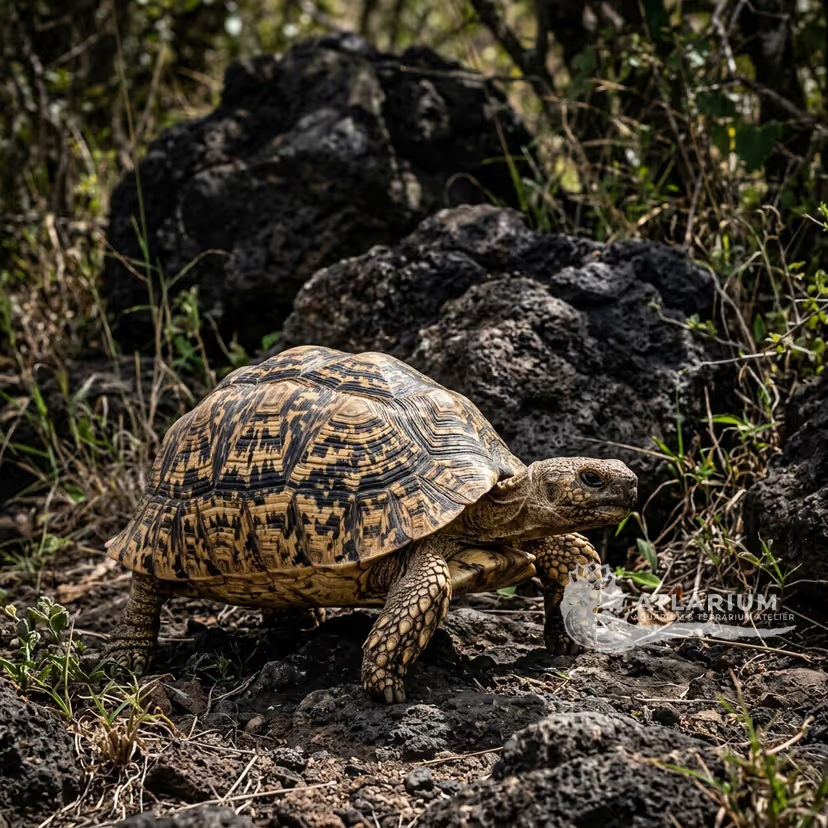
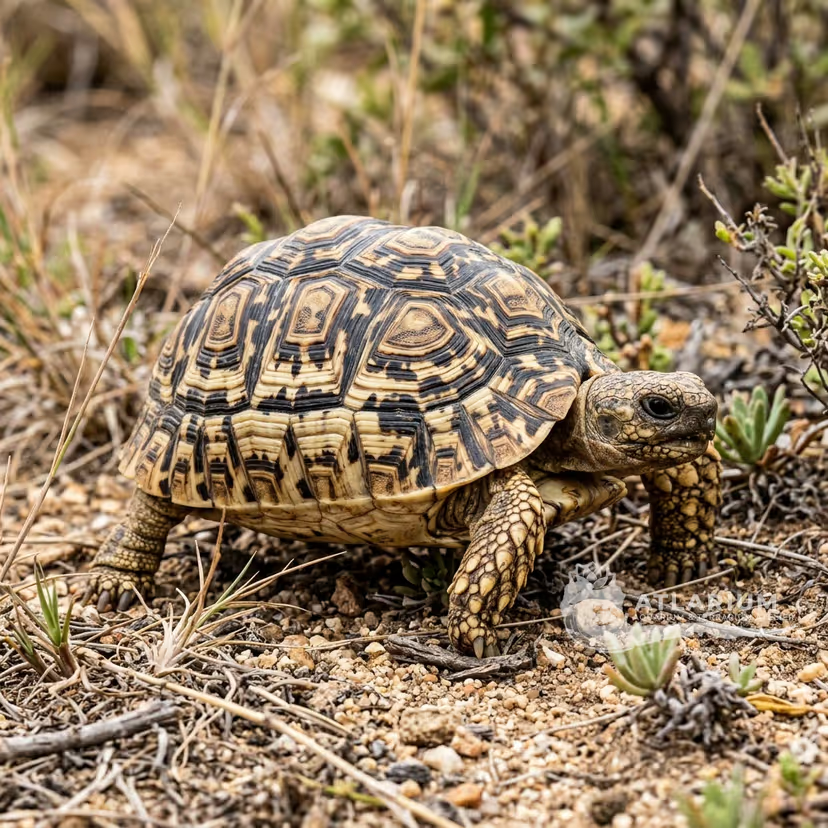
Morphology: It features an exceptionally high and domed carapace, which as an adult can reach a length between 40 and 60 centimeters for a weight ranging from 15 to 30 kilograms. The background coloration is yellow or cream, densely spotted with a black labyrinthine pattern resembling a leopard's coat. Males are distinguished by a longer, stouter tail and a distinctly concave plastron to facilitate mating.
Care, breeding and tankmates
Terrarium Setup: Adult specimens require large outdoor spaces; ideal are protected outdoor pens of at least 4x4 meters, with a dry substrate, grassy vegetation, and a cool shade zone. For juveniles, large open terrariums (tortoise tables) of at least 150x80 cm can be used with a substrate of peat mixed with sand. It is fundamental to guarantee a dry environment to prevent skin fungal infections.
Lighting and Heating: It requires a heat source that creates a daytime basking zone of 35-38°C, with an average terrarium temperature of 26-28°C and nighttime minimums not lower than 20-21°C. It is absolutely essential to install high-emission UVB lamps (10.0 or mercury vapor lamps) to allow the correct synthesis of vitamin D3 and prevent rickets.
Humidity and Hydration: Humidity must be kept low, ideally between 40% and 50%, although juveniles benefit from slight morning humidity. A very shallow, heavy, and stable water bowl must be inserted, in which the tortoise can drink and eventually partially submerge; the water must be changed daily.
Feeding and Supplementation: The diet must be exclusively herbivorous, characterized by a very high content of crude fibers and a low intake of proteins and sugars. The ideal components are field hay, fresh grass, dandelion, clover, plantain, and cactus pads. It is necessary to dust the food with calcium carbonate three times a week and use a specific supplement for reptiles once a month.
Compatibility: It is a generally peaceful and tolerant species towards conspecifics. They can be raised in small groups consisting of one male and several females, provided large spaces are available. The cohabitation of multiple males in the same enclosure must be avoided to prevent aggressive territorial behaviors and continuous attempts to flip each other.
Health and Common Diseases: Pyramiding of the carapace is a common pathology resulting from an excessively high protein diet or low humidity in the first years of life. The species is very sensitive to respiratory diseases if exposed to cold drafts or stagnant humidity. Intestinal parasitosis must be checked regularly through veterinary analysis of the feces.
Geographic Origin and Distribution
This large terrestrial tortoise is native to the semi-arid regions, wooded savannas, and thorn scrubs of Eastern and Southern Africa, extending from Sudan and southern Ethiopia to the provinces of South Africa. It prefers open, sunny habitats where wild grasses and low shrubs abound, providing shelter from the extreme midday heat and natural predators.
Origin
Africa and Madagascar
Reptile profile
- Diet
- No verified data available
- Life expectancy
- No verified data available
- Adult size
- 40 cm
- Lifestyle/Microhabitat
- No verified data available
- Activity cycle
- No verified data available
- Sociality
- No verified data available
- Reproduction
- No verified data available
- Handling tolerance
- No verified data available
- Brumation
- No verified data available
- Molting
- No verified data available
The catalog's scalar value is 40 cm. The ReptTraits v1.2 source reports a maximum adult measurement of 40 cm for this species, recorded as straight carapace length (SCL). These figures are not interchangeable: the first is the profile's editorial reference, whereas the second is a published maximum under a specific measurement convention; differences among sources can reflect sex, population, life stage and measuring method.
Image gallery
Licensed images linked to the species or, when marked, to the closest representative taxon.
Related species
Recommendations grouped by close relatives, companion choices, and similar care.