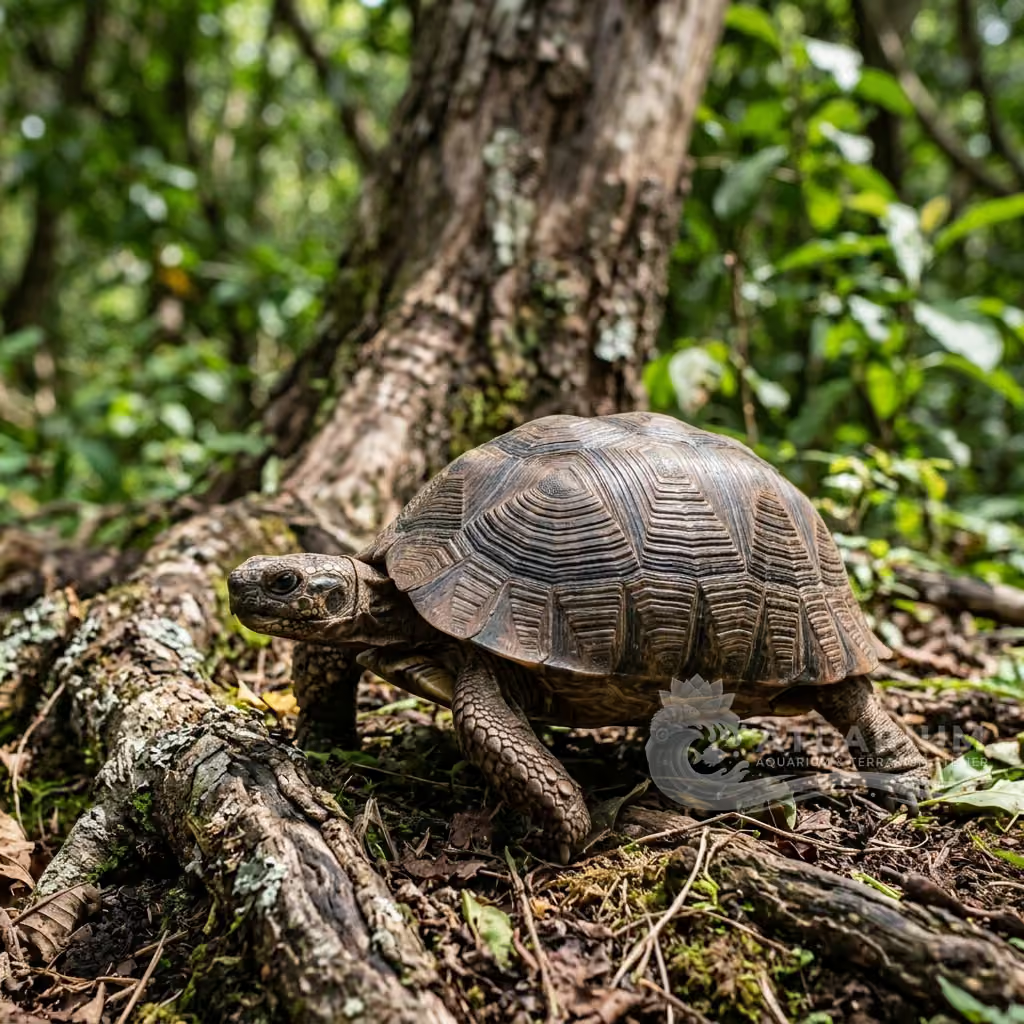
Lobatse Hingeback Tortoise
Kinixys lobatsiana
A South African tortoise with a flexible rear carapace hinge to protect its hind legs. This secretive, omnivorous reptile thrives in savanna-themed terrariums with dry hides.
Environment
Terrestrial
Humidity
50 - 70 %
Day temperature
15 - 30 °C
Ambient temperature
15 - 30 °C
Night temperature
19 - 21 °C
Basking spot
30 - 32 °C
Adult size
18 cm
Minimum enclosure
>= 250 L

Species description
Geographical Origin and Habitat: This species is native to southern Africa, with populations primarily concentrated in eastern Botswana and northern South Africa. It inhabits rocky hillsides, dry acacia savannas, and thorny scrublands, finding shelter under rocks or in abandoned burrows during dry seasons.
Taxonomy and Genetics: Classified in the family Testudinidae and the genus Kinixys. Scientifically known as Kinixys lobatsiana, it was long considered a regional variant of Kinixys belliana. Genetic sequencing has elevated it to a distinct species, adapted to the specific climate of the South African highveld.
Behavior and Habits: Diurnal and terrestrial. It is a highly secretive tortoise that spends much of its time hidden in thick vegetation or rocky crevices. Unlike most strictly herbivorous tortoises, it is omnivorous, actively searching for fallen fruits, fungi, and small invertebrates, especially after rain.
Morphology: Features an elongated carapace measuring 18-22 cm in adults. The defining feature is a flexible hinge located at the rear of the upper shell. This anatomical adaptation allows the tortoise to close the back of its shell downwards, fully sealing off its soft hind legs and tail from predators.

Care, breeding and tankmates
Terrarium Setup: An indoor enclosure of at least 150x80 cm is required for a single adult. The substrate should mimic a savanna floor, using a mixture of topsoil, play sand, and peat moss covered with leaf litter. Provide several hides, such as hollow cork logs and stable rock caves.
Lighting and Heating: Provide moderate to high UVB lighting (8-10%) on a 12-hour cycle. Maintain a temperature gradient with a cool area of 26-28°C (79-82°F) and a localized basking zone of 30-32°C (86-90°F). Nighttime temperatures should drop slightly but stay above 20°C (68°F).
Humidity and Hydration: Maintain relative humidity around 60-70%. Spray the enclosure with warm water several times a week. A shallow, heavy water dish must be provided for daily drinking and soaking. Regular soaking helps prevent kidney issues and dehydration.
Feeding and Supplementation: Omnivorous diet. Feed a mix of 70% leafy greens, weeds, dandelion, and edible flowers, and 30% animal protein such as live snails with shells, earthworms, and occasional gut-loaded crickets. Dust food with calcium three times a week and vitamin D3 weekly.
Compatibility: Best housed individually due to their shy nature. If keeping a group, provide a very large enclosure and ensure there is only one male to prevent aggressive ramming. Do not cohabitate with other tortoise genera to prevent cross-contamination of pathogens.
Health and Common Diseases: Prone to dehydration and respiratory infections if kept in drafty or cold conditions. Shell rot can occur if the substrate is constantly soggy. Captive-born specimens are highly preferred, as wild-caught individuals often carry heavy parasite loads.

Geographic origin and distribution
This species is native to southern Africa, with populations primarily concentrated in eastern Botswana and northern South Africa. It inhabits rocky hillsides, dry acacia savannas, and thorny scrublands, finding shelter under rocks or in abandoned burrows during dry seasons.
Origin
Africa and Madagascar

Reptile profile
- Diet
- Herbivore
- The Lobatse Hingeback Tortoise feeds as an opportunistic omnivore in its dry, rocky savanna habitats. A significant portion of their food intake consists of coarse grasses, fibrous weeds, and seasonal succulents. However, they actively seek out invertebrates such as millipedes, snails, and beetles, which provide necessary protein for shell development. Providing a varied diet containing both leafy greens and occasional insect prey is ideal for captive care.
- Adult size
- 18 cm
- Lifestyle/Microhabitat
- Terrestrial
- This terrestrial tortoise inhabits rocky hillsides, savanna woodlands, and scrublands in southern Africa. In captivity, they require an enclosure with hiding spots that mimic the rocky outcroppings and low bushes of their natural habitat.
- Activity cycle
- Diurnal
- Primarily active during the day, particularly in the early morning hours before the sun becomes too intense. They often retreat into rocky crevices or thick brush during the heat of midday, coming out again in the late afternoon or after rainstorms.
- Sociality
- Solitary
- Found predominantly in a restricted range within Southern Africa, this tortoise navigates rocky outcrops and bushveld environments. Their distinct carapace features a well-developed posterior hinge, allowing them to firmly clamp their shell shut to protect against predators like jackals and eagles. They are most active during overcast days or after heavy rains, spending the hottest parts of the dry season deep within rock crevices. They exhibit a solitary and generally shy disposition.
- Reproduction
- Oviparous
- Mating activity aligns with the rainy season, when there is ample food to support egg development. Females dig flask-shaped nests in sheltered, loamy soils, typically depositing small clutches of 2 to 4 elongated eggs. The incubation process is lengthy and relies heavily on natural seasonal warming to prompt hatching. Once emerged, the small hatchlings are extremely vulnerable and spend most of their time hidden under rocks or low shrubs.
- Handling tolerance
- Expert only
- Like most hingebacks, they are easily stressed by human interaction and prefer to be left alone. When threatened, they use the hinge mechanism on the rear of their shell to protect their vulnerable hind legs and tail. Handle only for health checks.
- Brumation
- Not required
- In their native range, they experience a cooler, dry winter season where they become largely inactive, hiding deep in rocky crevices or burrows. Captives may require a similar cooling period with reduced daylight to maintain natural biological rhythms.
- Molting
- Regular
- They do well at moderate ambient humidity with access to a humid microclimate. They shed skin continuously in small flakes. Providing a shallow water dish for soaking helps facilitate normal shedding and prevents dehydration in their enclosure.

Related species
Recommendations grouped by close relatives, companion choices, and similar care.