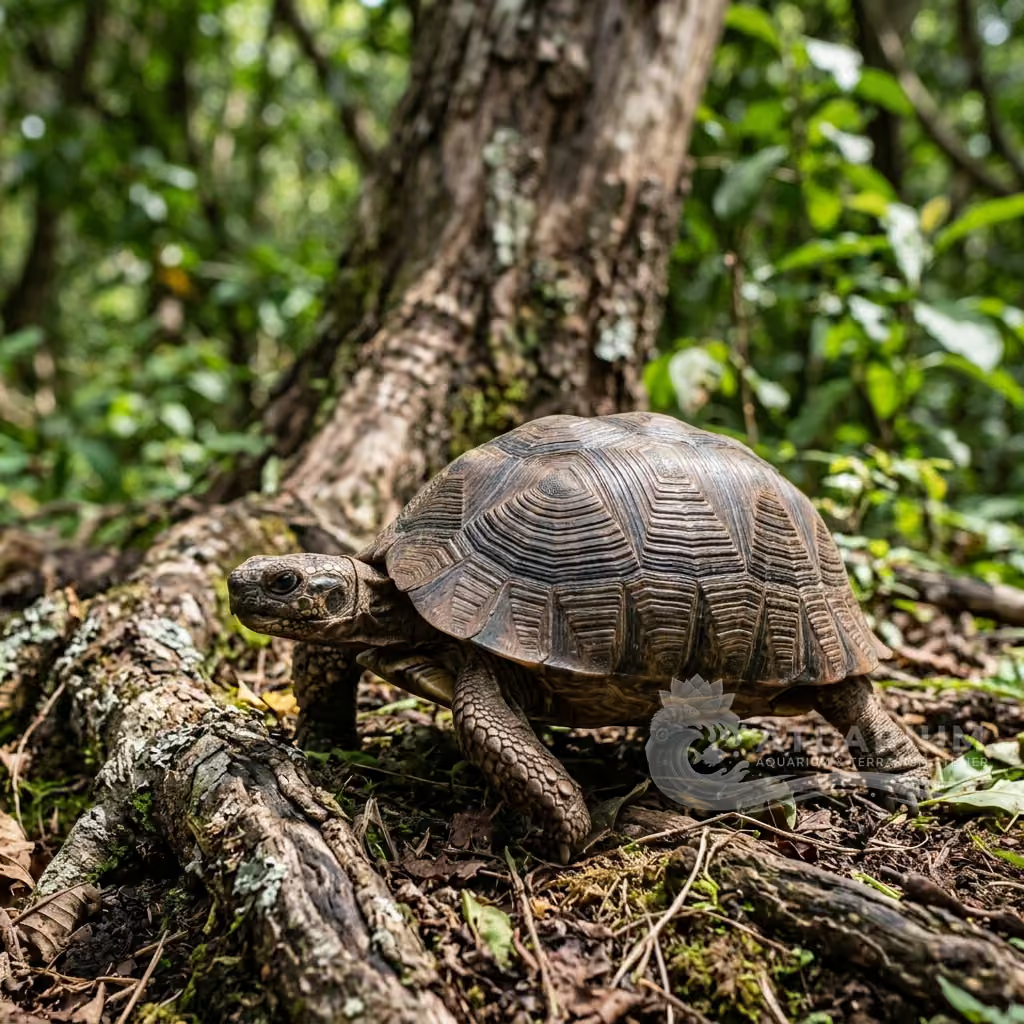
Russian Tortoise
Testudo horsfieldii
An incredibly popular terrestrial tortoise native to Central Asia, well-known for its deeply active burrowing habits and impressively high tolerance for seasonal temperature variations.
Environment
Terrestrial
Humidity
40 - 50 %
Day temperature
22 - 26 °C
Ambient temperature
22 - 26 °C
Night temperature
15 - 19 °C
Basking spot
32 - 35 °C
Adult size
20 cm
Minimum enclosure
>= 300 L
Brumation temperature
4 - 8 °C

Species description
Geographical Origin and Habitat: Testudo horsfieldii, commonly known as the Russian Tortoise, Central Asian Tortoise, or Horsfield's Tortoise, is native to the vast semi-arid and arid regions of Central Asia. Its distribution range includes southern Russia, Kazakhstan, Uzbekistan, Iran, Afghanistan, and northwestern Pakistan. It inhabits dry steppes, sandy or clay deserts, rocky hillsides, and dry grasslands at high elevations. It is adapted to extreme continental climates with freezing winters and scorching summers, sheltering in deep self-dug burrows.
Taxonomy and Genetics: Belonging to the family Testudinidae and the genus Testudo (sometimes classified under Agrionemys), several subspecies are recognized based on minor carapace shape and coloration differences. A unique morphological feature is the presence of only four claws on each forefoot, giving rise to its other common name, the Four-toed Tortoise. Adults typically reach a size of 15 to 22 centimeters, with females growing slightly larger than males.
Behavior and Habits: It exhibits diurnal habits and is an exceptionally active burrower, capable of digging tunnels up to two meters long to protect itself from temperature extremes and predators. In the wild, they are active for only a few months during spring, spending the hot summer months in aestivation and the freezing winter in hibernation. They are highly active, curious, and hardy tortoises with a peaceful disposition.
Morphology: The carapace is rounded, somewhat flattened dorsally, and ranges in color from olive-yellow to golden-brown with dark brown or black markings on each scute. The plastron is mostly black or dark brown. The head and limbs are robust, covered in thick scales, and terminate in four strong claws. Males can be distinguished by their longer, thicker tails and slightly concave plastrons, whereas females have shorter tails and flat plastrons.

Care, breeding and tankmates
Terrarium Setup: An adult requires a large outdoor enclosure (preferred during warm months) or an indoor terrarium measuring at least 120x60x50 cm. Substrate must be 15-20 cm deep to accommodate their burrowing instinct; a 50/50 mix of organic topsoil and silica sand is ideal, topped with hay or dry leaves. Avoid damp substrates, pine shavings, or pure sand. Enclosure decor should include stable hides, flat rocks for basking, and low branches.
Lighting and Heating: Strong UVB radiation and a warm basking zone are vital. The basking spot (warm zone) should reach 32-35°C under a heat lamp, while the cool end should stay around 22-24°C. Turn off all heating at night to allow temperatures to drop to 18-20°C. A 10.0% UVB lamp is mandatory on a 12-hour cycle to prevent metabolic bone disease and allow proper calcium absorption.
Humidity and Hydration: As an arid species, relative humidity must be kept low, between 30% and 50%. High humidity can cause respiratory infections and shell rot. A shallow, heavy water dish (to prevent tipping) must be available for drinking and soaking, with water changed daily. Weekly warm baths of 15-20 minutes are highly recommended to keep the tortoise hydrated.
Feeding and Supplementation: Strictly herbivorous and requires a high-fiber, low-protein diet. Feed wild weeds (dandelion, plantain, clover, nettle), endive, escarole, chicory, and hibiscus leaves. Avoid fruit, sugary vegetables, dog/cat food, or grains, which cause renal damage. Dust food with pure calcium carbonate three times a week and a calcium/vitamin D3 supplement once a week.
Compatibility: Can be kept individually or in small groups (one male and multiple females) in very large enclosures. Avoid keeping multiple males together, as they are territorial and will fight, leading to physical injuries or chronic stress. They should never be housed with other tortoise species or allowed contact with other household pets like dogs.
Health and Common Diseases: A long-lived species that can survive 40-50+ years. Common health issues arise from improper care: shell pyramiding (from high protein or low UVB), dehydration, respiratory infections (pneumonia), and intestinal parasites. Controlled hibernation should only be attempted with healthy individuals after veterinary check-ups and gradual temperature reduction.

Geographic origin and distribution
Testudo horsfieldii, commonly known as the Russian Tortoise, Central Asian Tortoise, or Horsfield's Tortoise, is native to the vast semi-arid and arid regions of Central Asia. Its distribution range includes southern Russia, Kazakhstan, Uzbekistan, Iran, Afghanistan, and northwestern Pakistan. It inhabits dry steppes, sandy or clay deserts, rocky hillsides, and dry grasslands at high elevations. It is adapted to extreme continental climates with freezing winters and scorching summers, sheltering in deep self-dug burrows.
Origin
Europe, Mediterranean, and West Asia

Reptile profile
- Diet
- Herbivore
- Russian Tortoises are strict herbivores that require a highly fibrous, low-protein, and calcium-rich diet to maintain good health. In the wild, they graze on a massive variety of broadleaf weeds, dry grasses, and desert wildflowers. In captivity, their diet should consist almost entirely of dark leafy greens like dandelion, endive, and various safe weeds, strictly avoiding fruits and high-protein foods. A proper calcium-to-phosphorus ratio is critical to prevent metabolic bone disease and ensure their shell grows smoothly.
- Adult size
- 20 cm
- Lifestyle/Microhabitat
- Terrestrial
- Strictly terrestrial and highly prone to burrowing. They require deep soil enclosures to facilitate their strong digging instincts.
- Activity cycle
- Diurnal
- A highly active, diurnal tortoise that spends its day furiously grazing, exploring, and digging.
- Sociality
- Solitary
- These tortoises are highly active, diurnal animals known for their impressive digging and burrowing capabilities. In their harsh natural habitat, they dig deep, expansive burrows to escape extreme temperatures, whether it be the freezing winters or scorching summers. They spend a significant portion of the year in a state of brumation or aestivation, emerging only when weather conditions are optimal for foraging. Providing them with deep substrate and ample roaming space is absolutely necessary to accommodate their tireless wandering and digging instincts.
- Reproduction
- Oviparous
- Mating behavior in Russian Tortoises is intense and often aggressive, with males relentlessly chasing, head-bobbing, and biting the females' legs. Once mating concludes, the female will dig a small, flask-shaped nest in well-drained, sandy soil to lay her eggs. She typically lays a small clutch of 1 to 5 eggs, though she can produce two or three clutches per season. The eggs require a lengthy incubation period, and the hatchlings emerge fully capable of navigating their environment and finding food.
- Handling tolerance
- Tolerant
- Very docile, hardy, and curious. They tolerate gentle handling very well, making them an excellent pet reptile.
- Brumation
- Required
- In the wild, they brumate for long periods to avoid harsh winters. Captive brumation can be performed but requires careful temperature management.
- Molting
- Regular
- They shed skin on their neck and legs in continuous, small, flaky pieces, totally independent of ambient humidity.

Related species
Recommendations grouped by close relatives, companion choices, and similar care.