Eastern Hermann's Tortoise
Testudo hermanni boettgeri
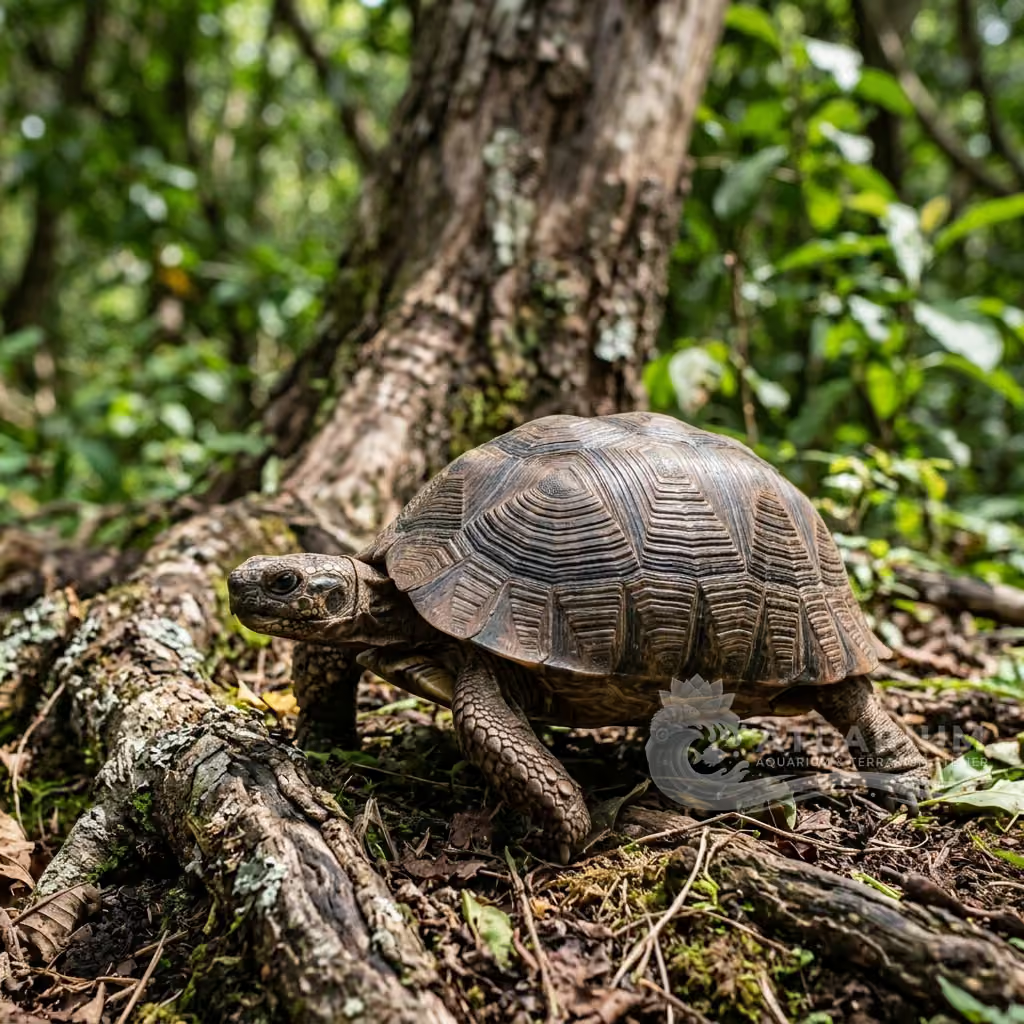
The 'Eastern Hermann's Tortoise'. The eastern and slightly larger subspecies (up to 10 inches) of the very widespread Mediterranean tortoise. Paler, with faded yellow and irregular black compared to the 'hermanni hermanni'. More prolific and robust, it is the most present terrestrial tortoise in European gardens. A fantastic indestructible and long-lived biological lawnmower.
Environment
Terrestrial
Humidity
40 - 60 %
Day temperature
26 - 32 °C
Night temperature
18 - 22 °C
Adult size
25 cm

Species description
Geographical Origin and Habitat: Grassy plains and woods of the Balkans, Greece and western Turkey. They prefer dry grassland, scrub, and open woodland habitats with abundant sunlight.
Taxonomy and Genetics: Family Testudinidae. CITES Appendix A. The key difference with the nominal species is the pectoral suture larger than the femoral, the more 'washed out' colors tending towards greenish/pale yellow, and the famous black band under the belly (plastron) which is DISCONTINUOUS (does not form two continuous parallel black lines). This subspecies is native to the Balkan region and is generally larger than the western subspecies.
Behavior and Habits: Unstoppable machines. Adapted to colder continental climates than the western cousin, they overcome very rigid winter hibernations burying themselves over 8 inches deep and emerge in spring mating fiercely. They are diurnal animals, spend their mornings basking in the sun to raise body temperature.
Morphology: Rounded carapace but generally larger (females 8-10 inches / 20-25 cm and weighing over 4 lbs). Dull camouflage colors, opaque straw yellow and blackish brown. The carapace is domed, displaying yellow and black markings with a distinct caudal horn.

Care, breeding and tankmates
Terrarium Setup: GIANT OUTDOOR ENCLOSURE (Lawn). Lined with anti-predator nets from above. Provide hills of drained soil, tuff refuges to protect themselves from freezing spring rains. An outdoor enclosure is highly recommended, as it provides natural sunlight and grazing opportunities.
Lighting and Heating: SUN AND ONLY SUN. Any indoor terrarium would cause huge problems to these hardy giants. (Induced basking at 95°F / 35°C and halide lamps if really forced in clinic). Diet should consist of wild weeds, dandelions, and calcium-rich leafy greens.
Humidity and Hydration: Natural atmospheric humidity (40-60%). Provide a shallow water dish that allows the tortoise to soak safely and drink.
Feeding and Supplementation: Insatiable shredders. Bitter and hard weeds (Wild chicory, plantain). Always provide finely crushed eggshells or Cuttlefish Bones for the massive calcium need (which they will scrape away with their beak). Adequate UVB exposure is critical to prevent metabolic bone disease and ensure shell health.
Compatibility: Polygamous groups. Boettgeri males are absurdly aggressive with each other for dominance and will exhaust the females. Provide visual obstacles in the garden to block the view. House males and females separately if the enclosure is small, as males can be persistent.
Health and Common Diseases: Indestructible Balkan battleships, unless they skip brumation (hibernation is MANDATORY so as not to wear out the liver or suffer chronic sterility) or are brutally bitten by domestic dogs or rats on balconies while sleeping. Ensure a safe, cold environment for their natural winter hibernation process.

Geographic origin and distribution
Grassy plains and woods of the Balkans, Greece and western Turkey. They prefer dry grassland, scrub, and open woodland habitats with abundant sunlight.
Origin
Europe, Mediterranean, and West Asia

Reptile profile
- Diet
- Herbivore
- The Eastern Hermann's Tortoise shares the strictly herbivorous dietary requirements of its western counterpart, grazing extensively on nutrient-poor, high-fiber flora. Its natural diet heavily favors weeds like plantain, mallow, and bindweed. High calcium availability is essential for healthy shell calcification, while excessive sugar, oxalates, or animal proteins strictly impair their digestive microbiota and skeletal health.
- Adult size
- 25 cm
- Lifestyle/Microhabitat
- Terrestrial
- This animal leads a terrestrial lifestyle, predominantly dwelling on the ground rather than climbing trees or spending time in the water. It traverses the forest floor, grasslands, or desert terrain in search of food, mates, and secure hiding spots beneath rocks, logs, or dense underbrush. In a terrarium setting, providing a large horizontal footprint is essential, along with a deep, appropriate substrate that allows for natural foraging and resting behaviors. While they may occasionally climb low-lying obstacles, their enclosure should be designed to maximize usable floor space.
- Activity cycle
- Diurnal
- This species exhibits a predominantly diurnal activity pattern, meaning it is most active during the daylight hours. Throughout the day, it is frequently observed exploring its enclosure, foraging for food, and actively seeking out basking spots to thermoregulate its body temperature. Providing appropriate full-spectrum lighting and adequate heat gradients during the day is critical to simulate its natural solar cycle. As evening approaches and temperatures drop, the animal will typically retreat to a secure hide or burrow to rest and conserve energy until the next morning.
- Sociality
- Gregarious
- Eastern Hermann's Tortoises exhibit largely solitary lifestyles, primarily roaming vast tracts of scrubland independently. Though they can be maintained in communal garden enclosures, careful observation is necessary; intense male-to-male combat or harassment of females is frequent. Keeping single sex groups, or one male to several females in massive enclosures, mitigates social friction.
- Reproduction
- Oviparous
- Breeding activities follow brumation in the spring, characterized by relentless male pursuit, shell ramming, and biting. As oviparous reptiles, female Eastern Hermann's Tortoises generally produce slightly larger clutch sizes than the western subspecies, laying between 4 to 8 eggs. Multiple clutches per season can be laid if environmental conditions and maternal fat stores are optimal.
- Handling tolerance
- Display only
- This animal is considered a display-only species, meaning it strongly dislikes being handled and becomes heavily stressed by human contact. They are either far too delicate to be handled safely or possess highly defensive traits that make interactions stressful and potentially harmful for both the animal and the keeper. Interaction should be strictly limited to visual observation through the enclosure glass, and physical handling should only occur during absolute emergencies or unavoidable health checkups. Appreciating their natural behaviors from a distance is the best approach to ensuring their well-being.
- Brumation
- Required
- This species naturally undergoes brumation—a reptile's equivalent to hibernation—during the colder winter months. To ensure optimal health and reproductive viability, keepers must carefully orchestrate a gradual cooling period, slowly lowering the ambient temperatures and reducing light cycles to mimic seasonal changes. During this dormancy phase, the animal's metabolism slows down significantly; it will cease eating and become highly inactive, sometimes for several months. Food must be completely withheld well in advance of cooling to prevent undigested matter from rotting in its stomach.
- Molting
- Regular
- Shedding (or molting) occurs regularly as the animal grows, with frequency decreasing as it reaches adulthood. Under normal enclosure conditions, providing a standard, moderate humidity level alongside a designated humid hide—a small, enclosed space filled with damp sphagnum moss—is entirely sufficient to facilitate a clean, complete shed. Prior to shedding, the animal's colors will appear dull, and its eyes may turn a cloudy, opaque blue. During this phase, it is crucial not to handle or feed the animal, allowing it to rest and shed its skin naturally in one uninterrupted piece.

Related species
Recommendations grouped by close relatives, companion choices, and similar care.