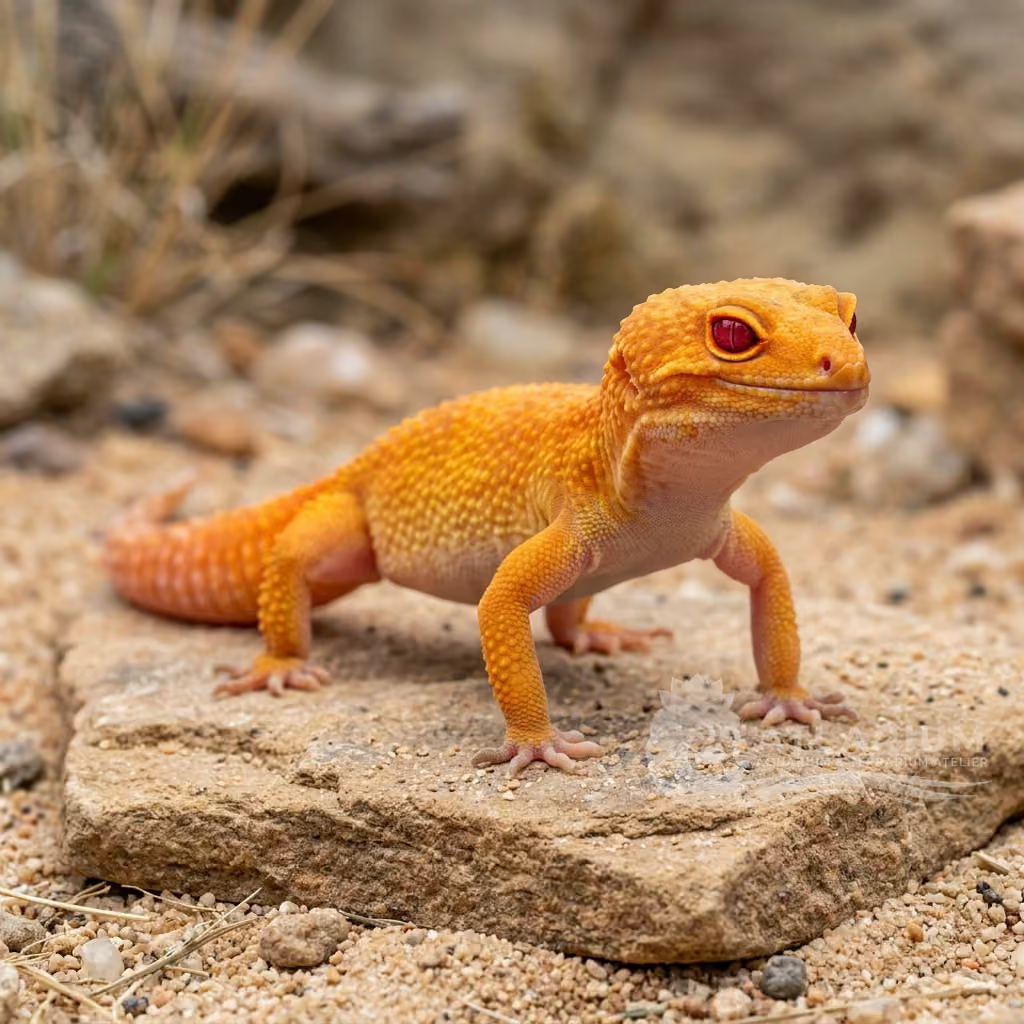
Leopard Gecko — Wild Type
Eublepharis macularius
The authentic Wild-Type Leopard Gecko. Displays the original, naturally beautiful pattern of prominent black spots scattered on a rich yellow-tan base.
Environment
Terrestrial
Humidity
30 - 40 %
Day temperature
24 - 32 °C
Night temperature
20 - 24 °C
Adult size
25 cm
UVB
Ferguson 1
UVI
0 - 0.7 UVI

Species description
Geographical Origin and Habitat: Eublepharis macularius 'Wild Type' represents the ancestral wild form of the leopard gecko, native to the dry, mountainous, and rocky regions of South Asia, specifically Pakistan, northwestern India, eastern Afghanistan, and parts of Iran. It inhabits rocky deserts, arid grasslands, and dry clay plains. During the hot daytime hours, it retreats into deep rock crevices, caves, or burrows dug under large stones, which offer cooler temperatures and higher humidity than the parched surface.
Taxonomy and Genetics: Belonging to the family Eublepharidae and the genus Eublepharis, these geckos differ from Gekkonidae by possessing movable eyelids and lacking adhesive toe pads (subdigital lamellae). The term 'Wild Type' refers to the original, unselected genetic lineage found in nature, containing the wild-type alleles without any of the color or pattern mutations (morphs) produced through captive selective breeding programs.
Behavior and Habits: It exhibits crepuscular and nocturnal habits, emerging at dusk to hunt for insects. During the day, it rests quietly in its hideouts. It is a strictly terrestrial gecko, slow-moving, and has an exceptionally docile temperament, making it one of the best starter reptiles. It stores fat reserves in its thick tail, which it can drop (autotomy) if grabbed by a predator and later regenerate.
Morphology: Features a robust body, thin legs with small claws designed for climbing over rocks, and a plump, segmented tail. The skin is covered in small, raised tubercles. The 'Wild Type' color pattern consists of a sandy-yellow to grey-brown base color, heavily covered in small, rounded black spots that mimic the coat of a leopard. The belly is plain white and translucent.

Care, breeding and tankmates
Terrarium Setup: A terrarium for a single adult should measure at least 60x40x40 cm. The substrate should be dry and non-abrasive, such as dry coco fiber, excavation clay, or pre-pressed sand-clay mix; avoid loose play sand or calcium sand which can cause lethal intestinal impactions if swallowed. Provide at least three hides: a warm dry hide, a cool dry hide, and a humid hide (moist cave) filled with damp moss or paper towels.
Lighting and Heating: As ectothermic reptiles, they require a heat source under one third of the enclosure (such as a heat mat controlled by a thermostat) to aid digestion. The warm zone should reach 30-32°C, while the cool end should be 24-26°C, with a night drop to 20°C. A low-strength (2% or 5%) UVB bulb is recommended on a 12-hour cycle to stimulate natural behavior and support vitamin D3 synthesis.
Humidity and Hydration: Overall relative humidity should be low, around 30% to 40%. However, the humid hide must be kept moist at all times to prevent shedding issues on the toes and eyes. Provide a small dish of fresh, clean water daily, and a tiny bottle cap filled with pure calcium powder (without D3) at all times so the gecko can lick it when needed.
Feeding and Supplementation: Strictly insectivorous. Feed a variety of live insects, such as crickets, roaches (Dubia or Lateralis), locusts, and occasional mealworms. Ensure the prey size is no longer than the width between the gecko's eyes. Dust the insects with calcium and vitamin D3 twice a week for juveniles and once a week for adults to prevent Metabolic Bone Disease (MBD).
Compatibility: Leopard geckos are solitary animals. Males are highly territorial and will fight to the death if housed together. Keeping females together is sometimes possible in large terrariums, but still presents a risk of bullying. It is highly recommended to house them individually to ensure they can feed, thermoregulate, and rest without competition or stress.
Health and Common Diseases: A long-lived species that can survive 15-20+ years in captivity. Common health conditions include Metabolic Bone Disease (MBD) from calcium deficiency, intestinal impaction from loose substrates, respiratory infections from cold conditions, and retained shed on the toes and tail tip, which can lead to tissue necrosis and toe loss if not removed.

Geographic origin and distribution
Eublepharis macularius 'Wild Type' represents the ancestral wild form of the leopard gecko, native to the dry, mountainous, and rocky regions of South Asia, specifically Pakistan, northwestern India, eastern Afghanistan, and parts of Iran. It inhabits rocky deserts, arid grasslands, and dry clay plains. During the hot daytime hours, it retreats into deep rock crevices, caves, or burrows dug under large stones, which offer cooler temperatures and higher humidity than the parched surface.
Origin
Europe, Mediterranean, and West AsiaSouth and Southeast Asia

Reptile profile
- Diet
- Insectivore
- The diet of Eublepharis macularius 'Wild Type' consists mainly of appropriately sized prey or specific plant matter, depending on its natural biology. Providing a varied and nutrient-rich diet is essential for maintaining their immune system and overall health. Owners must ensure that all food items are properly dusted with high-quality calcium and vitamin D3 supplements to prevent severe metabolic issues. Fresh, clean water should also be accessible at all times to aid in digestion.
- Adult size
- 25 cm
- Lifestyle/Microhabitat
- Terrestrial
- Adapting uniquely to their environment, Eublepharis macularius 'Wild Type' exhibits a lifestyle that necessitates specific terrarium setups to thrive in captivity. Whether climbing, burrowing, or dwelling on the forest floor, their habitat must replicate the structural elements they utilize in the wild. Proper gradients of temperature and humidity are also essential to support their physiological processes. A well-enriched environment will significantly improve their quality of life and longevity.
- Activity cycle
- Crepuscular
- The activity pattern of Eublepharis macularius 'Wild Type' is closely tied to its natural habitat's lighting and temperature cycles. They tend to have specific peak hours of activity during which they hunt, forage, and explore their environment. Providing a consistent and naturalistic light cycle with appropriate UVB lighting is critical for regulating their circadian rhythms. During their resting periods, they will seek out secure hides to remain undisturbed.
- Sociality
- Gregarious
- Eublepharis macularius 'Wild Type' displays a range of fascinating behaviors that are deeply rooted in their evolutionary adaptations for survival. They can be territorial, especially among males, so appropriate enclosure sizing and solitary housing are often recommended to prevent stress and injury. They utilize complex body language to communicate with other members of their species and to deter potential threats. Observing these natural behaviors in a well-designed terrarium is highly rewarding for keepers.
- Reproduction
- Oviparous
- Breeding Eublepharis macularius 'Wild Type' generally requires carefully controlled environmental parameters such as temperature and humidity cycling to stimulate natural reproductive behaviors. Females will often need an increase in calcium intake to safely produce and lay healthy clutches of eggs. Once laid, eggs must be promptly moved to an incubator set to the precise temperatures required for optimal development. Careful monitoring of both the breeding adults and the incubating eggs is crucial for successful reproduction.
- Handling tolerance
- Tolerant
- When it comes to interaction, Eublepharis macularius 'Wild Type' should be handled with care and respect to minimize unnecessary stress. It is best to allow the animal to approach voluntarily and support their entire body weight when lifting them. Over-handling can lead to severe health issues, dropped tails, or defensive biting depending on the individual's temperament. Always wash your hands before and after handling to prevent the transmission of harmful bacteria.
- Brumation
- Required
- During the colder months, Eublepharis macularius 'Wild Type' may exhibit a natural physiological slowdown known as brumation. During this period, their metabolism drops, and they may refuse food while remaining hidden for weeks or months. It is important to lower terrarium temperatures slightly to safely facilitate this process if the animal is healthy. Sick or underweight individuals should not be allowed to brumate, as it can be fatal.
- Molting
- Regular
- As Eublepharis macularius 'Wild Type' grows and matures, it will periodically shed its outermost layer of skin to accommodate new growth. This process requires elevated humidity levels to ensure the skin comes off cleanly in one piece or large sections. Many reptiles will consume their shed skin to recycle essential nutrients back into their bodies. Retained shed, particularly around the eyes and digits, must be addressed quickly to prevent infections and loss of circulation.

Related species
Recommendations grouped by close relatives, companion choices, and similar care.