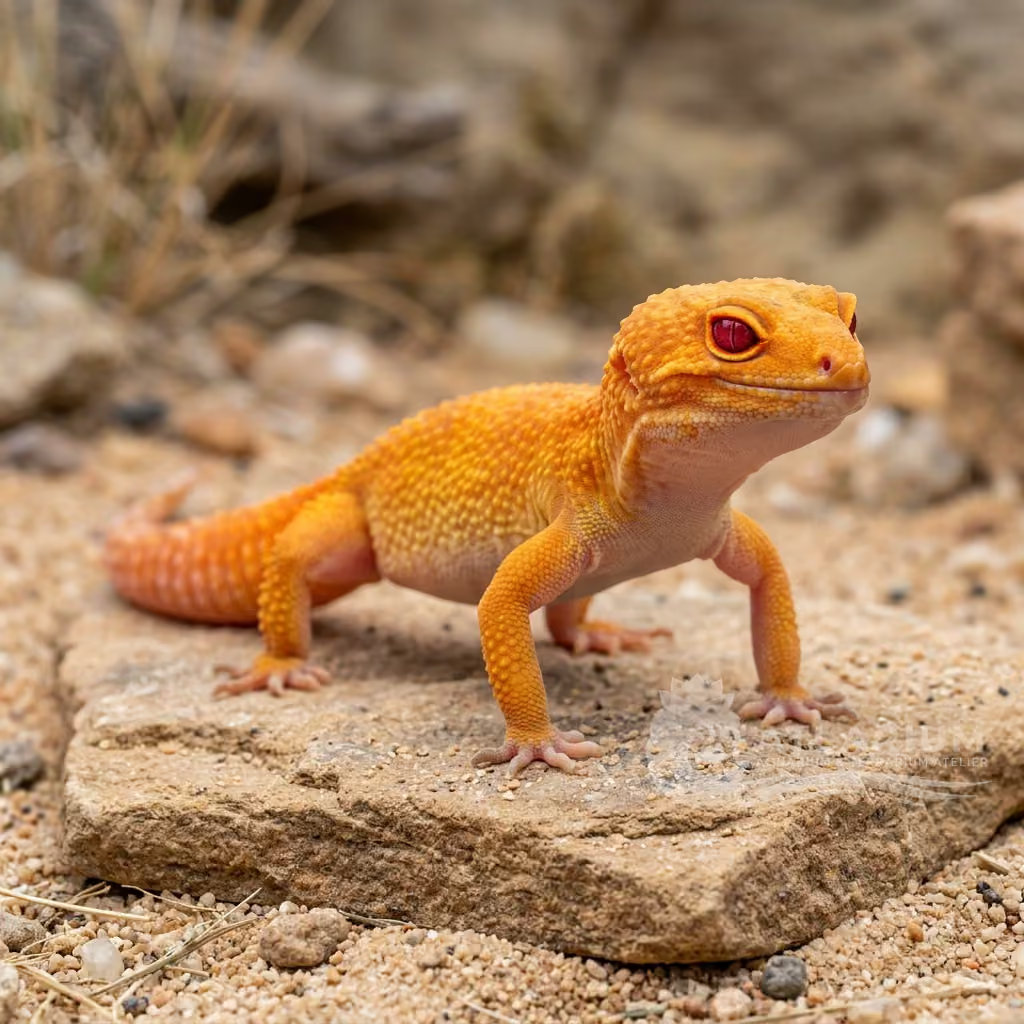
Leopard Gecko — Mack Snow / Super Snow
Eublepharis macularius
The Mack Snow and Super Snow morphs. Incomplete dominant mutations that suppress yellow pigment, yielding gorgeous, high-contrast black and white geckos.
Environment
Terrestrial
Humidity
30 - 40 %
Day temperature
24 - 32 °C
Night temperature
20 - 24 °C
Adult size
25 cm
UVB
Ferguson 1
UVI
0 - 0.7 UVI

Species description
Geographical Origin and Habitat: Inhabits dry desert plateaus, steppes, and rocky zones of Southern Asia, ranging from northern Pakistan and northwestern India to Afghanistan. A terrestrial and burrowing reptile, it shelters during the hot day in damp underground crevices, emerging at dusk to hunt.
Taxonomy and Genetics: Belonging to the family Eublepharidae. The 'Mack Snow' line is an incomplete dominant mutation that suppresses yellow pigmentation. Heterozygous individuals (Mack Snow) display light yellow coloration as adults, while homozygous individuals (Super Snow) feature a pure black-and-white pattern with solid black Eclipse eyes.
Behavior and Habits: Crepuscular and nocturnal species, widely celebrated for its docile temperament and ease of handling. They navigate their environment using keen vision and smell, assisted by their tongue. The thick tail serves as a primary fat reserve to survive periods of food scarcity.
Morphology: Robust body reaching 20-25 cm in length. Unlike most geckos, they possess functional eyelids and lack adhesive toe pads, having claws instead for burrowing. Males feature a broader head, a distinct V-shape row of preanal pores, and visible hemipenal bulges at the tail base.

Care, breeding and tankmates
Terrarium Setup: Requires a horizontal terrarium (minimum 80x45x45 cm). A dry clay-sand-soil mix is the ideal substrate. Furnish with at least three hides: one on the warm side, one on the cool side, and a mandatory humid hide filled with damp sphagnum moss.
Lighting and Heating: Provide a thermal gradient with a basking spot at 30-32°C using a thermostat-controlled heat mat or cable, and a cool side of 24°C. Allow a night drop to 20-22°C. A low-output (2-5%) UVB source is highly recommended to support natural cycles.
Humidity and Hydration: Maintain low ambient humidity (30-40%). Provide a shallow water dish. Keeping the humid hide moist is essential to facilitate shedding and prevent stuck shed on toes, which can lead to constriction and necrosis.
Feeding and Supplementation: Strictly insectivorous. Feed gut-loaded crickets, roaches, and mealworms. Dust prey with pure calcium at every feeding, and include calcium with D3 and multivitamins once or twice a week to prevent bone diseases.
Compatibility: Strictly solitary. Never house males together as they will fight to the death. Avoid keeping mixed groups due to reproduction-induced stress; single housing is strongly recommended.
Health and Common Diseases: A thinning tail (known as 'stick tail') is a severe symptom of internal parasites or malnutrition. Metabolic Bone Disease (MBD) occurs due to lack of calcium/UVB, causing deformed limbs. Handle gently to avoid tail autotomy.

Geographic origin and distribution
Inhabits dry desert plateaus, steppes, and rocky zones of Southern Asia, ranging from northern Pakistan and northwestern India to Afghanistan. A terrestrial and burrowing reptile, it shelters during the hot day in damp underground crevices, emerging at dusk to hunt.
Origin
Selective breeding and cultivarsEurope, Mediterranean, and West AsiaSouth and Southeast Asia

Reptile profile
- Diet
- Insectivore
- The diet of Eublepharis macularius "Mack Snow / Super Snow" consists mainly of appropriately sized prey or specific plant matter, depending on its natural biology. Providing a varied and nutrient-rich diet is essential for maintaining their immune system and overall health. Owners must ensure that all food items are properly dusted with high-quality calcium and vitamin D3 supplements to prevent severe metabolic issues. Fresh, clean water should also be accessible at all times to aid in digestion.
- Adult size
- 25 cm
- Lifestyle/Microhabitat
- Terrestrial
- Adapting uniquely to their environment, Eublepharis macularius "Mack Snow / Super Snow" exhibits a lifestyle that necessitates specific terrarium setups to thrive in captivity. Whether climbing, burrowing, or dwelling on the forest floor, their habitat must replicate the structural elements they utilize in the wild. Proper gradients of temperature and humidity are also essential to support their physiological processes. A well-enriched environment will significantly improve their quality of life and longevity.
- Activity cycle
- Crepuscular
- The activity pattern of Eublepharis macularius "Mack Snow / Super Snow" is closely tied to its natural habitat's lighting and temperature cycles. They tend to have specific peak hours of activity during which they hunt, forage, and explore their environment. Providing a consistent and naturalistic light cycle with appropriate UVB lighting is critical for regulating their circadian rhythms. During their resting periods, they will seek out secure hides to remain undisturbed.
- Sociality
- Gregarious
- Eublepharis macularius "Mack Snow / Super Snow" displays a range of fascinating behaviors that are deeply rooted in their evolutionary adaptations for survival. They can be territorial, especially among males, so appropriate enclosure sizing and solitary housing are often recommended to prevent stress and injury. They utilize complex body language to communicate with other members of their species and to deter potential threats. Observing these natural behaviors in a well-designed terrarium is highly rewarding for keepers.
- Reproduction
- Oviparous
- Breeding Eublepharis macularius "Mack Snow / Super Snow" generally requires carefully controlled environmental parameters such as temperature and humidity cycling to stimulate natural reproductive behaviors. Females will often need an increase in calcium intake to safely produce and lay healthy clutches of eggs. Once laid, eggs must be promptly moved to an incubator set to the precise temperatures required for optimal development. Careful monitoring of both the breeding adults and the incubating eggs is crucial for successful reproduction.
- Handling tolerance
- Tolerant
- When it comes to interaction, Eublepharis macularius "Mack Snow / Super Snow" should be handled with care and respect to minimize unnecessary stress. It is best to allow the animal to approach voluntarily and support their entire body weight when lifting them. Over-handling can lead to severe health issues, dropped tails, or defensive biting depending on the individual's temperament. Always wash your hands before and after handling to prevent the transmission of harmful bacteria.
- Brumation
- Required
- During the colder months, Eublepharis macularius "Mack Snow / Super Snow" may exhibit a natural physiological slowdown known as brumation. During this period, their metabolism drops, and they may refuse food while remaining hidden for weeks or months. It is important to lower terrarium temperatures slightly to safely facilitate this process if the animal is healthy. Sick or underweight individuals should not be allowed to brumate, as it can be fatal.
- Molting
- Regular
- As Eublepharis macularius "Mack Snow / Super Snow" grows and matures, it will periodically shed its outermost layer of skin to accommodate new growth. This process requires elevated humidity levels to ensure the skin comes off cleanly in one piece or large sections. Many reptiles will consume their shed skin to recycle essential nutrients back into their bodies. Retained shed, particularly around the eyes and digits, must be addressed quickly to prevent infections and loss of circulation.

Related species
Recommendations grouped by close relatives, companion choices, and similar care.