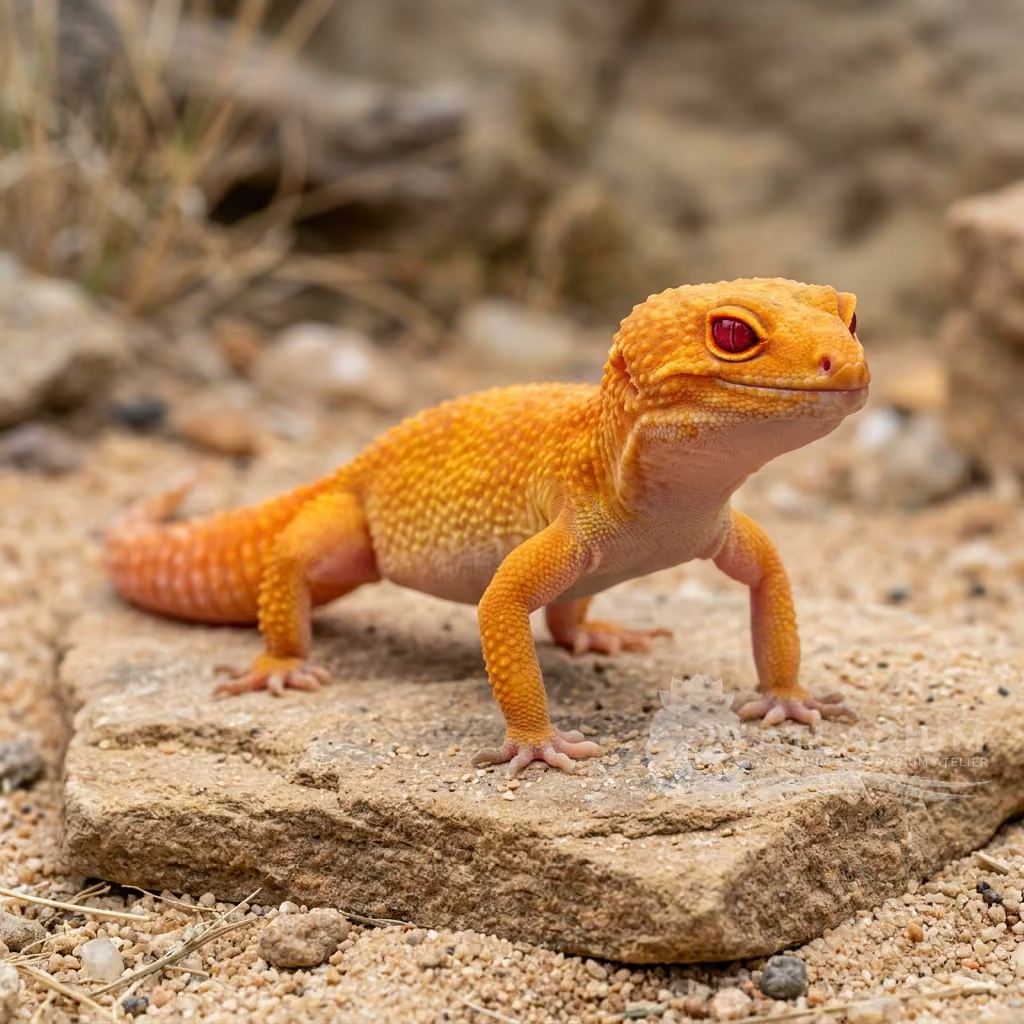
Leopard Gecko — Tremper Albino
Eublepharis macularius
The palest and physically smallest of the albino strains, characterized by extensive pink tones, highly washed-out mottling, and surprisingly dark eyes.
Environment
Terrestrial
Humidity
30 - 40 %
Day temperature
30 - 32 °C
Ambient temperature
25 °C
Night temperature
20 °C
Basking spot
32 °C
Adult size
25 cm
Minimum enclosure
>= 60 L
UVB
Ferguson 1
UVI
0 - 0.7 UVI

Species description
Geographical Origin and Habitat: The leopard gecko is native to the dry, semi-desert regions of Southern Asia, specifically Afghanistan, Pakistan, northwestern India, and parts of Iran. They inhabit rocky clay slopes, dry grasslands, and arid scrublands, avoiding fine shifting sand dunes. They spend the hot daytime hours sheltering in deep rock crevices or cool underground burrows. The "Tremper Albino" was the first albino morph isolated and bred in captivity in 1996 by herpetologist Ron Tremper.
Taxonomy and Genetics: Belonging to the family Eublepharidae. The "Tremper Albino" mutation (often called the Texas Albino) is a simple autosomal recessive trait. This genetic mutation completely prevents the production of black melanin, leaving yellow, orange, pink, and tan pigments intact. Their eyes feature a silver or light pink base color with visible red veins under direct light.
Behavior and Habits: Terrestrial, crepuscular, and nocturnal. They possess an incredibly docile, calm, and handleable temperament, making them one of the most popular reptile pets globally. They communicate using slow tail waving and can vibrate their tail rapidly when excited or hunting.
Morphology: Robust body with a plump tail that serves as a fat storage organ. The livery of the Tremper Albino features a yellow or orange background with light brown, pink, or lavender spots and an absolute absence of black. Adults reach 20-25 cm in length. They have functional moveable eyelids and thin toes lacking adhesive pads. Males have prominent preanal pores and hemipenal bulges.

Care, breeding and tankmates
Terrarium Setup: An enclosure measuring 60x40x40 cm is ideal for a single gecko. The substrate must not be loose sand to prevent fatal intestinal impaction; use slate tiles, paper towels, textured vinyl mat, or dry coco fiber. Provide at least three shelters: one on the warm side, one on the cool side, and a humid hide containing damp sphagnum moss necessary for shedding.
Lighting and Heating: Require a daytime thermal gradient with a hot spot temperature of 30-32°C (86-90°F) (via an under-tank heat mat or overhead ceramic heater regulated by a thermostat) and 24-25°C (75-77°F) on the cool side. Night temperatures can drop to 20°C (68°F). A low-output 2% or 5% UVB light is recommended to prevent bone issues.
Humidity and Hydration: General ambient humidity should be kept low (35-45%). However, the humid hide must remain damp at all times (internal humidity >70%) to ensure successful skin shedding. Provide a shallow dish of fresh dechlorinated water, changed daily, on the cool side.
Feeding and Supplementation: Strictly insectivorous. Feed live crickets, Dubia roaches, locusts, and mealworms, with occasional waxworms or hornworms as treats. Dust insect feeders with pure calcium at every feeding for juveniles, and calcium with vitamin D3 2-3 times a week. Place a small bottle cap filled with pure calcium in the tank.
Compatibility: Males are fiercely territorial and will fight violently if housed together. Females can also show territorial dominance, making individual housing the safest choice to ensure a stress-free life. Never house males and females together unless pairing temporarily for breeding.
Health and Common Diseases: Metabolic Bone Disease (MBD) is the most common health issue, caused by a lack of calcium and vitamin D3. Intestinal impaction is caused by swallowing sand. Retained shed on the toes can lead to tissue necrosis and loss of digits due to constricted blood circulation.

Geographic origin and distribution
The leopard gecko is native to the dry, semi-desert regions of Southern Asia, specifically Afghanistan, Pakistan, northwestern India, and parts of Iran. They inhabit rocky clay slopes, dry grasslands, and arid scrublands, avoiding fine shifting sand dunes. They spend the hot daytime hours sheltering in deep rock crevices or cool underground burrows. The "Tremper Albino" was the first albino morph isolated and bred in captivity in 1996 by herpetologist Ron Tremper.
Origin
Selective breeding and cultivarsNorth AmericaEurope, Mediterranean, and West AsiaSouth and Southeast AsiaTropical oceans and reefs

Reptile profile
- Diet
- Insectivore
- This terrestrial species sustains itself entirely on a diet of live arthropods, showing a strong preference for actively moving prey. Keepers must provide a rotating menu of gut-loaded insects, ensuring adequate supplementation of calcium to support their skeletal system and prevent nutritional deficiencies. During feeding, they are remarkably focused and will often stalk a cricket for several seconds before accurately snapping it up.
- Adult size
- 25 cm
- Lifestyle/Microhabitat
- Terrestrial
- They are strictly terrestrial geckos, well-adapted to living on the ground in arid, rocky environments. While they cannot climb smooth vertical surfaces due to the lack of adhesive toe pads, they enjoy exploring and climbing low, textured structures like rocks and cork bark.
- Activity cycle
- Crepuscular
- Leopard geckos are primarily crepuscular, meaning they are most active during the twilight hours of dawn and dusk. In captivity, they may also show bursts of activity during the night. They spend most of the day hiding in secure, dark crevices to avoid the heat.
- Sociality
- Solitary
- Known for their highly manageable temperament, these geckos are among the most popular and docile reptile pets available. They spend their days resting in secure, dark hides and emerge at dusk to begin their nightly routines of hunting and exploring. In the wild, they rely on their thick, segmented tails to store fat reserves for times of scarcity, a feature that also serves as a distracting decoy for predators.
- Reproduction
- Oviparous
- They are oviparous reptiles that exhibit a high reproductive output when provided with the correct seasonal cues and optimal husbandry. A single female can lay up to eight clutches of two eggs in one season, requiring significant nutritional support to replenish her calcium reserves. The development of the embryos is highly temperature-sensitive, which ultimately determines the gender ratio of the resulting offspring.
- Handling tolerance
- Tolerant
- Leopard geckos are renowned for their docile and calm temperament, making them one of the best beginner reptiles. They tolerate handling very well once accustomed to their owner. It is important to support their body fully and avoid grabbing their tail, as they can drop it if they feel threatened.
- Brumation
- Brumation is not strictly necessary for pet leopard geckos, but a mild cooling period (around 65-70°F or 18-21°C) during winter can be provided, especially if breeding is intended. During this time, their appetite and activity levels will naturally decrease.
- Molting
- Regular
- They shed their skin every 2 to 4 weeks depending on age and growth rate. Providing a humid hide box filled with moist sphagnum moss or paper towels is essential to help them shed cleanly, especially around the toes and eyes. They typically consume their shed skin to recycle nutrients and hide their scent from predators.

Related species
Recommendations grouped by close relatives, companion choices, and similar care.