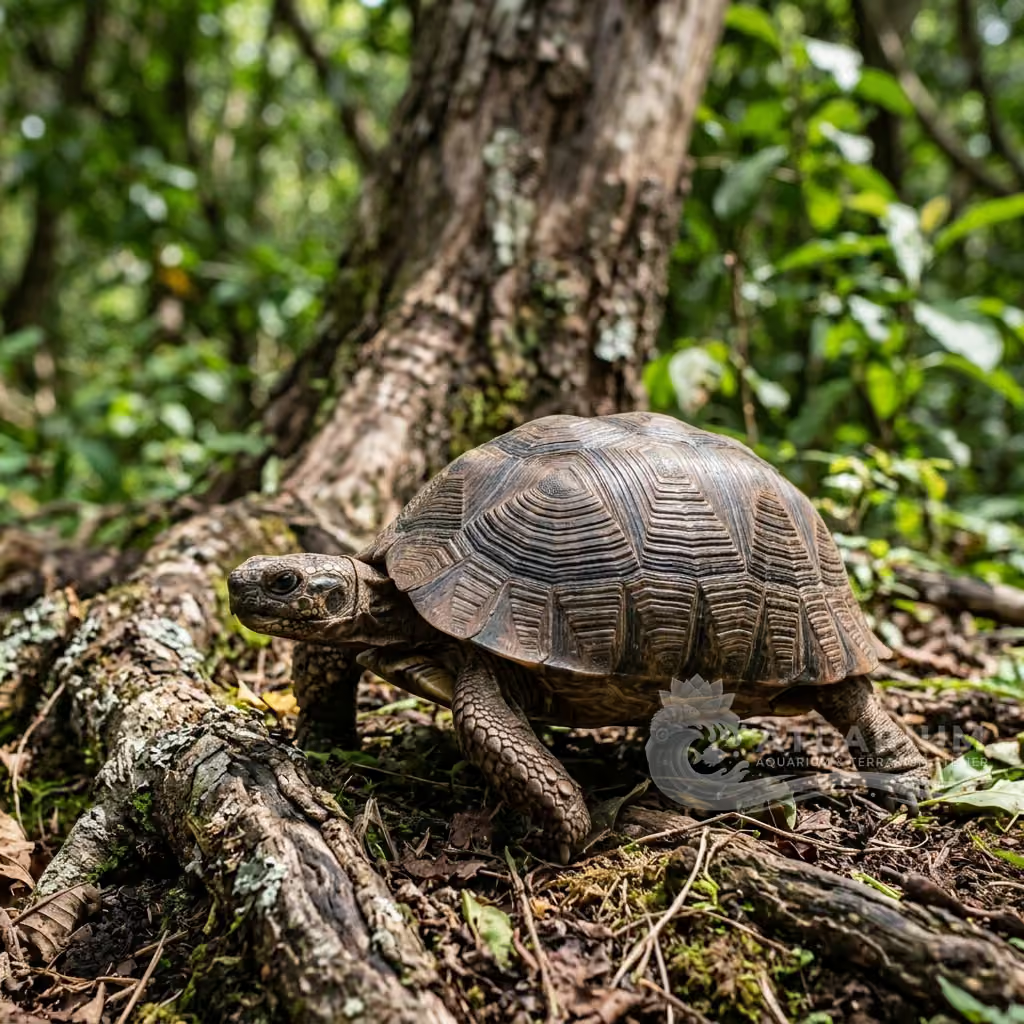
Pancake tortoise
Malacochersus tornieri
The incredible African Pancake Tortoise is uniquely adapted to wedging into tight rock crevices. Requires a minimum 100x60 cm enclosure containing extremely stable rock formations with horizontal gaps, high heat, and a dry diet.
Environment
Terrestrial
Humidity
30 - 50 %
Day temperature
28 - 35 °C
Night temperature
20 - 24 °C
Adult size
18 cm
UVB
Ferguson 2-3
UVI
0.7 - 2.6 UVI

Species description
Geographical Origin and Habitat: This species is native to East Africa, specifically found in Kenya and Tanzania. Its natural habitat consists of arid rocky hillsides, known as kopjes, within thorny scrublands and savannas. They live at elevations ranging from 30 meters to over 1800 meters above sea level, relying heavily on rock crevices for shelter.
Taxonomy and Genetics: Belonging to the family Testudinidae, its most famous morphological feature is the extremely flat, thin, and flexible carapace. This flexibility is due to a reduction in the ossification of the bony plates, allowing the tortoise to squeeze into narrow rocky crevices to escape predators and extreme weather.
Behavior and Habits: Unlike most tortoises, this species is an agile climber and moves surprisingly fast over rocky terrain. When threatened, instead of withdrawing into its shell, it runs to a nearby crevice, wedges itself inside, and inflates its body with air to make it nearly impossible for predators to extract it.
Morphology: In addition to its flat carapace, it possesses strong, clawed limbs well-adapted for climbing rocky surfaces. The average adult size ranges from 15 to 18 centimeters in length. The plastron is highly flexible, containing wide cartilaginous areas that facilitate body compression when wedged in rocks.

Care, breeding and tankmates
Terrarium Setup: A spacious enclosure is required, with a minimum size of 100x60 cm for a single tortoise. It is vital to construct stable rock formations that create secure, narrow horizontal crevices where the tortoise can hide. The substrate should consist of a dry soil and sand mixture to prevent moisture buildup near the plastron.
Lighting and Heating: Requires high-output UVB lighting (10% UVB bulb) for 12 hours daily. Heating must provide a clear thermal gradient: a basking spot at 35-38 degrees Celsius, and a cooler zone around 24 degrees. Nighttime temperatures can drop to 20 degrees Celsius. Ensure all heat lamps are securely mounted.
Humidity and Hydration: Adapted to dry climates; ambient humidity should be kept low at around 40-50%. However, a shallow, heavy water dish must be provided for drinking and soaking. Lightly spraying the rocky hiding areas once or twice a week simulates morning dew and assists with hydration.
Feeding and Supplementation: Strictly herbivorous, requiring a high-fiber, low-protein diet. Feed grass, dandelion, clover, romaine lettuce, chicory, and dried hay. Avoid fruits and commercial moist pet foods. Dust the food with pure calcium carbonate three times a week and a calcium supplement with vitamin D3 once a week.
Compatibility: Can be kept in small groups consisting of one male and multiple females, provided the enclosure is large enough and has multiple hides. Avoid keeping two males together as they will aggressively fight for dominance and territory, causing severe stress to the weaker individual.
Health and Common Diseases: Prone to Metabolic Bone Disease (MBD) due to insufficient calcium or UVB exposure. Excess humidity or cold drafts can cause upper respiratory infections. Since their shells are naturally soft, any changes in flexibility should be evaluated carefully by a specialized reptile veterinarian.

Geographic origin and distribution
This species is native to East Africa, specifically found in Kenya and Tanzania. Its natural habitat consists of arid rocky hillsides, known as kopjes, within thorny scrublands and savannas. They live at elevations ranging from 30 meters to over 1800 meters above sea level, relying heavily on rock crevices for shelter.
Origin
Cosmopolitan or introducedNorth AmericaAfrica and Madagascar

Reptile profile
- Diet
- Herbivore
- The diet of Malacochersus tornieri consists of specific nutrients. It forages for a variety of food sources. A well-balanced feeding regimen is essential.
- Adult size
- 18 cm
- Lifestyle/Microhabitat
- Terrestrial
- Malacochersus tornieri leads a lifestyle adapted to its niche. It utilizes various elements of its habitat. Providing a complex enclosure is crucial for its enrichment.
- Activity cycle
- Diurnal
- The activity pattern of Malacochersus tornieri dictates when it is most active. It exhibits periods of rest aligned with light cycles. Understanding these rhythms helps create a suitable schedule.
- Sociality
- Gregarious
- The behavior of Malacochersus tornieri is characterized by distinctive interactions. It displays specific patterns of foraging and hiding. Observing these behaviors provides crucial insights.
- Reproduction
- Oviparous
- Reproduction for Malacochersus tornieri involves specific mating behaviors. Females seek out appropriate nesting sites. Successful breeding requires mimicking natural conditions.
- Handling tolerance
- Display only
- Handling Malacochersus tornieri should be done with care. It is recommended to allow the animal to adjust first. Gentle movements are key when handling is necessary.
- Brumation
- Not required
- Brumation for Malacochersus tornieri is triggered by temperature changes. During this period, its metabolism slows down. Proper preparation is essential to ensure a healthy emergence.
- Molting
- Regular
- The molting process of Malacochersus tornieri allows it to shed old layers. Adequate humidity is vital for facilitating a smooth shed. Caretakers must regularly check for retained pieces.

Related species
Recommendations grouped by close relatives, companion choices, and similar care.