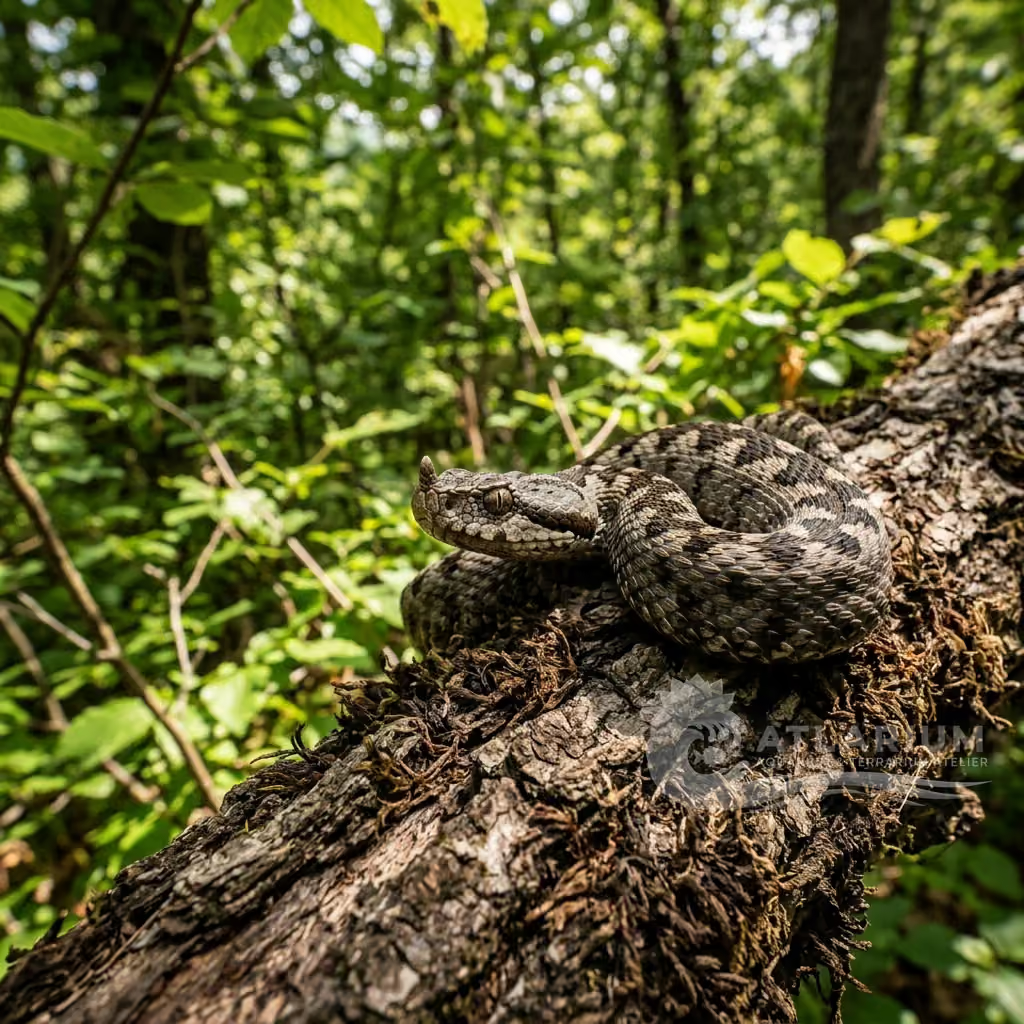
Western Hognose Snake (Swiss Chocolate)
Heterodon nasicus
Morph Swiss Chocolate. The dramatic 'cobra' of the prairies. Famous for its shovel-shaped snout ('pig nose') used for digging, it is a diurnal terrestrial colubrid that feigns theatrical cobra-like attacks or spectacular false deaths (thanatosis) if frightened. It requires peculiar husbandry due to its mild venom (rear-fanged) and specialized diet (in the wild, it almost exclusively eats toads).
Environment
Terrestrial
Humidity
30 - 50 %
Day temperature
21 - 35 °C
Night temperature
18 - 24 °C
Adult size
55 cm

Species description
Geographical Origin and Habitat: Widespread in the sandy prairies, semi-arid deserts, and dry plains of the United States and northern Mexico. Being expert fossorial (burrowing) snakes, they spend most of their time underground, plowing through sand and loose soil in search of toad nests, salamanders, and small rodents.
Taxonomy and Genetics: Colubridae family (often reclassified to Dipsadidae). One of the most captive-bred snakes in the world thanks to its comical face and formidable genetic morphs (Anaconda, Conda, Albino, Toxic, Snow). It is a **Rear-fanged Venomous** snake (Opisthoglyphous): it possesses venom fangs, but not frontally like vipers. The fangs are located at the back of the upper jaw, and the venom is mild, specifically evolved to paralyze amphibian toads, and generally harmless to healthy humans.
Behavior and Habits: Diurnal and outrageously theatrical. If threatened, it adopts two legendary tactics: 1) The Cobra Bluff: it flattens its neck (simulating a hood), hisses furiously, and pretends to strike by head-butting (it rarely bites for defense, delivering closed-mouth 'boops'). 2) Thanatosis: if the predator persists, it flips onto its back, opens its mouth, lets its tongue loll out into the mud, and defecates, pretending to be a rotting corpse. If the owner flips it back upright, it will immediately flip onto its back again to prove it is 'really dead'.
Morphology: A very stout, short snake ('sausage-like'). Males remain lilliputian (15-20 inches / 40-50 cm, 80 grams), while females are massive and can reach 3 feet (80-90 cm) exceeding 300 grams in weight. The unmistakable feature is the upturned rostral scale ('pig nose'), evolved as a perfect biological shovel to rapidly dig through sandy and gravelly soils without injuring the snout.
Note on Morph (Swiss Chocolate): Variante cromatica 'Chocolate', caratterizzata da tinte molto scure o marroni al posto dei pattern chiari.

Care, breeding and tankmates
Terrarium Setup: Fossorial terrestrial hunters. They require horizontal terrariums (e.g. 36x18 inches for an adult female). Height is irrelevant as they almost never climb. THE SUBSTRATE IS CRITICAL: they need at least 4-6 inches (10-15 cm) of a diggable layer (dust-free Aspen wood shavings, or a mix of dry sand and topsoil). The snake will spend its days 'swimming' through the bedding, creating complex tunnel systems. Strictly avoid wet coco coir, which will lead to immediate respiratory infections.
Lighting and Heating: Lovers of dry, bright sun. Strict thermal gradients: Cool side at 72-77°F (22-25°C) and a Hot Basking spot (under a halogen heat lamp) touching 90-93°F (32-34°C). They often partially emerge from the sand (leaving only their head and neck out) under the hot spotlight to thermoregulate. A 5% UVB lamp is highly recommended to stimulate diurnal activity and natural behaviors.
Humidity and Hydration: DRY environments. Humidity should sit between 30% and 50%, normal central-heated house values. NEVER mist the terrarium. Provide a small water bowl in the cool corner, narrow enough to prevent the snake from getting in to soak, otherwise evaporation will dangerously raise humidity causing severe dermatitis (Scale Rot).
Feeding and Supplementation: THE REAL CHALLENGE. In the wild, they are specialized Toad eaters (their rear fangs are specifically adapted to 'pop' and deflate toads that puff up with air for defense). In captivity, they must be converted to thawed mice. Babies are infamous for dramatic 'hunger strikes' if they don't smell amphibians (Scenting): breeders often have to rub the thawed pinky mouse on dead frogs, or canned tuna/hard-boiled eggs, to trick them into accepting it. Adults eat mice every 7-10 days.
Compatibility: Solitary and cannibalistic at a young age. Keep strictly separated. During mating, the massive female might occasionally try to swallow the microscopic male if not abundantly fed beforehand.
Health and Common Diseases: VENOM WARNING: Although not lethal, a prolonged, 'chewing' feeding bite where the rear-fangs successfully inoculate the saliva/venom will cause the keeper's hand to suffer severe swelling, throbbing itching, joint pain, and blistering erythema lasting for days (though true anaphylaxis is rare). Scale Rot: a ventral bacterial infection manifesting as bloody brown scabs if the substrate under the water bowl is left constantly wet and soiled.

Geographic origin and distribution
Widespread in the sandy prairies, semi-arid deserts, and dry plains of the United States and northern Mexico. Being expert fossorial (burrowing) snakes, they spend most of their time underground, plowing through sand and loose soil in search of toad nests, salamanders, and small rodents.
Origin
Selective breeding and cultivarsCentral America and CaribbeanNorth America

Reptile profile
- Diet
- Carnivore
- The Western Hognose Snake is a specialized carnivore, uniquely adapted in the wild to prey primarily on amphibians, particularly toads. Their distinctive upturned rostral scale is perfectly evolved for excavating buried toads from loose soil. In captivity, these mildly venomous, rear-fanged colubrids are typically transitioned to a highly convenient and nutritious diet of frozen-thawed rodents. Hatchlings begin on pinky mice, gradually upgrading in prey size as they mature. Scenting techniques (rubbing prey with toad or fish scent) are sometimes required for stubborn neonates to stimulate their natural feeding response.
- Adult size
- 55 cm
- Lifestyle/Microhabitat
- Fossorial
- They possess a highly specialized fossorial lifestyle, characterized by their distinctly upturned rostral scale (the 'hog nose') which acts like a shovel for digging in loose soils. They spend a significant portion of their time burrowed underground to regulate their temperature, hide from predators, and ambush prey. Providing a deep layer of loose, dry substrate, such as aspen shavings, is absolutely essential in captivity to allow them to create extensive tunnel systems.
- Activity cycle
- Diurnal
- Western Hognose snakes are primarily diurnal, meaning they are most active during the daylight hours. In the wild, they use the heat of the sun to thermoregulate, often emerging in the morning to bask before actively hunting for amphibians and small prey. In captivity, they benefit from a proper day/night cycle with a bright, full-spectrum light source to simulate natural daylight, encouraging their natural exploratory behaviors.
- Sociality
- Solitary
- Western Hognose Snakes are solitary reptiles that interact with their own kind exclusively for the purpose of reproduction during the breeding season. Housing them together outside of monitored mating introductions is strongly discouraged, as it can induce chronic stress, lead to competition for resources like heat and food, and inherently carries a risk of cannibalism. They are famous for their dramatic defensive behaviors when threatened; they may flatten their necks like a cobra, hiss loudly, strike with a closed mouth, or ultimately play dead (thanatosis) by rolling onto their backs and exuding a foul-smelling musk.
- Reproduction
- Oviparous
- This snake is strictly oviparous, laying clutches of eggs typically in late spring or early summer following a period of winter brumation. Successful breeding heavily relies on cooling the snakes to approximately 50-55°F (10-13°C) for several months to stimulate follicle development and mating behavior. Once warmed and introduced, copulation ensues, and the female will later seek a humid, warm lay box filled with substrate like sphagnum moss to deposit her clutch, which can range from 4 to over 20 eggs. The eggs require precise incubation temperatures to hatch successfully after about 50-60 days.
- Handling tolerance
- Tolerant
- While juveniles can be quite defensive—often displaying dramatic behaviors such as hissing, flattening their necks like a cobra, false striking with a closed mouth, or even playing dead (thanatosis)—they are generally docile once accustomed to regular, gentle handling. Adult hognose snakes are usually very tolerant of being held and rarely bite in defense, making them an excellent and manageable species for keepers of various experience levels.
- Brumation
- Required
- While not strictly required for their survival in captivity, a period of brumation is highly recommended, especially if breeding is intended. A typical brumation cycle involves gradually lowering temperatures and withholding food, followed by maintaining the snake at around 50-55°F (10-13°C) for 2 to 3 months. This resting period mimics their natural winter dormancy and helps maintain long-term hormonal balance and health.
- Molting
- Regular
- Like other snakes, they shed their skin in one continuous piece periodically as they grow. While they typically require arid conditions overall, it is crucial to provide a humid hide—a small, enclosed space filled with damp sphagnum moss—during the shedding cycle. This localized bump in humidity prevents the skin from sticking and ensures a clean, complete shed, particularly around the delicate eye caps and tail tip.

Related species
Recommendations grouped by close relatives, companion choices, and similar care.